1. My First Walk Into Kedarnath Valley (And What Caught Me Off Guard)
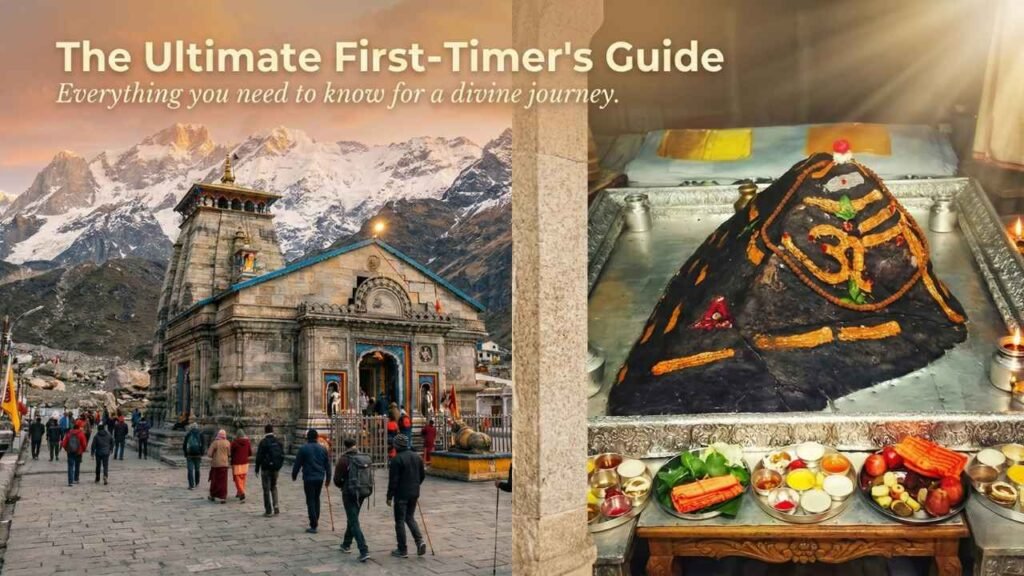
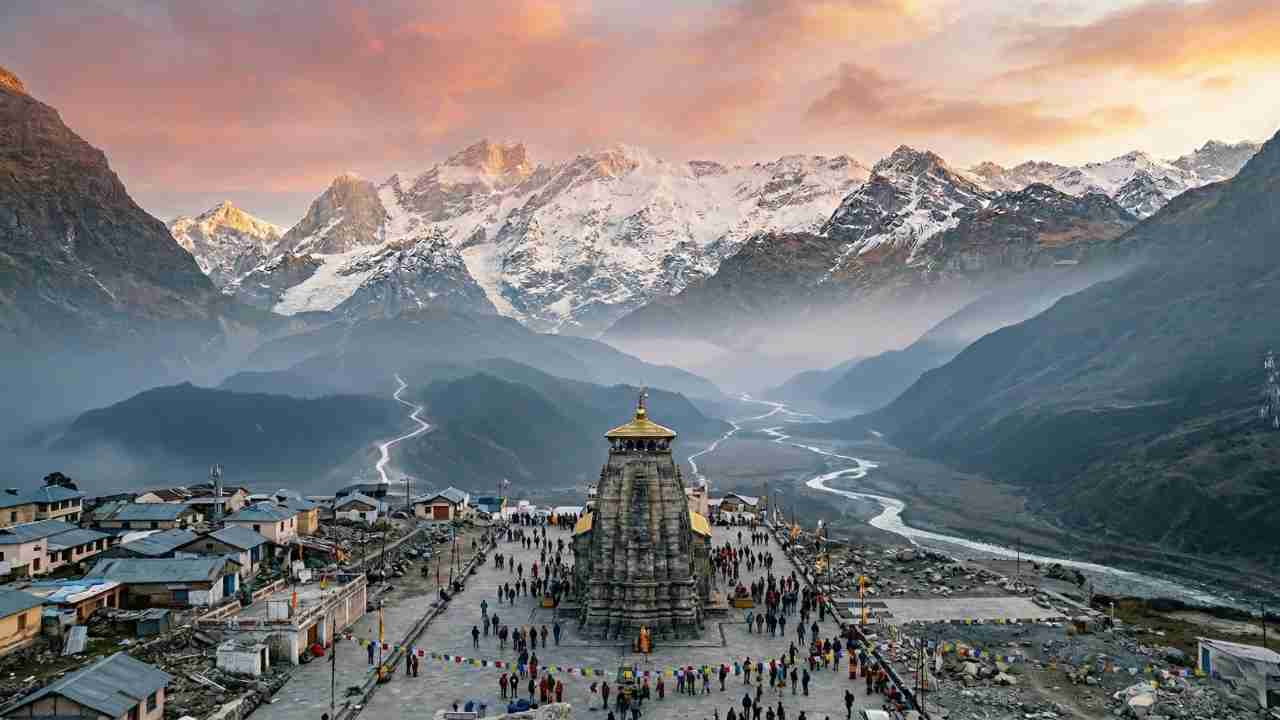
I still remember the exact moment the valley opened up on my first trek to Kedarnath. My calves were cramping after seven hours of climbing from Gaurikund, my jacket was damp from an afternoon drizzle near Lincholi, and every breath past the 3,200-metre mark felt noticeably thin. Then, just past the Base Camp check-post, the mist cleared. Standing right against the massive white wall of the Kedar Dome was the 1,200-year-old grey stone temple, with temple bells ringing across the Mandakini valley. Every bit of physical exhaustion vanished on the spot.
Situated at 3,583 metres (11,755 feet) in Uttarakhand's Rudraprayag district, Kedarnath is the highest of the 12 Jyotirlingas of Lord Shiva and the most physically demanding stop on the Himalayan Char Dham Yatra. Unlike roadside shrines where you can step out of a cab and walk straight into the queue complex, Kedarnath asks for preparation, patience, and respect for mountain weather.
On my first journey from Nagpur, I made three classic first-timer mistakes: I underestimated how long the shuttle jeep queue from Sonprayag to Gaurikund takes at dawn, I packed a regular city jacket instead of a proper waterproof windcheater, and I didn't book my GMVN night stay until the last minute. Those small missteps cost me hours in the cold.
I wrote this guide so you don't have to learn those lessons the hard way. Below you'll find the verified 2026 kapat schedule, the exact Sonprayag to Gaurikund trek logistics, official IRCTC helicopter rules, and practical tips from my own time on the trail.
2. History, Legend & Architecture of Kedarnath Temple
The Pandava Legend and the Origin of Panch Kedar
According to the Skanda Purana (Kedara Khanda) and the Mahabharata, the story of Kedarnath begins after the Kurukshetra war. Burdened by the guilt of slaying their own kinsmen (Gotrahatya), the five Pandava brothers handed over their kingdom and walked into the Garhwal Himalayas seeking Lord Shiva's forgiveness. Shiva, wishing to test their penance before granting darshan, took the form of a bull (Nandi) and grazed secretly among the cattle in the Guptkashi valley.
When Bhima recognized the divine bull and tried to catch it, Lord Shiva dived into the earth at Kedarnath. Bhima managed to hold onto the bull's conical hump, which remained above the ground here as the self-manifested (Swayambhu) pyramid-shaped Jyotirlinga. The other four parts of Shiva's bull form reappeared across nearby valleys: the arms at Tungnath, the face at Rudranath, the midsection (navel) at Madhyamaheshwar, and the matted hair (jata) at Kalpeshwar, together forming Uttarakhand's revered Panch Kedar circuit.
Adi Shankaracharya's 8th-Century Stone Engineering & Bhim Shila
While early inscriptions and Puranic traditions trace worship here back to the Pandava era, the present stone temple is credited to the 8th-century philosopher-saint Adi Shankaracharya, who revived the four cardinal dhams of India and attained mahasamadhi right behind this shrine at the age of 32. Built on a raised stone platform in the classical Himalayan Katyuri-Nagara architectural style, the temple uses massive ashlar-cut grey stone slabs interlocked with iron clamps rather than conventional mortar.
That ancient engineering proved its strength during the devastating June 2013 Chorabari glacial lake outburst flood. While walls of water and boulders swept away nearly every surrounding building in the town, a giant boulder, now worshipped as Bhim Shila, rolled down the mountain and stopped just a few feet behind the sanctum wall, splitting the floodwaters into two channels on either side of the temple.
- Garbha Griha (Sanctum Sanctorum): Houses the triangular, rock-cut Sadashiva Jyotirlinga where devotees offer gangajal, bilva leaves, and ghee during morning hours.
- Sabha Mandapa (Assembly Hall): Features stone carvings of the five Pandavas, Draupadi, Lord Krishna, Nandi, and Virabhadra along the inner walls.
- Eastern Nandi Mandapa: A massive stone Nandi sits outside on the raised courtyard platform, facing straight into the sanctum doorway.
- Bhim Shila & Shankaracharya Samadhi: Located immediately behind the main shikhara; both are open to devotees after completing main temple darshan.
3. 2026 Kapat Opening, Closing Dates & Daily Aarti Schedule
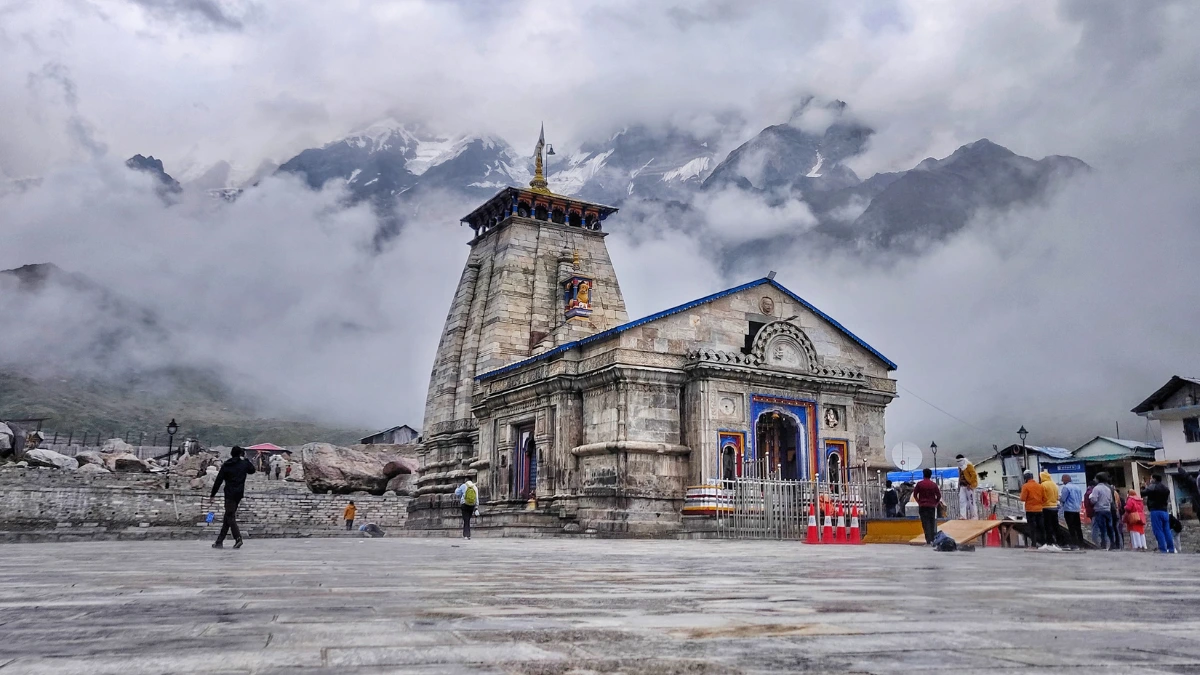
Because Kedarnath remains buried under several feet of snow for six months every year, the shrine opens only between late April/May (around Akshaya Tritiya) and late October/November (Bhai Dooj). For the 2026 Yatra season, the Badrinath-Kedarnath Temple Committee (BKTC) opened the ceremonial doors on 22 April 2026 at 8:00 AM following the three-day Panchmukhi Doli procession from Ukhimath.
The temple doors close for winter on Bhai Dooj (expected on 11 November 2026 at 8:30 AM). Once the doors are locked for the winter and the Akhand Jyot (eternal lamp) is lit inside the sanctum, the movable Panchmukhi Utsav Murti of Baba Kedar is carried back down to Omkareshwar Temple in Ukhimath, where winter worship continues until next spring.
| Schedule / Daily Ritual | 2026 Date / Daily Timing | Pilgrim Notes |
|---|---|---|
| 2026 Kapat Opening Date | 22 April 2026 (8:00 AM) | Follows Doli departure from Ukhimath on 19 April |
| Morning Mahabhishek Puja | 4:00 AM - 6:00 AM | Pre-booked Rudrabhishek & Mahabhishek sevas via BKTC |
| Morning General Darshan (Dharma Darshan) | 6:00 AM - 3:00 PM | Devotees allowed inside Garbha Griha when crowd permits |
| Afternoon Bhog & Sanctum Cleaning | 3:00 PM - 5:00 PM | Sanctum doors remain closed for rest and shringar prep |
| Evening Shringar Darshan & Sandhya Aarti | 5:00 PM - 8:30 PM (Aarti at 7:30 PM) | Darshan from Sabha Mandapa; inner sanctum entry closed |
| 2026 Winter Closing Date (Bhai Dooj) | 11 November 2026 (8:30 AM) | Winter worship shifts to Omkareshwar Temple, Ukhimath |
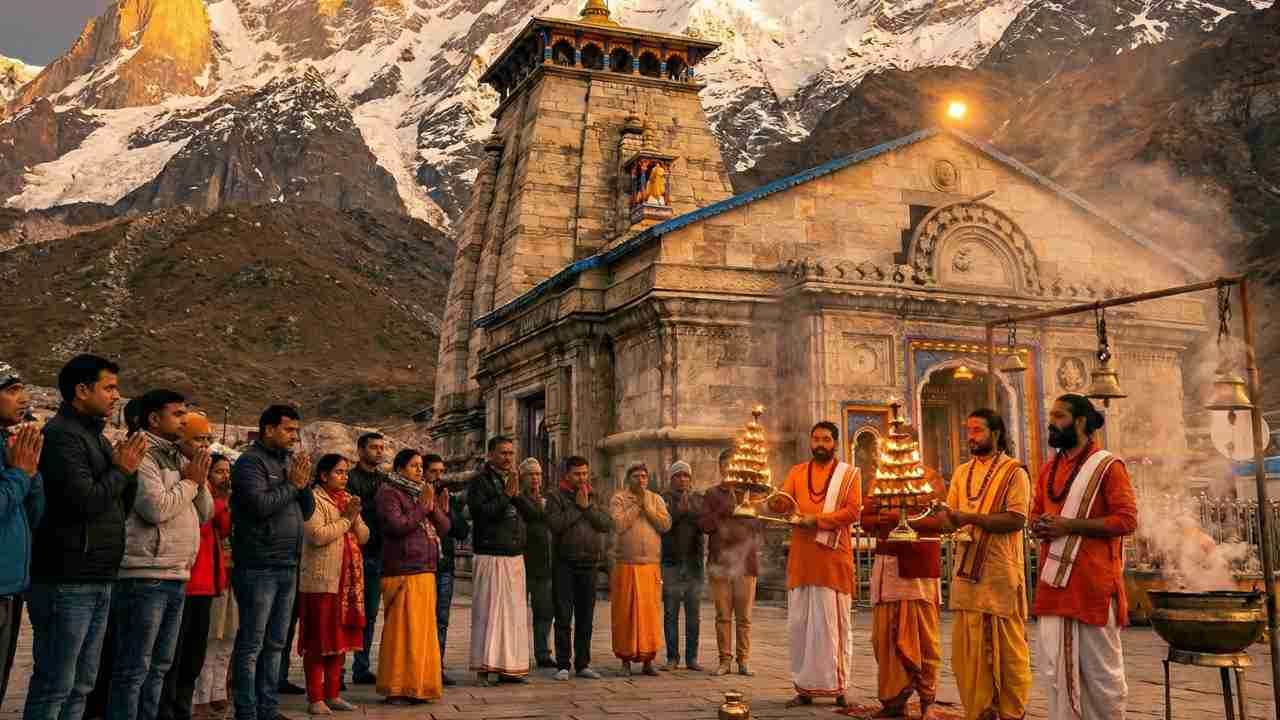
My Personal Tip on Morning vs. Evening Darshan: Notice the difference between the morning and evening sessions. Before 3:00 PM, devotees are allowed to offer jal and bilva leaves inside the Garbha Griha (unless peak-season token crowds force a barrier darshan). After 5:00 PM, the Rawal and priests dress the Jyotirlinga in its full silver face mask and floral shringar, so evening darshan is viewed from the Sabha Mandapa. Stay at least one night at the top so you can witness the 7:30 PM Sandhya Aarti in the courtyard and enter the inner sanctum at dawn the next morning.
Strict Mobile & Reel Ban at the Temple: Following repeated disturbances by vloggers, the Badrinath-Kedarnath Temple Committee (BKTC) strictly prohibits mobile photography, videography, and reels inside the temple premises and within the inner courtyard barricade. Keep your phone switched off in a zippered pocket or leave it in your tent locker before joining the token lane.
4. Mandatory Uttarakhand Yatra Registration (Step-by-Step)
Every single pilgrim visiting Kedarnath must carry a valid Uttarakhand Char Dham Yatra Registration Certificate (Yatra Pass). Registration is 100% free of cost and is used by the state administration to track daily crowd capacity, issue weather alerts, and provide emergency RFID/QR tracking along the trek.
Do not wait until you reach Sonprayag to register offline. During May and June, the offline biometric counters at Haridwar and Sonprayag regularly hit their daily slot limits, forcing unregistered travellers to wait a day or two in town. Register online from home in five minutes:
Yatra.Offline Registration Counters (Backup Only): If you are already on the road, physical registration kiosks operate at Haridwar Rahi Hotel (near the railway station), Rishikesh ISBT & Gurdwara Hemkund Sahib complex, Guptkashi, Phata, and the Sonprayag parking complex.
5. How to Reach Gaurikund by Road, Train & Flight
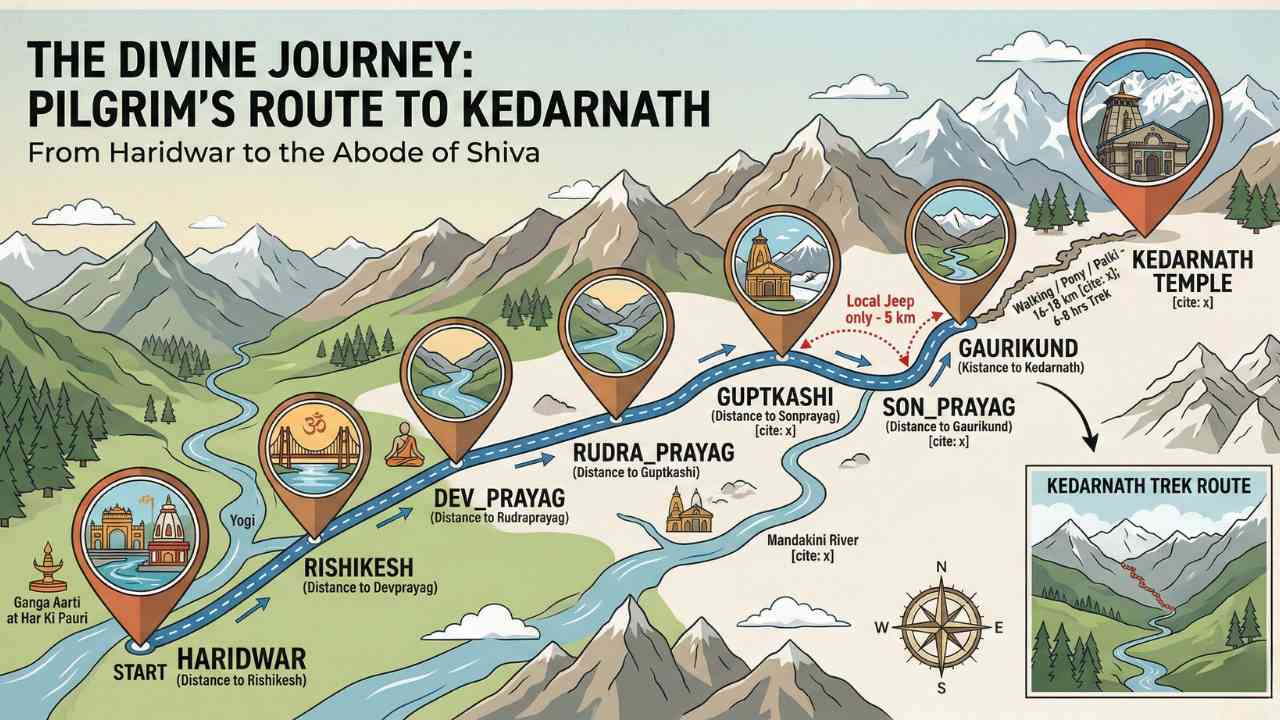
Whether you are flying in from Mumbai, Nagpur, Bengaluru, or taking a train via Delhi, your gateway into the mountains is the twin town belt of Haridwar and Rishikesh. From Rishikesh, National Highway 7 (NH-7) climbs alongside the Ganga to Devprayag (where the Bhagirathi and Alaknanda meet) and continues to Rudraprayag, where the route turns left onto NH-107 along the Mandakini River through Agastyamuni, Guptkashi, Phata, and Rampur before stopping at Sonprayag.
| Starting Hub | Distance to Sonprayag / Gaurikund | Realistic Road Time | Best Transport Mode |
|---|---|---|---|
| Rishikesh (ISBT / Natraj Chowk) | 212 km to Sonprayag (+5 km shuttle) | 7.5 to 9 hours | 5:00 AM UTC / TGMO bus or shared Bolero |
| Haridwar Railway Station | 236 km to Sonprayag (+5 km shuttle) | 8.5 to 10 hours | Early morning Vishwanath/Himgiri buses or private cab |
| Dehradun Jolly Grant Airport (DED) | 228 km to Sonprayag | 8 to 9 hours | Pre-paid airport taxi via Rishikesh bypass |
| New Delhi (Kashmere Gate / NCR) | 455 km to Sonprayag | 12 to 14 hours (break journey) | Vande Bharat / Shatabdi to Haridwar, then mountain bus |
Crucial Detail: The Sonprayag to Gaurikund 5 km Shuttle Bottleneck
Many travel blogs claim you can drive straight to Gaurikund, which is incorrect. All private cars, tempo travellers, and outstation taxis must stop at the multi-level parking lot in Sonprayag. From Sonprayag, you walk across the Mandakini bridge through the police registration checkpoint and board a local union shuttle jeep (₹50 per person one way) for the narrow 5 km climb to Gaurikund. Between 5:00 AM and 8:00 AM in peak season, the queue for this shuttle alone can take 60 to 90 minutes, so factor that buffer into your trek start time.
6. The 16 km Gaurikund to Kedarnath Trek: Checkpoint by Checkpoint
After the 2013 floods destroyed the old Rambara trail on the right bank of the Mandakini, the Nehru Institute of Mountaineering (NIM) rebuilt the current trek route along the higher slopes. While road signs still say 16 km from the Gaurikund gate, once you count the walk from the Sonprayag shuttle drop point to the temple courtyard, your smartwatch will log closer to 18 to 19 km one way, climbing 1,601 metres (5,250 feet) in elevation.
| Trek Checkpoint | Distance from Gaurikund | Altitude | What the Trail Feels Like |
|---|---|---|---|
| Gaurikund Gate (Start) | 0 km | 1,982 m | Crowded market lane; pony & kandi booking counters |
| Jungle Chatti | 4 km | 2,622 m | Steady stone-paved climb; first major medical aid post & tea stalls |
| Bheembali | 6.5 km | 2,845 m | Good resting spot with GMVN canteen, washrooms & oxygen booth |
| Rambara Bridge | 8 km | 2,910 m | Crosses the Mandakini River; steep switchbacks begin right after |
| Chhoti Lincholi & Badi Lincholi | 9.5 - 11 km | 3,022 m | Toughest zig-zag incline (Hathni Mor); thin air slows your pace |
| Kedarnath Base Camp (Ghoda Padav) | 14.5 km | 3,450 m | Ponies stop here; flat 1.5 km paved walk to the temple plaza |
| Kedarnath Temple Courtyard | 16 km | 3,583 m | Token counter, shoe stand & main temple plaza |
Pony (Ghoda), Palki (Doli) & Kandi Rates at Gaurikund
If you are travelling with elderly parents or develop knee pain midway, the Rudraprayag district administration operates prepaid booking counters at Gaurikund and Bheembali: Ponies (Ghoda/Khachchar) cost roughly ₹2,500-₹3,200 one way (Gaurikund to Base Camp), Kandi (basket seat carried by a single porter) costs ₹3,000-₹4,500 depending on body weight, and a Palki/Doli (carried by four porters) ranges between ₹8,500 and ₹11,000 one way. Always book from the official prepaid booth so your handler's ID badge is registered.
High-Altitude Safety Note (Above 3,000 Metres):
Acute Mountain Sickness (AMS) does not care how young or athletic you are. Once you cross Rambara Bridge toward Lincholi, avoid sprinting or competing with faster trekkers. Sip warm water with ORS every 30 minutes, never trek on an empty stomach, and if you experience a throbbing headache, dizziness, or breathlessness while resting, stop immediately at the nearest Six Sigma / State Medical Relief Post (located every 2 km along the route) for free oxygen and check-up.
7. IRCTC HeliYatra Booking, Helipads & Approved Fares
Shuttle helicopters operate from three valley helipads along the Rudraprayag-Sonprayag highway: Sirsi, Phata, and Guptkashi. All fares are strictly fixed by the Uttarakhand Civil Aviation Development Authority (UCADA), and 100% of online ticket inventory is sold exclusively through IRCTC HeliYatra. We also maintain a dedicated Temple Helicopter Booking Guide if you are combining Kedarnath with Badrinath Dham.
| Departure Helipad | Distance from Sonprayag | One-Way Flight Time | UCADA Round-Trip Fare (Approx.) |
|---|---|---|---|
| Sirsi Helipad | 7 km before Sonprayag | ~9 minutes | ₹5,770 - ₹6,060 (2026 revised tariff) |
| Phata Helipad | 14 km before Sonprayag | ~9 minutes | ₹5,774 - ₹6,063 per person |
| Guptkashi Helipad | 30 km before Sonprayag | ~12 to 15 minutes | ₹8,126 - ₹8,532 per person |
How to Book Without Falling for Fake Helicopter Websites
Every year, hundreds of pilgrims lose money to copycat websites and WhatsApp scammers claiming to sell "VIP Kedarnath chopper tickets." Keep these official rules in mind:
- Only One Official Portal Exists: Book strictly at heliyatra.irctc.co.in using your Uttarakhand Yatra Registration Group ID (or Individual Registration Number).
- Zero Authorised Travel Agents: IRCTC does not authorise any private travel agent, Telegram group, or WhatsApp number to issue shuttle helicopter tickets via UPI QR codes.
- Strict Luggage & Body-Weight Rules: Only a soft handbag up to 5 kg per passenger is allowed onboard; large suitcases must be left at your base hotel in Phata or Guptkashi. Passengers weighing over 80 kg are weighed at the helipad and charged a nominal per-kg overweight fee (~₹150/kg).
- Keep 1 Buffer Day for Valley Fog: Afternoon clouds in the Mandakini valley frequently halt flights after 1:00 PM. If your slot is cancelled due to bad weather, IRCTC processes a full ticket refund, and you must either trek or wait for the next day's slot.
8. Where to Stay: Kedarnath Top, Guptkashi & Sonprayag
Choosing the right night halt makes a huge difference to your energy levels. You need two separate bookings: one base hotel in the valley (before and after the trek) and one night halt at Kedarnath top if you are trekking.
- At Kedarnath Top (3,583 m): Accommodation up here is purely functional for surviving the sub-zero night. The safest, cleanest options are government-run GMVN Cottages (Swargarohini / Nandadevi Bhawan) and Nandi Base Camp Tents, booked directly through gmvnl.in (₹1,000-₹1,500 per bed in dorms/tents, ₹4,000-₹7,500 for private rooms). Private lodges near the temple charge ₹3,500-₹8,000 per room in peak season and charge ₹50-₹100 per bucket of hot water.
- Best Pre-Trek Valley Base (Guptkashi, Phata & Sitapur): Staying in Guptkashi or Phata on the night you arrive from Rishikesh gives you proper hotels, geysers, pharmacies, and the chance to visit the ancient Kashi Vishwanath & Ardhanareshwar Temple in Guptkashi. If you want to beat the morning shuttle rush, book a guesthouse right in Sitapur or Sonprayag so you can walk to the shuttle barrier at 4:30 AM.
9. Best Months to Visit (And Why July-August Is Risky)
Although the temple stays open for six months from late April to early November, mountain conditions change dramatically across the season:
- Late April to Mid-May (Opening Snow Season): You will walk between 6-foot walls of cut snow near Lincholi and Base Camp, and temperatures drop to -3°C at night. The energy of the opening weeks is unforgettable, though sudden afternoon snowfall is common.
- Late May to June (Peak Family Season): Daytime weather is pleasant (10°C to 15°C), making it comfortable for families and senior citizens, but expect the heaviest crowds of the year because of school summer holidays.
- July to August (Active Monsoon - Best Avoided): Heavy rain triggers frequent shooting stones and roadblocks at Sirobagad (between Rudraprayag and Agastyamuni) and along the Sonprayag-Gaurikund stretch. Unless you are an experienced mountain traveller with flexible dates, avoid peak monsoon weeks.
- Mid-September to Early November (Best Overall Window): Once the monsoon retreats around 15 September, the skies turn crystal clear, the Chaukhamba and Kedar Dome peaks glow gold at sunrise, helicopter cancellations drop sharply, and darshan queues move much faster. Just pack heavy woollens as October nights dip below -5°C.
10. What to Pack for Sub-Zero Mountain Evenings
When you start walking at Gaurikund (1,982 m) in the morning, you will sweat within 20 minutes and feel like wearing a T-shirt. Four hours later at Lincholi (3,022 m), icy wind and rain can chill you to the bone in minutes. The secret is three-layer dressing rather than carrying one bulky coat:
Clothing & Footwear
- 2 pairs of thermal innerwear (top & bottom)
- 1 fleece jacket + 1 packable down/padded jacket
- Full-length waterproof rain poncho (covers backpack too)
- Broken-in trekking shoes with deep rubber grip
- 3-4 pairs of woollen socks, fleece gloves & monkey cap
Documents, Cash & SIM
- Original Aadhaar Card / Government Photo ID
- 2 printed copies of Uttarakhand Yatra QR Pass
- Printed GMVN stay & IRCTC HeliYatra receipts
- ₹5,000-₹8,000 in physical cash (withdraw in Rishikesh/Guptkashi; UPI fails when network drops)
- Jio, Airtel, or BSNL SIM (strongest signal in valley)
Medical & Trail Gear
- ORS packets, glucose powder & dry fruits/chikki
- Doctor-advised AMS medicine (Diamox), paracetamol, muscle-relief spray & blister plasters
- 10,000-20,000 mAh power bank (cold drains phone batteries fast)
- Camphor (kapoor) pouch & small torch/headlamp
- Wooden walking stick (available at Gaurikund for ₹30-₹50)
11. 5 Sacred Places Around Kedarnath You Shouldn't Miss
Most first-time yatris rush down the mountain immediately after temple darshan, missing some of the most spiritually significant spots right around the shrine and in the Sonprayag valley:
- 1. Shri Bhairavnath Temple (800 m hike above Kedarnath): Perched on the eastern ridge overlooking the entire Kedarnath valley, Baba Bhairavnath is revered as the Kshetrapala (guardian deity) who protects the locked temple during the six winter months when snow covers the town. The 25-minute climb behind the temple offers the best panoramic view of the Kedarnath shikhara.
- 2. Adi Shankaracharya Samadhi Sthal (Behind the Sanctum): Reconstructed in an underground meditation chamber right behind the main temple and Bhim Shila, this quiet space marks the spot where the 32-year-old saint merged into the divine after establishing the four dhams.
- 3. Triyuginarayan Temple (12 km from Sonprayag): Before you leave the Sonprayag/Sitapur belt, take a 30-minute cab detour up to Triyuginarayan Village. Revered as the venue of the celestial marriage of Lord Shiva and Goddess Parvati (with Lord Vishnu acting as Parvati's brother), its courtyard features the Akhand Dhuni, a sacred wood fire that has burned continuously across yugas. Devotees offer wood sticks (samidha) and collect sacred ash for a blessed married life.
- 4. Omkareshwar Temple, Ukhimath (41 km from Sonprayag): The winter seat of both Lord Kedarnath and Lord Madhyamaheshwar. Even during summer, stopping here lets you see the ancient stone architecture where the Rawal (head priest) resides.
- 5. Chopta & Tungnath Temple (via Ukhimath-Makku Math route): If you have one extra day on your return toward Rudraprayag, take the scenic forest road from Ukhimath to Chopta and hike the gentle 3.5 km stone path to Tungnath (3,680 m), the third Kedar and the highest Shiva temple in the world.
12. Realistic Per-Person Cost Breakdown (4-5 Day Trip ex-Haridwar/Rishikesh)
Because yatra registration and general darshan are completely free, your main expenses are mountain transport, overnight stays, and whether you walk or use a pony/helicopter:
| Expense Category | Budget Trekker (Per Person) | Comfort / Family Option (Per Person) |
|---|---|---|
| Haridwar/Rishikesh ↔ Sonprayag Road Transport + Shuttle | ₹1,400 - ₹1,800 (State Bus + Jeep) | ₹3,500 - ₹5,500 (Shared Cab / Private Car Split) |
| Accommodation (2 Nights Valley + 1 Night Kedarnath Top) | ₹2,000 - ₹3,000 (GMVN Dorms & Budget Lodge) | ₹5,500 - ₹9,500 (Private Rooms in Guptkashi & Top) |
| Meals, Tea, Hot Water & Trail Refreshments (4 Days) | ₹1,200 - ₹1,800 | ₹2,200 - ₹3,500 |
| Ascent Support (Foot Trek vs. Pony / Helicopter) | ₹0 (Self Trek on Foot) | ₹5,800 - ₹8,500 (Round-Trip Pony or IRCTC Chopper) |
| Prasad, Special Puja Receipt & Miscellaneous | ₹500 - ₹800 | ₹1,500 - ₹2,500 |
| ESTIMATED TOTAL PER PERSON (Ex-Haridwar) | ₹5,100 - ₹7,400 | ₹18,500 - ₹29,500 |
13. Hard-Earned Do's & Don'ts from the Trail
What You Should Do
- Cross the Sonprayag registration barrier between 4:00 AM and 5:30 AM so you start walking from Gaurikund before the pony rush builds up.
- Always walk on the mountainside (inner edge) of the trail, never on the outer valley edge when ponies pass by, as a bump from a loaded pony can be dangerous.
- Collect your free darshan token at the Kedarnath arrival counter as soon as you reach the top so you know your exact time slot for the queue complex.
- Cloak excess luggage at your Sonprayag/Guptkashi hotel and carry only a 4-5 kg daypack up the mountain.
Mistakes to Avoid
- Do not start the upward trek from Gaurikund after 1:30 PM; police close the upward gate in the afternoon so trekkers aren't stranded in the dark at Lincholi.
- Do not take unmarked "shortcuts" cutting across the stone switchbacks; they are slippery, steeper, and exhaust your lungs twice as fast.
- Do not pay any touts or WhatsApp numbers promising instant helicopter tickets or VIP sanctum passes outside heliyatra.irctc.co.in and badrinath-kedarnath.gov.in.
- Do not sleep in damp clothes after reaching the top; change into dry thermals immediately to prevent hypothermia.
14. Frequently Asked Questions (FAQs)
Q1. When did Kedarnath Temple open in 2026, and when will it close for winter?
For the 2026 yatra season, the doors (kapat) of Kedarnath Dham opened on 22 April 2026 at 8:00 AM. The temple closes for winter every year on Bhai Dooj (two days after Diwali), which falls on 11 November 2026 at 8:30 AM. During the six winter months, Lord Kedarnath's Panchmukhi Utsav idol is worshipped at Omkareshwar Temple in Ukhimath.
Q2. Can devotees touch the Jyotirlinga inside Kedarnath Temple?
Yes, during the morning Dharma Darshan window (6:00 AM to 3:00 PM), devotees are permitted inside the Garbha Griha to offer gangajal and touch the pyramid-shaped Jyotirlinga, provided crowd levels are manageable. During peak summer rush days when daily footfall crosses 25,000+ pilgrims, the administration temporarily switches to quick line darshan from the sanctum threshold so everyone gets a view. After 5:00 PM, the Jyotirlinga is adorned in Shringar, and darshan takes place from the Sabha Mandapa.
Q3. Is there any VIP darshan pass at Kedarnath Temple?
The Badrinath-Kedarnath Temple Committee (BKTC) offers official special pujas, such as Mahabhishek, Rudrabhishek, and Shodashopachara Puja, which can be booked online via badrinath-kedarnath.gov.in or at the temple office counter for fixed trust donations. Be cautious of unofficial touts outside the temple claiming to sell ₹500 or ₹1,000 "direct VIP entry" without an official BKTC receipt.
Q4. Which mobile network works best in Gaurikund and Kedarnath?
Reliance Jio, Airtel, and BSNL have towers at Gaurikund, Lincholi, and Kedarnath township. However, during heavy cloud cover or peak pilgrim rush, mobile data and UPI apps frequently time out. Always withdraw sufficient cash in Rishikesh, Rudraprayag, or Guptkashi before heading to Sonprayag.
Q5. Can I complete the Gaurikund-Kedarnath trek Up and Down on the same day?
Fit trekkers who cross Gaurikund by 4:30 AM sometimes reach the temple by 10:30 AM, complete darshan by noon, and trek back down to Sonprayag by 6:00 PM (a 32+ km round trip in a single day). However, for most devotees, a same-day 32 km trek is exhausting and means missing the evening Sandhya Aarti. Staying one night at Kedarnath top or Lincholi makes the pilgrimage much safer and more peaceful.
Q6. Are medical and oxygen facilities available along the 16 km trek?
Yes. The Uttarakhand Health Department and Six Sigma Healthcare operate free Medical Relief Posts equipped with oxygen cylinders, nebulizers, and doctors at Gaurikund, Jungle Chatti, Bheembali, Lincholi, Base Camp, and right beside Kedarnath Temple.
15. Final Thoughts Before You Begin Your Climb
Walking up the Mandakini valley in cold rain with heavy legs is no small feat, and there will probably be a moment around the steep switchbacks of Lincholi where you wonder how much further the top is. Take a five-minute breather, sip warm ginger tea at a roadside chatti, and keep moving one slow step at a time.
When you finally stand barefoot in that stone courtyard at 7:30 PM as the conch shells echo off the snow peaks during Sandhya Aarti, every single step from Gaurikund feels worth it. If you are planning your trip and have a question about route timings, staying in Guptkashi, or booking slots, feel free to send me a message here; I read and reply to every fellow yatri personally.
Har Har Mahadev · Jai Baba Kedar 🙏
- Devendra Khambalkar, Nagpur, Maharashtra
Official Portals for Your Kedarnath Yatra
Always use these direct government and temple trust portals; never pay third-party agents for registration or chopper tickets.
Related Himalayan & Jyotirlinga Guides on HinduTempleGuide.com
- Char Dham Yatra Complete Guide - Yamunotri, Gangotri, Kedarnath & Badrinath Route
- Badrinath Temple Guide 2026 - Kapat Dates, Tapt Kund & Darshan Timings
- Temple Helicopter Booking Guide - Kedarnath, Badrinath & Vaishno Devi
- Tirupati Balaji Temple Guide - Darshan Types, SED Booking & Timings
- Nagchandreshwar & Mahakaleshwar Ujjain - My 24-Hour Darshan Experience
Last updated: November 2026 | Researched and written by Devendra Khambalkar using firsthand trek notes and official announcements from the Badrinath-Kedarnath Temple Committee (BKTC), UCADA, and Uttarakhand Tourism. Always verify live weather advisories before starting your trek from Gaurikund.