Nagchandreshwar Temple: My 24-Hour Nag Panchami Darshan at Ujjain’s Once-a-Year Shrine

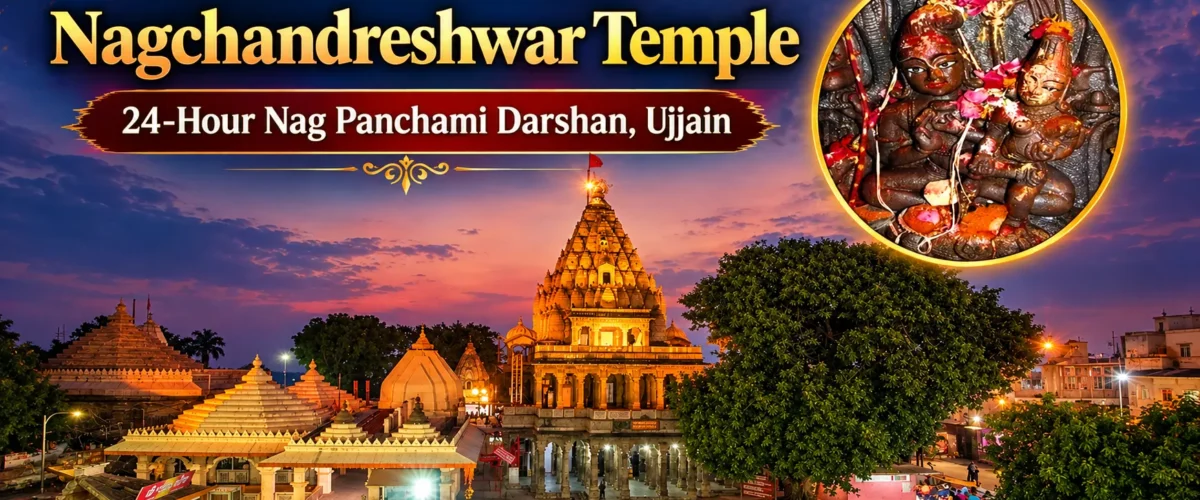
Nagchandreshwar Temple is the one shrine in India I had circled on my calendar for three years before I finally stood in front of it, and I still remember the exact moment the queue turned a corner on that narrow stone staircase and the idol came into view for the first time. If you’ve ever read that there’s a temple in Ujjain that opens its doors for only twenty-four hours in an entire year, you’ve read about this one, and let me tell you, no article, reel, or video prepares you for what it actually feels like to stand there at midnight, surrounded by thousands of strangers, all chanting “Jai Shri Mahakal” in the same breath. This is my personal, first-hand account of visiting Nagchandreshwar Temple on Nag Panchami, along with everything timings, mythology, rituals, and the real crowd situation I wish someone had told me before I went. Har Har Mahadev 🙏
Quick Navigation
Table of Contents
Why This Darshan Is Unlike Any Other
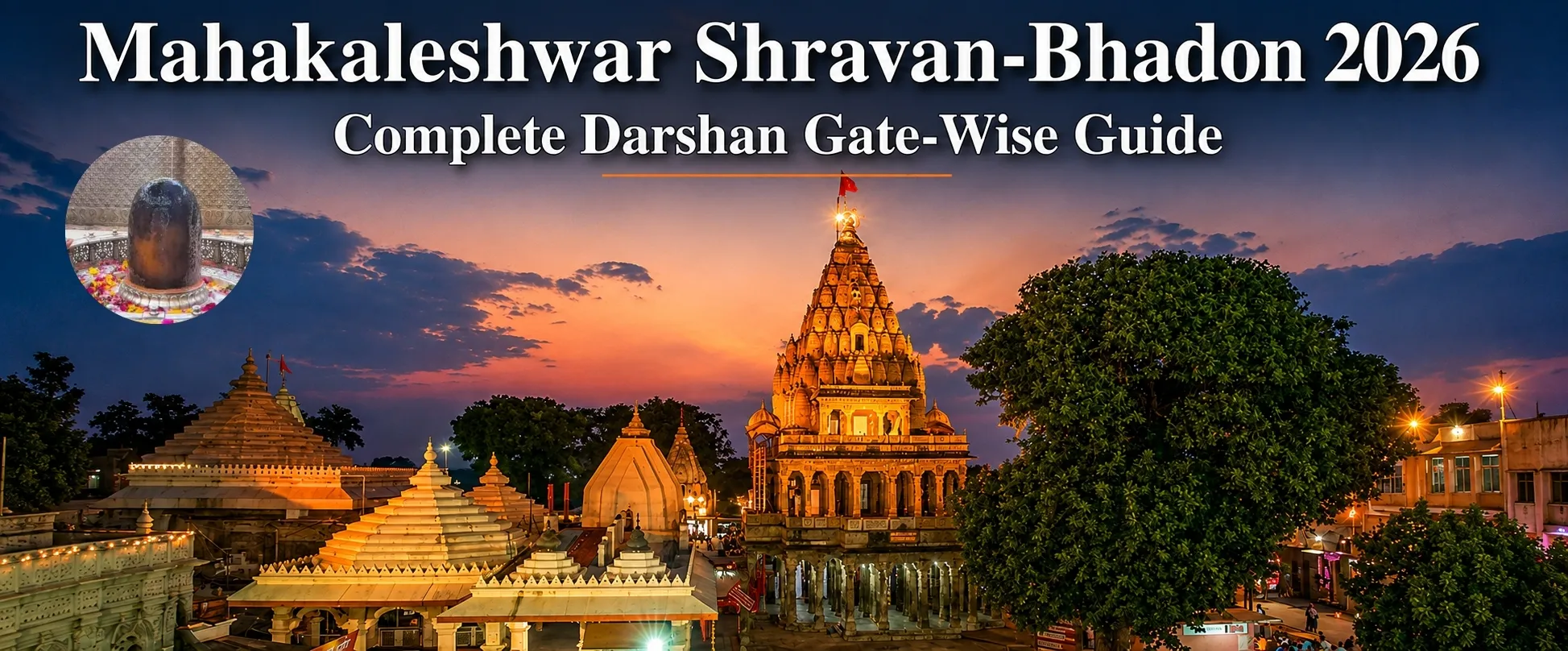
I am writing this not as a travel writer sitting at a desk, but as someone who actually climbed that staircase, waited in that line, and came back down changed. Nagchandreshwar Temple sits on the third and topmost floor of the Shri Mahakaleshwar Jyotirlinga complex, and for 364 days of the year the staircase leading up to it stays locked, guarded, and completely off-limits, no VIP pass or special permission gets you in. Only on Nag Panchami does it open, for a single continuous window of twenty-four hours. So settle in, this is a long, honest, devotional account of one of the rarest darshans in the whole of Hindu pilgrimage tradition.
What Is Nagchandreshwar Temple?
What makes the Nagchandreshwar idol so unusual?
| Detail | Information |
|---|---|
| Location | 3rd floor, Shri Mahakaleshwar Temple Complex, Ujjain, Madhya Pradesh |
| Presiding Deity | Lord Shiva seated on Nagraj Takshak (serpent throne) with Parvati and Ganesha |
| Opens | Only once a year, on Nag Panchami |
| Duration Open | 24 hours, starting just after midnight |
| Entry Fee | Free, no paid or VIP queue |
| Nearest Railway / Airport | Ujjain Junction (~2 km) / Devi Ahilyabai Holkar Airport, Indore (~55 km) |
If devotion to Lord Shiva runs in your family the way it does in mine, this is one darshan that belongs on your list, not as a tourist stop, but as a pilgrimage in the truest sense of the word.
My Midnight Journey to the Sanctum
I reached Ujjain a full day early, on purpose. Every seasoned pilgrim I’d spoken to said the same thing, don’t arrive on the morning of Nag Panchami itself, because roads, trains, and guesthouses near Mahakal fill up completely. I checked in by evening, ate a light meal, and tried to sleep by nine.
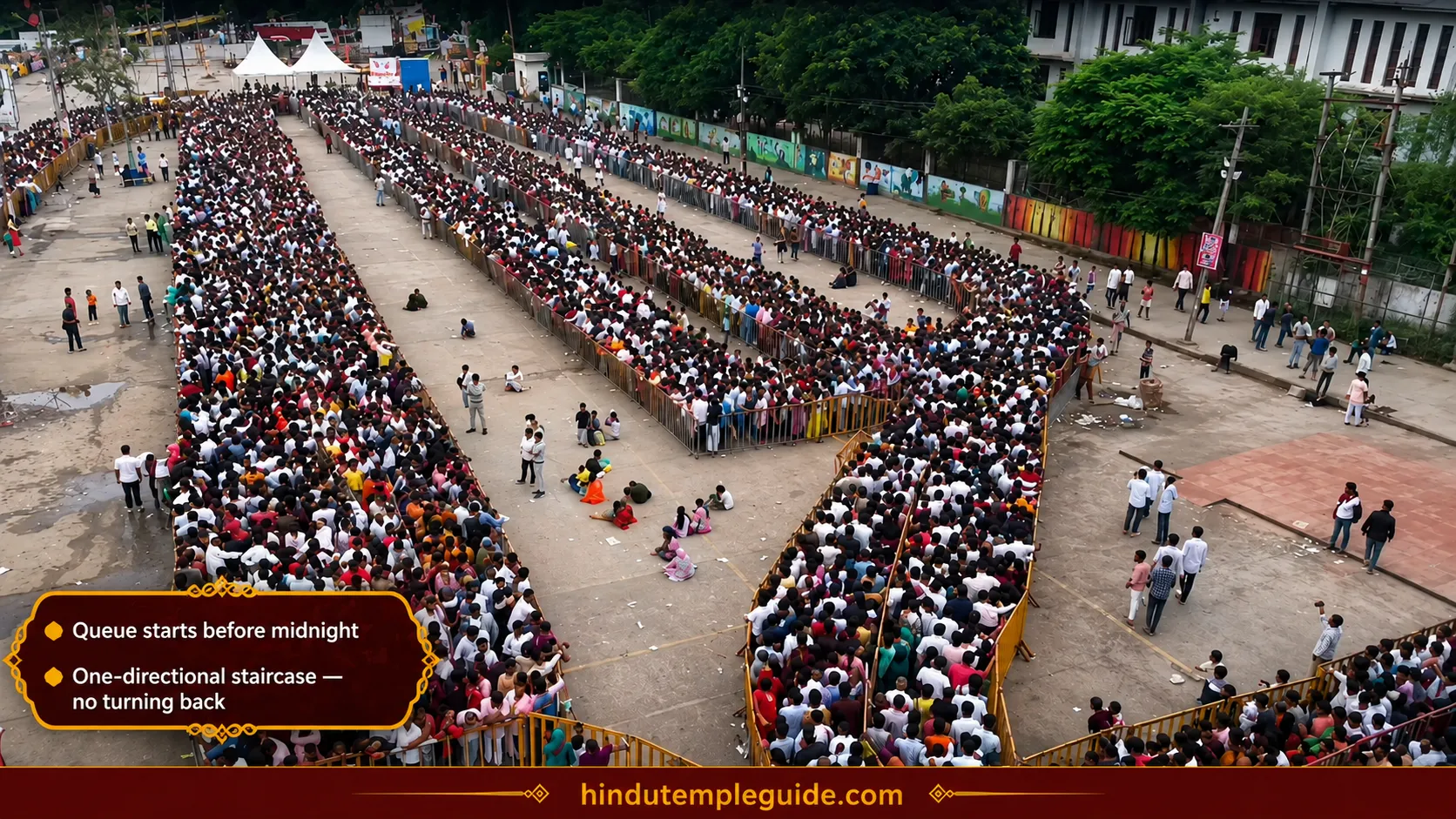
By eleven-thirty that night, I was already walking toward the Mahakal complex with my family. Thousands of feet moving in the same direction, temple bells in the distance, small flower stalls glowing under string lights, it felt less like a queue and more like a river of people flowing toward one point. We reached the base of the staircase a little before midnight, and then we waited. Not impatiently, there was something meditative about standing shoulder to shoulder with strangers, all there for the exact same reason.
Just after midnight, following the Trikaal Puja performed by the Mahanirvani Akhada, a wave of “Jai Shri Mahakal” rolled through the crowd, and I knew the doors had opened above us. The staircase itself is narrow, steep, and one-directional, once you start climbing, there is no turning back. After almost two hours of moving inch by inch, I turned the final corner and saw Him, Lord Shiva seated on that extraordinary ten-hooded serpent throne. I did not expect my eyes to well up, but standing before a form of Shiva most people only ever see in a photograph, knowing this exact darshan wouldn’t be possible again for another 365 days, something in my chest simply let go.
The Mythology Behind the Temple
Why does the temple stay locked for 364 days a year?
This, according to tradition, is exactly why the shrine’s doors remain sealed for the rest of the year, opening daily would break the silence Shiva promised Takshak. Only on Nag Panchami, the day sacred to serpent worship across Hindu tradition, is that solitude set aside so devotees may have darshan. It’s a beautiful piece of mythology when you think about it, a temple that exists because of a promise of quiet, opening for just one day out of respect for devotees, and then returning to its silence.
Temple Timings & Trikaal Puja 2026
For 2026, Nag Panchami falls on Monday, 17 August, a date that also coincides with the third Shravan Somwar Sawari of Lord Mahakal, an overlap that last happened back in 2019.
| Time | What Happens |
|---|---|
| 12:00 AM | Trikaal Puja concludes; temple doors open to devotees |
| 12:00 AM – 4:00 AM | First darshan wave, heavy footfall but the line keeps moving |
| 2:30 – 4:30 AM | Bhasma Aarti at the main Mahakaleshwar sanctum (Shravan Monday timing) |
| 5:00 AM onward | Peak morning rush begins as the muhurat approaches, the busiest stretch of the day |
| 11:00 AM – 2:00 PM | Comparatively lighter window, locals consider this the best time |
| 12:00 PM | Second official puja, by temple administration |
| 7:30 PM | Third puja, performed after Mahakal’s evening aarti |
| 12:00 AM (next night) | Special Maha Aarti performed; kapaat close again for the year |
What surprised me most was learning that the temple follows a structured Trikaal Puja tradition, three distinct pujas performed at three different times, each involving the binding of a coconut, chanting, and offerings according to Shaiva custom.
| Puja | Time & Performed By |
|---|---|
| First Puja | Immediately after midnight kapaat-opening, by Mahanirvani Akhada saints |
| Second Puja | 12:00 Noon, by temple administration officials |
| Third Puja | 7:30 PM, after sandhya aarti, by Mahakaleshwar committee priests |
Because timings can shift slightly depending on tithi calculations each year, I always recommend cross-checking the exact hours on the official Mahakaleshwar Temple website a few days before you travel.
What I Saw Inside the Sanctum
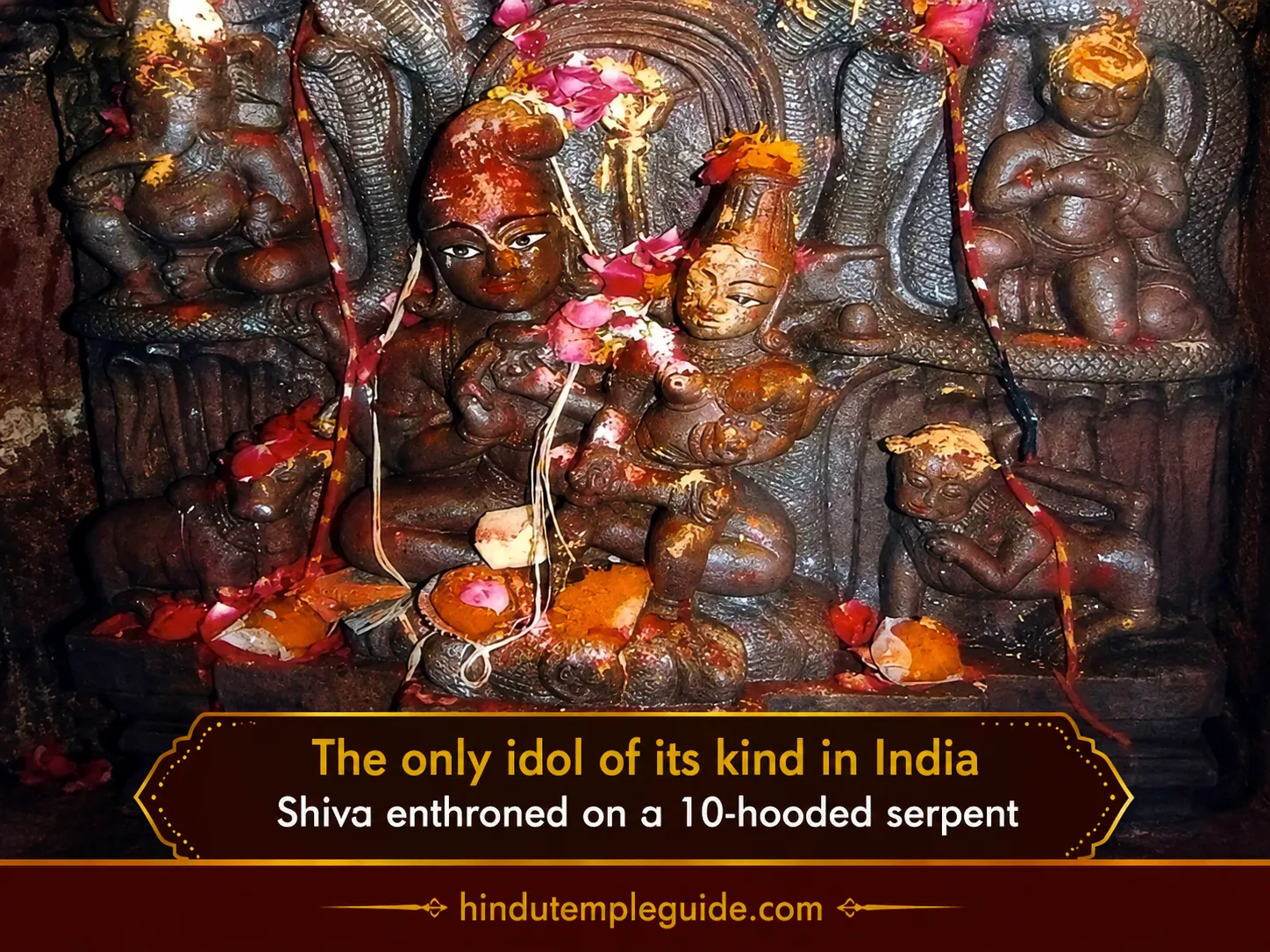
Photography is strictly not permitted once you’re near the sanctum, so everything here comes purely from memory, which, if anything, made the experience feel more sacred rather than less. The idol itself is smaller than I’d imagined, tucked into a compact chamber that can only hold a handful of devotees before you’re gently guided forward by priests. Shiva sits in serene meditation atop the coiled body of the great serpent, its ten hoods fanned protectively above his head like a living canopy. Parvati sits beside him, and a small form of Ganesha completes the family grouping, decorated in fresh flowers, sandalwood paste, and damp garlands from the earlier abhishek.
There is a belief, deeply held by locals and pilgrims alike, that a single darshan of Bhagwan Nagchandreshwar frees a person from all forms of sarp dosh, serpent-related planetary afflictions. Whether you approach that belief with full faith or gentle curiosity, standing there at two in the morning, surrounded by hundreds of people who clearly believe it with their whole heart, is an experience that stays with you.
Nag Panchami 2026: The Crowd Reality
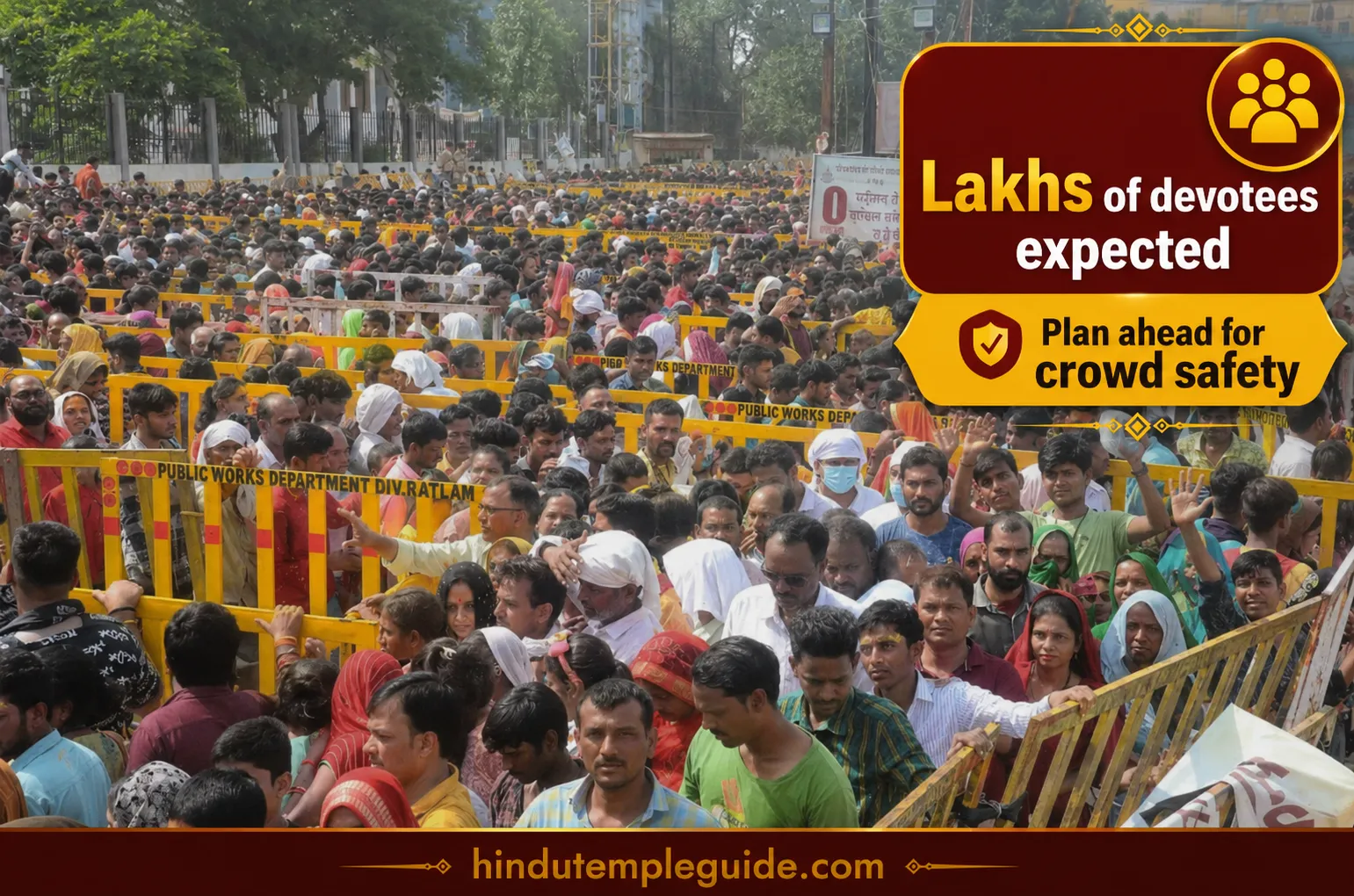
Is Nag Panchami 2026 a bigger crowd year than usual?
I want to be completely honest here, because most articles only show glowing temple photos and skip the practical, sometimes difficult, reality of visiting on this exact day. The temple committee has clarified that reports circulating on social media were exaggerated, but the underlying lesson is simple: this is not a casual darshan you walk into at a leisurely pace. Stay close to your group, keep children and elderly family members within arm’s reach, carry water, and if you feel the crowd pressure building, don’t panic, move with the flow rather than against it, and alert the nearest police or temple volunteer if anyone needs help.
Practical Tips & How to Reach
Nagchandreshwar Temple has no separate entrance of its own, you enter through the main Mahakaleshwar complex and take the internal staircase up once it opens. Ujjain Junction (UJN) is barely 2 km from the temple; the nearest airport is Devi Ahilyabai Holkar in Indore, about 55 km away. On Nag Panchami day, expect significant traffic restrictions near the temple from early afternoon onward, once the Sawari procession routes begin closing.
- Arrive the evening before, not the morning of, trains, roads, and accommodation fill up completely by the day itself.
- Choose your darshan window wisely, midnight to 2 AM sees the first heavy wave; 11 AM to 2 PM is generally the calmest stretch.
- Leave your phone and bag in the free cloakroom near the entry gates, photography inside the sanctum is not allowed.
- Wear comfortable, weather-appropriate clothing, Shravan month in Malwa brings sudden afternoon showers.
- Carry water and light snacks, especially if attempting darshan during the busier daytime hours.
- If performing Kaal Sarp Dosh puja, confirm with your pandit whether it includes Navagraha Mandir at Triveni.
- Respect the one-directional staircase, once the queue starts moving, accept the brief darshan and let the line keep moving.
- Do Nagchandreshwar first, Mahakaleshwar second, the Jyotirlinga sanctum is open year-round, but this shrine is not.
Frequently Asked Questions
Planning your own Nag Panchami visit to Nagchandreshwar?
Writing this months later, I still find myself thinking about that staircase, the sound of a thousand voices chanting in unison, and that brief, glowing glimpse of Lord Shiva seated upon Nagraj Takshak’s coils. If you’re even slightly considering making this journey, stop weighing the crowd and the queue against the darshan, and just go. Some experiences are worth the wait, and this is one of them. Share your own experience in the comments below, I personally reply to every genuine query from fellow devotees. Har Har Mahadev 🙏