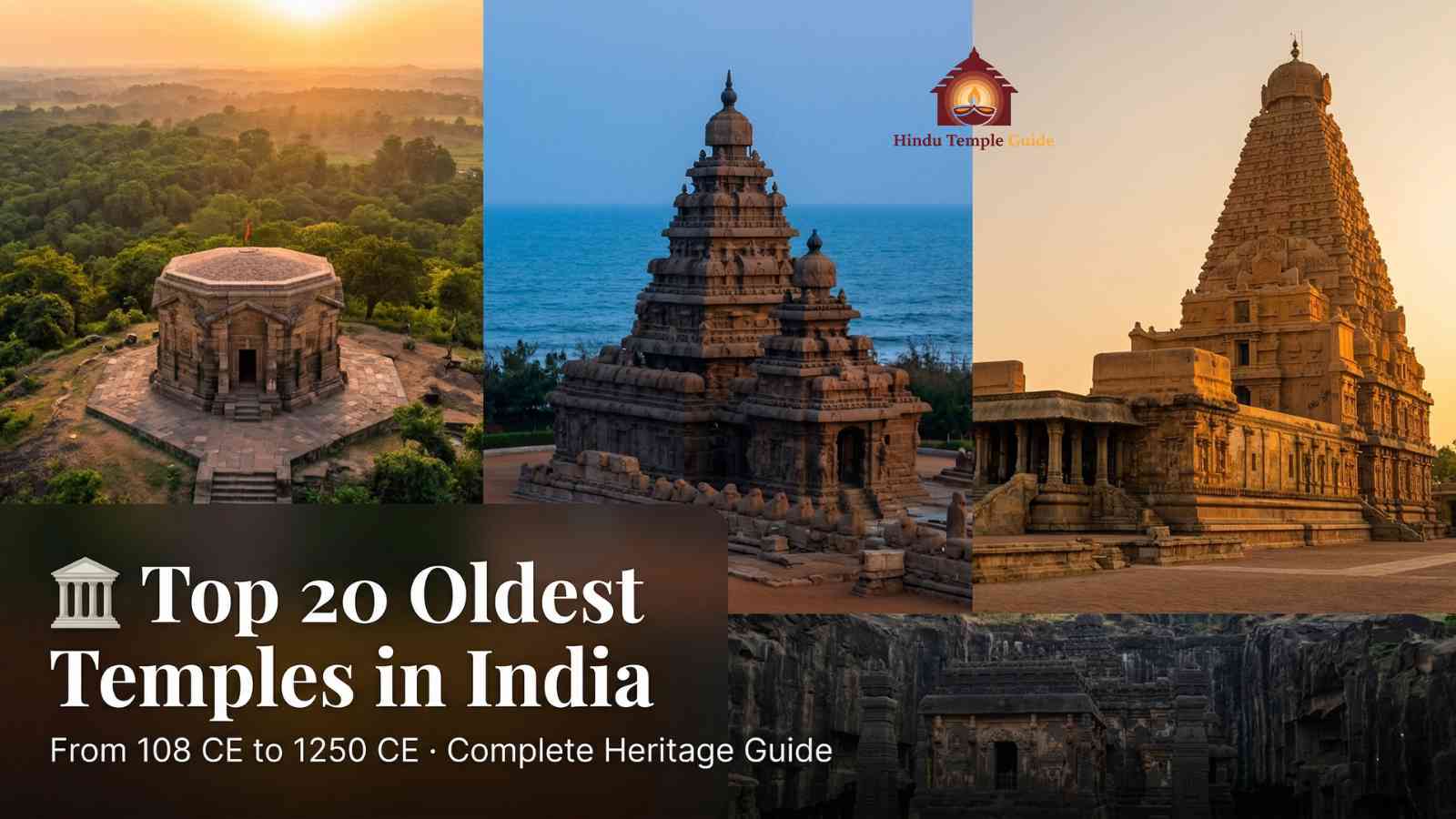
From 2nd-7th century CE sanctuaries to 13th-century stone chariots-living monuments to India's unbroken spiritual and architectural heritage.
Top 20 Ancient Temples8 UNESCO Heritage SitesNagara · Dravidian · VesaraASI & Epigraphic Dates
Whenever I stand inside an ancient stone sanctum-whether touching the 8th-century interlocked Katyuri stones of Kedarnath at 3,583 metres or looking up at the carved pillars of Deccan and Central Indian shrines near my home in Nagpur-what strikes me most is that India's oldest temples are not silent museum ruins. Unlike the Parthenon in Athens or the temples of Luxor, many of India's earliest stone shrines still echo with the exact same Vedic and Agamic chants at dawn today as they did 1,300 to 1,900 years ago.
In this heritage guide, I trace the 20 oldest and most historically significant temples in India-comparing their ASI and epigraphic dates, royal dynasties, architectural styles (Nagara, Dravidian, and Vesara), UNESCO World Heritage recognition, and practical route itineraries for your next heritage yatra.
SECTION 1
Why India's Oldest Temples Matter: Living Faith & Stone Engineering
Early Vedic and Mauryan shrines were built primarily of timber, brick, and terracotta, which meant few survived the centuries intact. Beginning in the Kushan, Satavahana, and Gupta eras (1st to 5th centuries CE), Indian master architects (Sthapatis) transitioned to rock-cut caves and dressed sandstone/granite masonry-creating monuments that matter for three reasons:
1. Unbroken Ritual Continuity
Shrines like Mundeshwari Devi in Bihar, Kedarnath in Uttarakhand, Srirangam, and Madurai Meenakshi have witnessed daily abhishekam and aarti across more than a millennium-preserving living lineage traditions.
2. Mortarless Stone Engineering
Using interlocking mortise-and-tenon joints, iron clamps, and top-down monolithic excavation (as at Kailasa Temple, Ellora), ancient craftsmen built structures that have withstood earthquakes, floods, and coastal cyclones for over 1,200 years.
3. Epigraphic & Astronomical Archives
Temple walls in Thanjavur, Aihole, Vidisha, and Srirangam serve as stone libraries-recording royal land grants, water-harvesting systems, music, dance, and solstice alignments in Sanskrit, Prakrit, Tamil, and Kannada inscriptions.
SECTION 2
Quick Reference: Top 20 Oldest Temples in India at a Glance
#
Temple Name
Location
Dated Period
Dynasty
Deity
1
Mundeshwari Devi Temple
Kaimur, Bihar
108 CE / 635 CE
Kushan / Late Gupta
Shiva & Shakti
2
Udayagiri Cave Temples
Vidisha, MP
c. 401 CE
Imperial Gupta
Vishnu (Varaha), Shiva
3
Dashavatara Temple
Deogarh, UP
c. 500 CE
Imperial Gupta
Lord Vishnu
4
Lad Khan Temple, Aihole
Bagalkot, Karnataka
6th century CE
Badami Chalukya
Lord Shiva
5
Durga Temple, Aihole
Bagalkot, Karnataka
Late 7th-8th c. CE
Badami Chalukya
Surya / Vishnu / Shiva
6
Shore Temple, Mahabalipuram
Chengalpattu, TN
700-728 CE
Pallava
Shiva & Vishnu
7
Virupaksha Temple, Pattadakal
Bagalkot, Karnataka
c. 740 CE
Badami Chalukya
Lord Shiva
8
Kailasa Temple (Cave 16), Ellora
Sambhajinagar, MH
756-773 CE
Rashtrakuta
Lord Shiva
9
Kedarnath Temple
Rudraprayag, UK
8th century CE
Katyuri / Shankaracharya
Lord Shiva
10
Tungnath Temple
Rudraprayag, UK
8th century CE
Katyuri Dynasty
Lord Shiva
11
Somnath Jyotirlinga
Veraval, Gujarat
649 CE+ (Rebuilt 1951)
Maitraka / Solanki
Lord Shiva
12
Meenakshi Amman Temple
Madurai, TN
7th c. CE (Expanded 16th c.)
Pandya & Nayaka
Meenakshi & Sundareswarar
13
Sri Ranganathaswamy Temple
Srirangam, TN
6th-10th century CE+
Chola / Pandya / Hoysala
Lord Ranganatha (Vishnu)
14
Mukteshwar Temple
Bhubaneswar, Odisha
950-975 CE
Somavamshi
Lord Shiva
15
Brihadeeswarar Temple
Thanjavur, TN
1003-1010 CE
Imperial Chola
Lord Shiva
16
Kandariya Mahadeva Temple
Khajuraho, MP
1025-1050 CE
Chandela
Lord Shiva
17
Lingaraja Temple
Bhubaneswar, Odisha
11th century CE
Somavamshi
Harihara (Shiva & Vishnu)
18
Chennakesava Temple, Belur
Hassan, Karnataka
1117 CE
Hoysala
Lord Vijayanarayana (Vishnu)
19
Konark Sun Temple
Puri District, Odisha
c. 1250 CE
Eastern Ganga
Surya (Sun God)
20
Jagatpita Brahma Temple
Pushkar, Rajasthan
Ancient site (Rebuilt 14th c.)
Gurjara / Marwar
Lord Brahma
Note on Archaeological vs. Puranic Dating: Many sacred kshetras (such as Somnath, Kedarnath, Madurai, Srirangam, and Pushkar) are celebrated in ancient Sangam, Epic, and Puranic texts long before their surviving stone superstructures were erected or renovated. The dates above reflect the surviving stone/rock-cut structures and epigraphic records documented by the Archaeological Survey of India (ASI).
SECTION 3
The 3 Classical Architectural Styles of Ancient Indian Temples
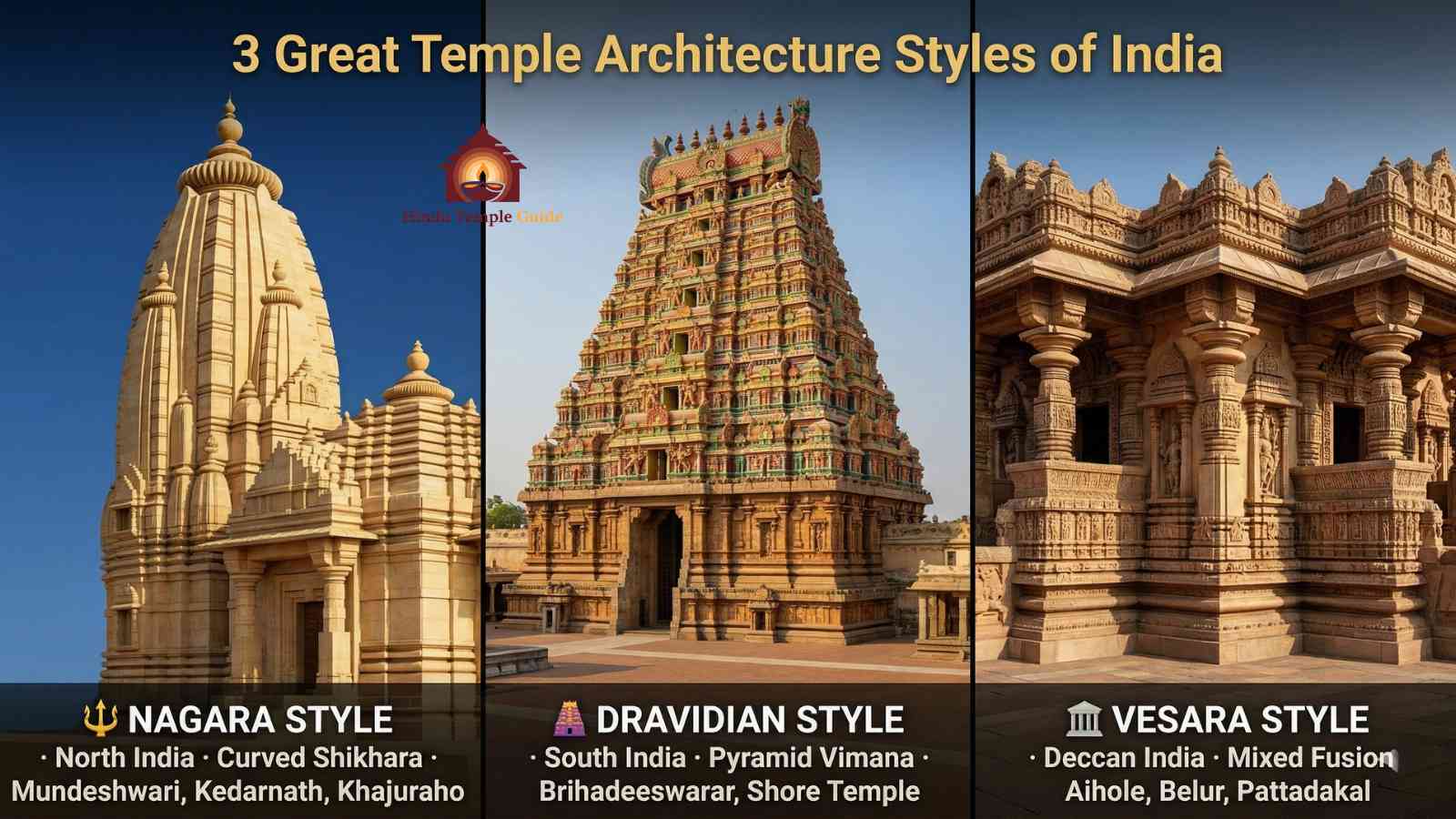
The three classical Vastu Shastra temple styles-Nagara (North), Dravidian (South), and Vesara (Deccan)-as evolved between the 5th and 13th centuries CE.
Ancient Sanskrit architectural treatises (Shilpa Shastras and Mayamata) classify India's historic stone temples into three regional families:
1. Nagara Style (Himalayas to Vindhyas)
North, West & East Indian Temple Architecture (Including Kalinga & Maru-Gurjara Sub-Styles)
Built on a raised stone terrace (Jagati) without boundary walls, a Nagara temple is defined by its inward-curving beehive spire (Rekha-Prasada / Latina Shikhara) rising directly over the square sanctum, crowned by a ribbed stone disc (Amalaka) and sacred pot finial (Kalasha).
Key Examples in This Guide: Dashavatara (Deogarh), Mundeshwari Devi (Kaimur), Kedarnath & Tungnath (Uttarakhand), Kandariya Mahadeva (Khajuraho), and the Kalinga-Nagara shrines of Lingaraja, Mukteshwar, and Konark.
2. Dravida (Dravidian) Style (Krishna River to Kanyakumari)
South Indian Temple Architecture (Pallava, Chola, Pandya & Vijayanagara)
Enclosed within concentric high compound walls (Prakarams) pierced by monumental gateway towers (Gopurams), a Dravidian temple features a stepped, rectilinear pyramid tower (Vimana) over the sanctum topped by an octagonal dome-shaped crown called a Shikhara/Stupi.
Key Examples in This Guide: Shore Temple (Mahabalipuram), Brihadeeswarar Temple (Thanjavur), Meenakshi Amman Temple (Madurai), Sri Ranganathaswamy (Srirangam), and Kailasa Temple (Ellora).
3. Vesara (Karnata-Dravida) Style (Vindhyas to Krishna River)
Developed in the Deccan plateau of Karnataka and Maharashtra-especially in the "cradle of Indian temple architecture" at Aihole, Badami, and Pattadakal, and later perfected in soapstone by the Hoysalas-Vesara blends Nagara verticality with Dravidian horizontal tiers, star-shaped (stellate) platforms, and lathe-turned pillars.
Key Examples in This Guide: Lad Khan & Durga Temples (Aihole), Pattadakal Complex, and Chennakesava Temple (Belur).
SECTION 4
Top 20 Oldest Temples in India: Individual Heritage Guides
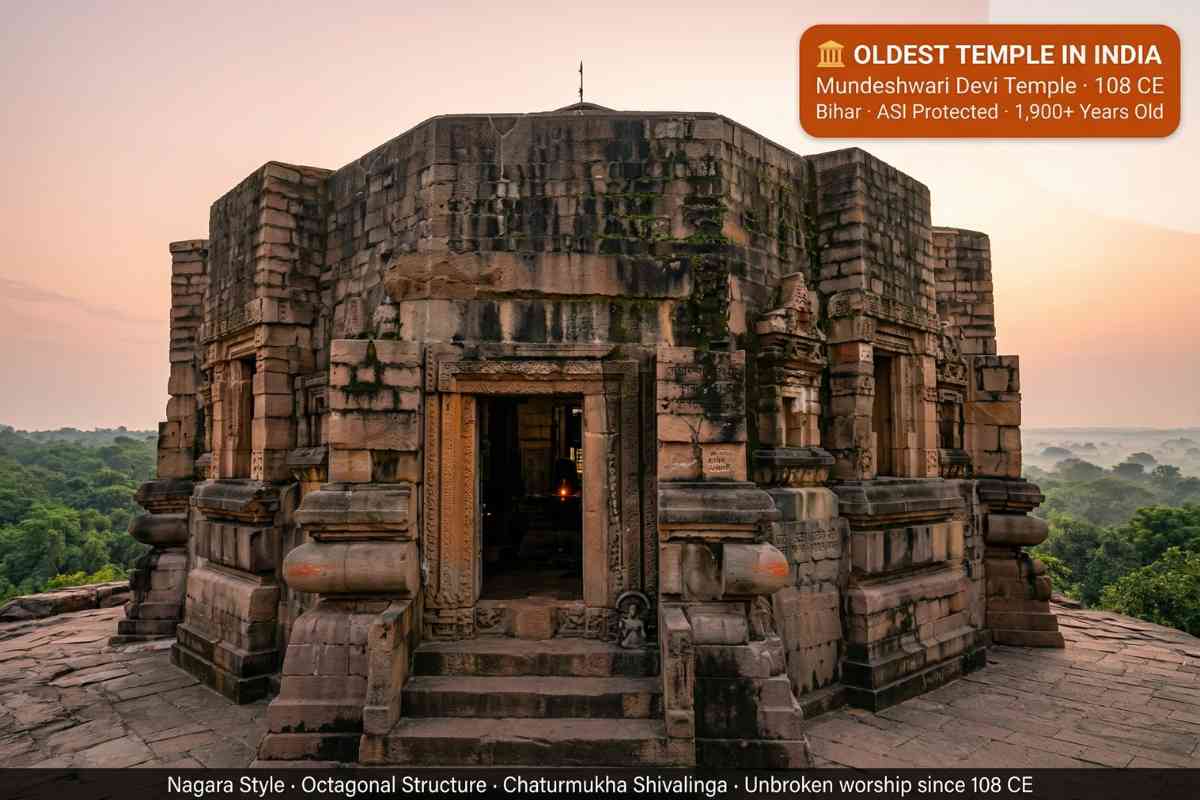
Perched atop the 608-foot Mundeshwari (indraneel) Hill at Ramgarh village in Bihar's Kaimur district, Maa Mundeshwari Devi Temple is widely recognised as the oldest continuously functioning Hindu temple in India. While Bihar State Religious Trust plaques and Kushan/Saka-era seals link the foundation of worship here to 108 CE, a famous Brahmi stone inscription discovered at the site in 1891 by the Archaeological Survey of India (now in the Indian Museum, Kolkata) records royal endowments in Year 30 of the Harsha Era (635 CE) under Maharaja Udayasena.
Built on a rare octagonal (Ashtakona) floor plan in early Nagara style, the sanctum unites Shaiva and Shakta traditions: a four-faced (Chaturmukha) Panchamukhi Shiva Linga occupies the centre while the ten-armed Mahishasuramardini form of Goddess Mundeshwari rides a buffalo in the eastern niche. The shrine is also famous for its Satvikbloodless ritual offering (Rakth-Viheen Bali), where a goat is sprinkled with sacred water and consecrated rice grains (Akshata) before the Goddess and released completely unharmed.
Detail
Information
Dated Period
108 CE (Saka Era tradition) / 635 CE (Udayasena Brahmi Inscription)
Architecture & Deities
Octagonal Nagara stone plan | Maa Mundeshwari & Chaturmukha Shivalinga
Timings & How to Reach
6:00 AM - 7:00 PM | Bhabua Road Station (25 km) · Varanasi Airport (102 km)
Carved into a sandstone ridge near Vidisha (ancient Besnagar, where the 113 BCE Heliodorus Garuda Pillar also stands), the 20 rock-cut shrines of Udayagiri Caves are the oldest precisely dated Hindu cave temples in India. Cave 6 bears a dated Sanskrit inscription from Gupta Year 82 (401 CE) during the reign of Emperor Chandragupta II Vikramaditya, while Cave 5 features the colossal 13-foot rock-cut relief of Lord Vishnu as Varaha lifting Goddess Bhudevi (Earth) from the cosmic ocean.
Detail
Information
Dated Period & Dynasty
401 CE (Inscribed Gupta Year 82) - Imperial Gupta Dynasty
Nearest Hubs
Vidisha Railway Station (6 km) · Sanchi Stupa (10 km) · Bhopal Airport (60 km)
#3 - c. 500 CE
3. Dashavatara Temple, Deogarh, Uttar Pradesh
Built around 500 CE overlooking the Betwa River valley in Lalitpur district, Dashavatara Vishnu Temple at Deogarh is the earliest surviving free-standing Panchayatana stone temple in North India to feature a rudimentary Nagara Shikhara tower. Its three outer rathika panels-depicting Sheshashayi Vishnu (Vishnu reclining on Ananta Shesha), Gajendra Moksha, and the penance of sages Nara and Narayana-are universally regarded as the high point of classical Gupta stone sculpture.
Detail
Information
Significance
Earliest surviving Nagara Shikhara & Panchayatana layout in North India
Nearest Hubs
Lalitpur Junction (33 km) · Jhansi Junction (125 km)
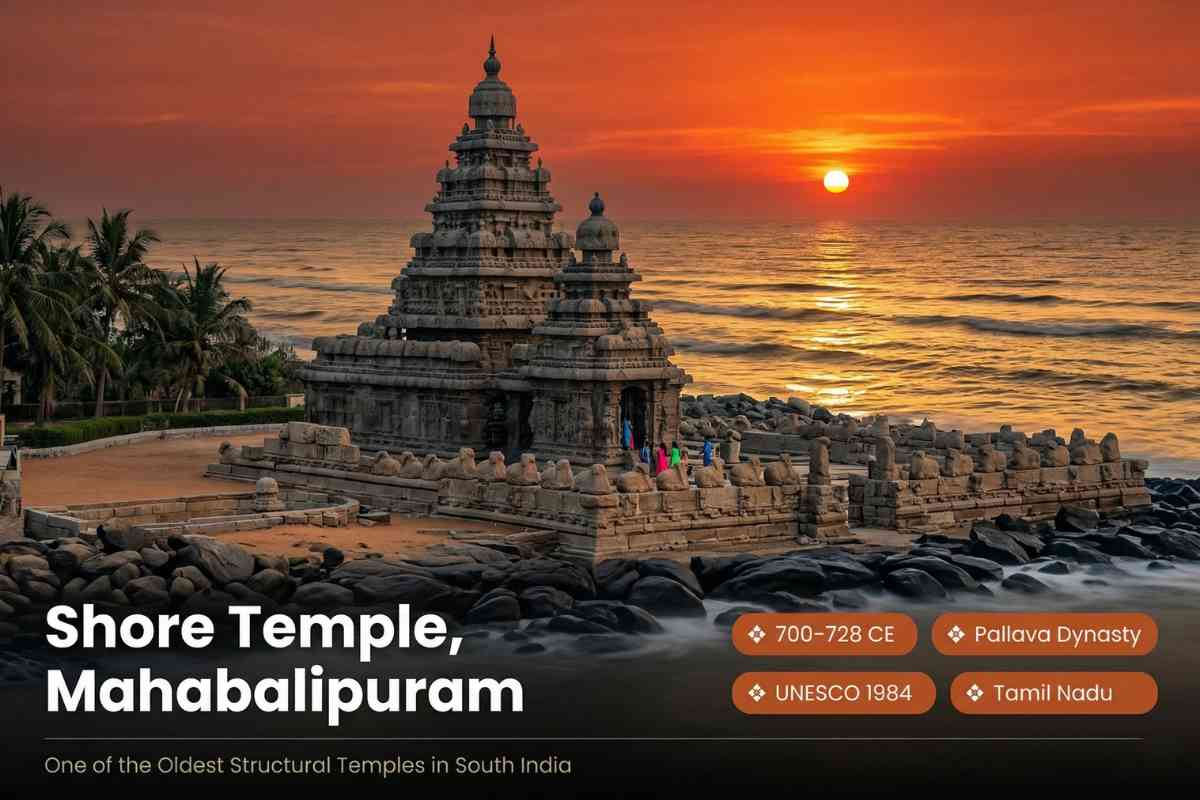
While the Badami Chalukyas were experimenting with early stone architecture in Karnataka at #4 Lad Khan Temple (6th c. CE) and the apsidal #5 Durga Temple at Aihole (late 7th-8th c. CE), Pallava Emperor Narasimhavarman II (Rajasimha) erected the iconic #6 Shore Temple at Mamallapuram (Mahabalipuram) between 700 and 728 CE. Built from dressed granite blocks right on the surf of the Bay of Bengal, it houses three shrines within one complex: two stepped Dravidian Vimanas dedicated to Lord Shiva (Kshatriyasimhesvara facing east toward the rising sun and Rajasimhesvara facing west) sandwiching an older rock-cut reclining Vishnu shrine (Narapathi Simha Pallava Vishnu Griha). It was inscribed as a UNESCO World Heritage Site in 1984.
Detail
Information
Built By & Era
Pallava King Narasimhavarman II Rajasimha (700-728 CE)
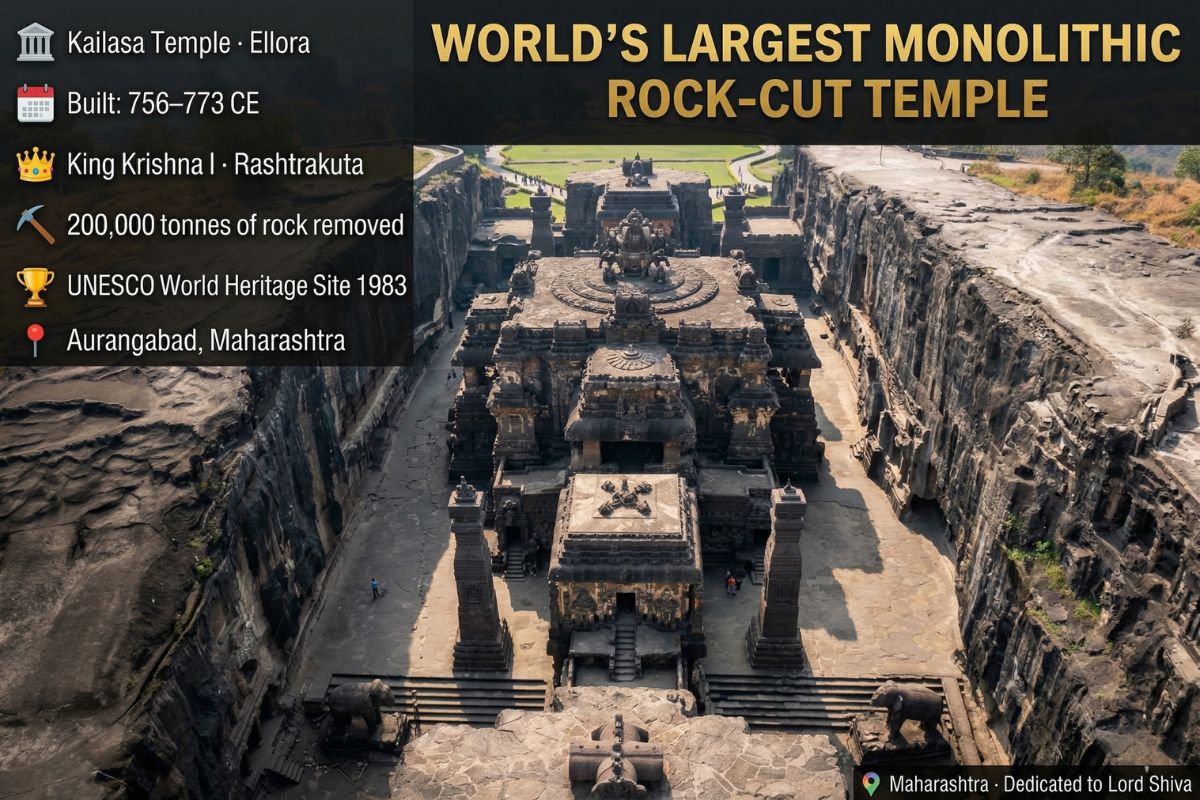
Inspired by the structural #7 Virupaksha Temple at Pattadakal (740 CE), Rashtrakuta Emperor Krishna I (r. 756-773 CE) commissioned the Kailasa Temple (Cave 16) at Ellora-the largest monolithic rock-cut structure on Earth. Instead of stacking cut stones upward, Rashtrakuta stonecutters trenched three deep U-shaped chasms into the top of a solid basalt cliff and chiselled top-down, removing an estimated 200,000 tonnes of volcanic rock to leave behind a two-storeyed chariot-shaped temple twice the area of the Parthenon, complete with life-size elephants, a 100-foot free-standing victory pillar (Dhvajastambha), and epic Ramayana/Mahabharata friezes.
Detail
Information
Built By & UNESCO Year
Rashtrakuta King Krishna I (756-773 CE) | UNESCO World Heritage (1983)
Timings & Weekly Closure
Sunrise to 6:00 PM (Closed every Tuesday) | Indians: ₹40 · Foreigners: ₹600
Combine With
Grishneshwar Jyotirlinga (800 m from Cave 16) · Chhatrapati Sambhajinagar (30 km)
#9 & #10 - 8th Century CE
9 & 10. Kedarnath (3,583 m) & Tungnath (3,680 m), Uttarakhand
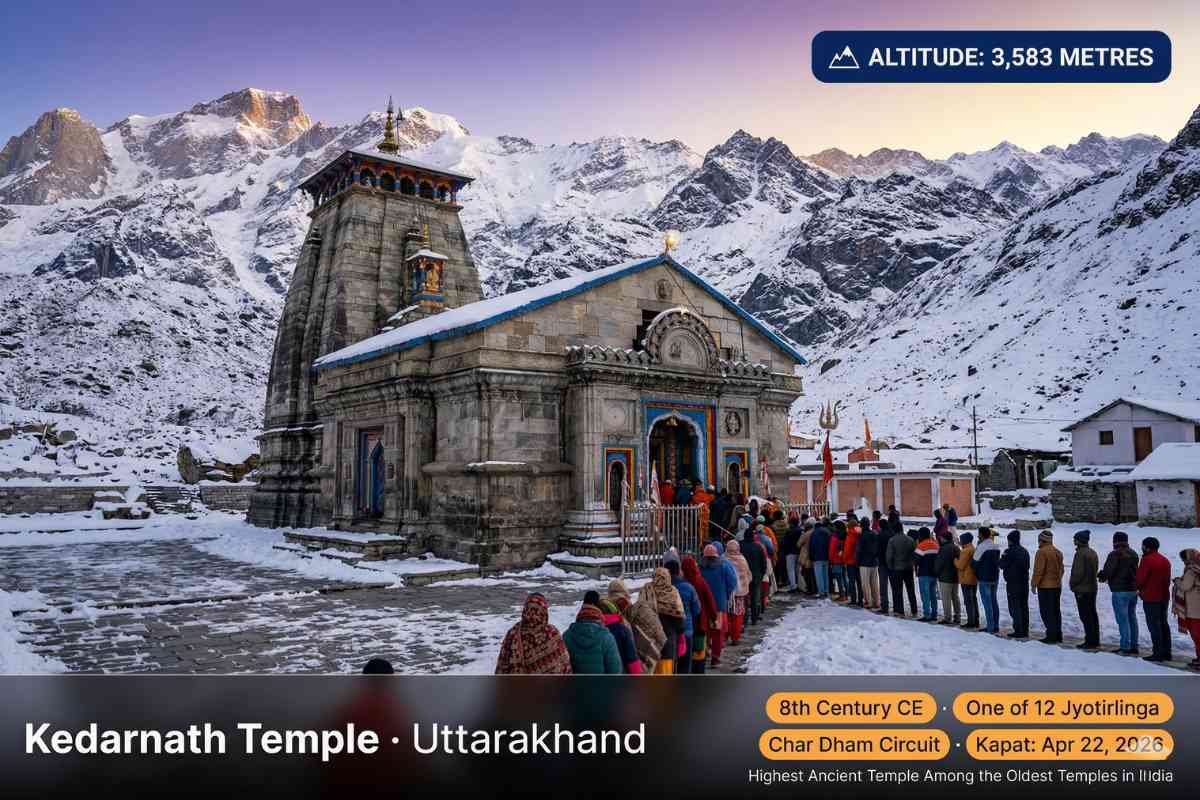
Built in the 8th century CE during the reign of the early Katyuri rulers of Garhwal and revived by Adi Shankaracharya, #9 Kedarnath Temple (3,583 m) and nearby #10 Tungnath Temple (3,680 m - the highest Shiva temple in the world) are masterpieces of high-altitude Katyuri-Nagara ashlar stone masonry. Constructed from interlocking grey granite slabs held together with iron clamps, Kedarnath famously survived both a 400-year Little Ice Age glacier burial and the catastrophic June 2013 flash flood.
12. Arulmigu Meenakshi Sundareswarar Temple, Madurai, Tamil Nadu
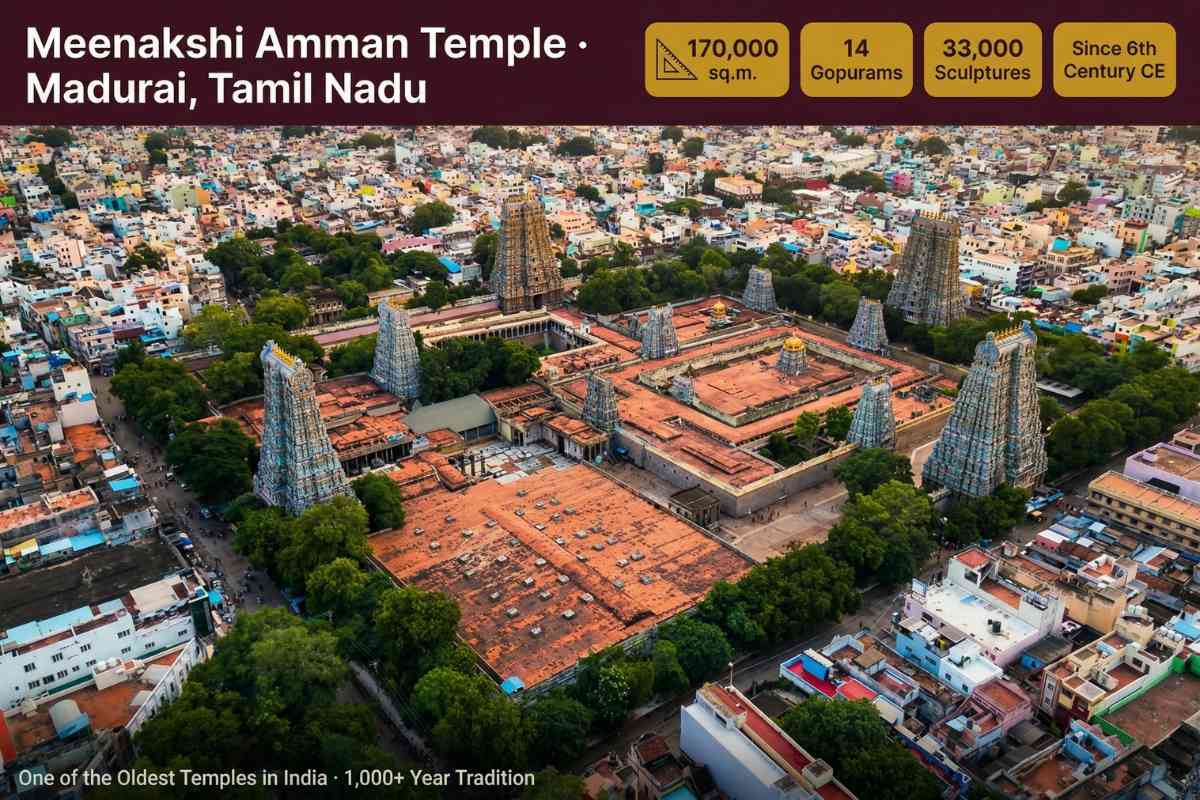
Celebrated in 7th-century CE Tamil Tevaram hymns by Saint Tirugnanasambandar and rooted in Pandya-era foundations along the Vaigai River, Meenakshi Amman Temple in Madurai was expanded to its present 14-acre walled city layout by the Madurai Nayak rulers (notably Tirumala Nayaka) in the 16th-17th centuries. Its 14 towering Gopurams (the tallest Southern Tower rising 51.9 metres), the 985-pillar Aayiram Kaal Mandapam, the musical granite pillars, and the Golden Lotus Tank (Porthamarai Kulam) make it the living heart of Tamil temple culture.
Detail
Information
Temple Timings
5:00 AM - 12:30 PM & 4:00 PM - 9:30 PM daily (Palliyarai Puja at 9:00 PM)
Nearest Hubs
Madurai Junction (1.5 km) · Madurai Airport (IXM - 12 km)
#15 - 1010 CE (UNESCO)
15. Brihadeeswarar Temple (Peruvudaiyar Kovil), Thanjavur, Tamil Nadu
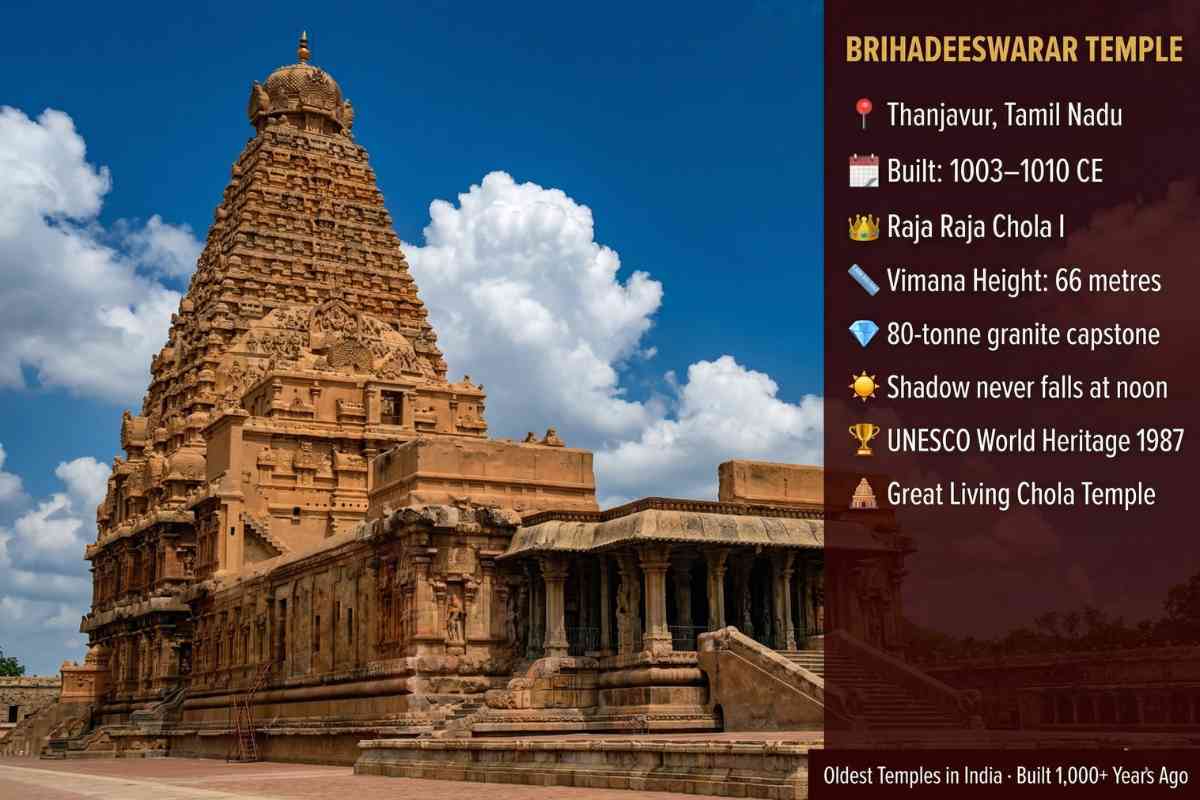
Completed in 1010 CE by Chola Emperor Raja Raja Chola I and his chief architect Kunjara Mallan Raja Raja Perunthachan, Brihadeeswarar Temple in Thanjavur is the supreme monument of Imperial Chola architecture. Built entirely out of interlocking granite blocks (transported over 50 km where no granite quarries existed locally) without a single drop of mortar, its 13-tiered Srivimana rises 66 metres (216 feet) into the sky and is crowned by an octagonal 80-tonne Kumbam cupola raised up an earthen ramp over 6 km long.
Detail
Information
Built By & UNESCO Status
Raja Raja Chola I (1003-1010 CE) | Great Living Chola Temples (UNESCO 1987)
Temple Timings & Access
6:00 AM - 12:30 PM & 4:00 PM - 8:30 PM | Thanjavur Jn (2 km) · Trichy Airport (58 km)
Fact Check on the "Shadowless Vimana" Legend: While popular folklore claims the 66-metre Vimana never casts a shadow on the ground at noon, in astronomical reality the tower does cast a shadow-except around the two annual zero-shadow solar zenith days at Thanjavur's 10.78°N latitude (in mid-April and late August), when the midday sun stands directly overhead and the shadow falls within the stepped base of the tower itself.
#19 - c. 1250 CE (UNESCO)
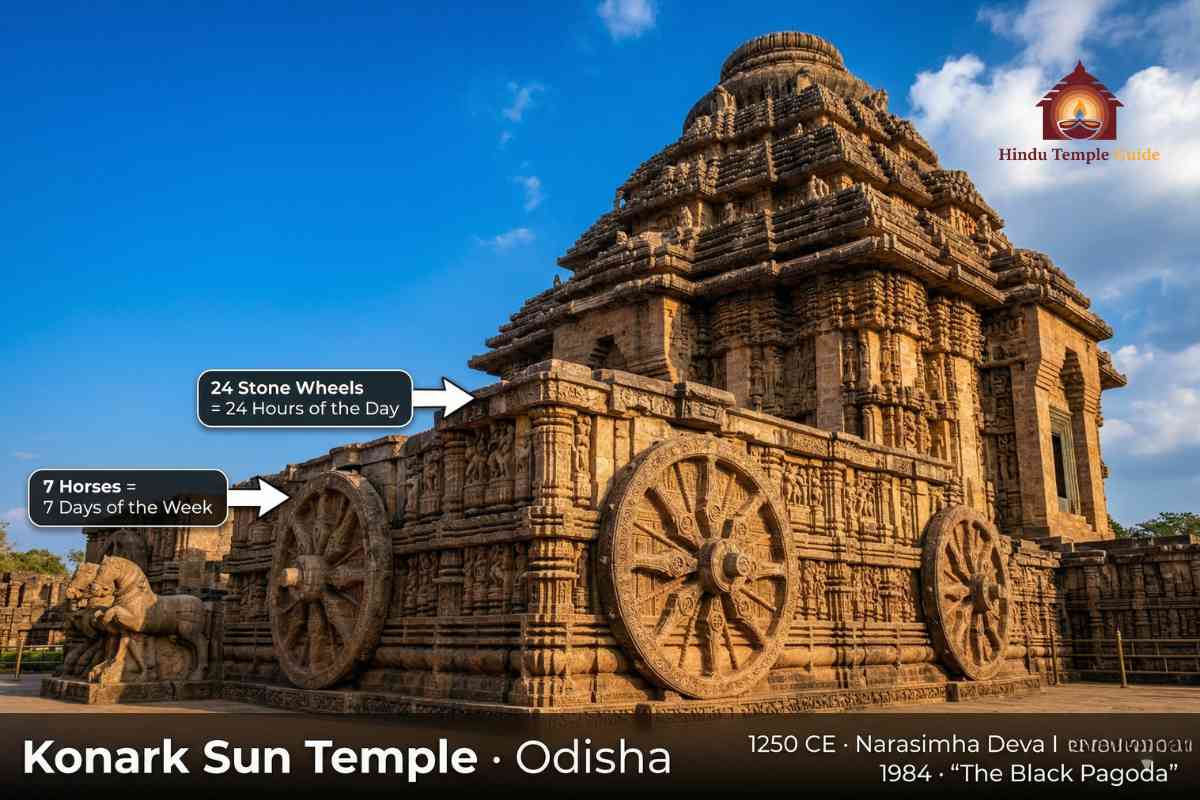
19. Konark Sun Temple, Odisha - The Stone Chariot of Surya
Built around 1250 CE by Eastern Ganga monarch Narasimhadeva I on the Odisha coast 35 km northeast of Puri, Konark Sun Temple is sculpted in Khondalite stone as the colossal 12-pair-wheeled celestial chariot of Surya (the Sun God) drawn by seven galloping horses. Each of the 24 carved stone wheels (9 feet 9 inches in diameter) functions as a precision sundial whose eight major and eight minor spokes allow trained guides to read the time of day to within three minutes.
Detail
Information
Built By & UNESCO Year
King Narasimhadeva I (c. 1250 CE) | UNESCO World Heritage Site (1984)
Timings & Nearest Hubs
6:00 AM - 8:00 PM daily | Puri Station (35 km) · Bhubaneswar Airport (64 km)
Complete Heritage Notes on the Remaining Shrines in the Top 20
#7 Virupaksha Temple, Pattadakal, Karnataka (c. 740 CE - UNESCO): Commissioned by Queen Trailokyamahadevi to commemorate Badami Chalukya King Vikramaditya II's victory over the Pallavas of Kanchi; this active Shiva temple served as the direct architectural blueprint for Kailasa Temple at Ellora.
#11 Shree Somnath Jyotirlinga, Prabhas Patan, Gujarat (649 CE Maitraka Era / Rebuilt 1951): The first of the 12 Jyotirlingas; while an earlier Maitraka stone temple stood here by 649 CE and Solanki King Bhima I rebuilt it in sandstone in 1026 CE, the current Mahu-Gurjara temple was reconstructed after independence in 1951.
#13 Sri Ranganathaswamy Temple, Srirangam, Tamil Nadu (6th-10th c. CE+): Spanning 156 acres with 7 concentric walled enclosures (Prakarams) and 21 Gopurams on an island between the Kaveri and Kollidam rivers in Tiruchirappalli, Srirangam is the largest functioning Hindu temple complex in the world and the foremost of the 108 Vaishnava Divya Desams.
#14 & #17 Mukteshwar (950 CE) & Lingaraja Temple (11th c. CE), Bhubaneswar, Odisha: Built by the Somavamshi kings in red sandstone, tiny Mukteshwar Temple is famed for its arched Torana gateway ("the gem of Odishan architecture"), while towering 180-foot Lingaraja Temple marks the zenith of the Kalinga Nagara style, worshipping Lord Shiva and Vishnu together as Harihara.
#16 Kandariya Mahadeva Temple, Khajuraho, Madhya Pradesh (c. 1025-1050 CE - UNESCO): Built by Chandela King Vidyadhara, its 31-metre spire is composed of 84 miniature replica spires (Urushringas) symbolising the snowy peaks of Mount Kailash, adorned with over 870 sandstone sculptures.
#18 Chennakesava Temple, Belur, Karnataka (1117 CE - UNESCO 2023): Commissioned by Hoysala King Vishnuvardhana, this star-shaped soapstone masterpiece took 103 years to complete and was inscribed as a UNESCO World Heritage Site in 2023 under the Sacred Ensembles of the Hoysalas.
#20 Jagatpita Brahma Mandir, Pushkar, Rajasthan (Ancient Tirtha / Rebuilt 14th c. CE): Standing beside sacred Pushkar Lake, this marble-and-stone shrine crowned by a red shikhara and Hamsa (swan) motif is the most prominent temple in the world dedicated to Lord Brahma, hosting the famous Kartik Purnima Pushkar Fair.
SECTION 5
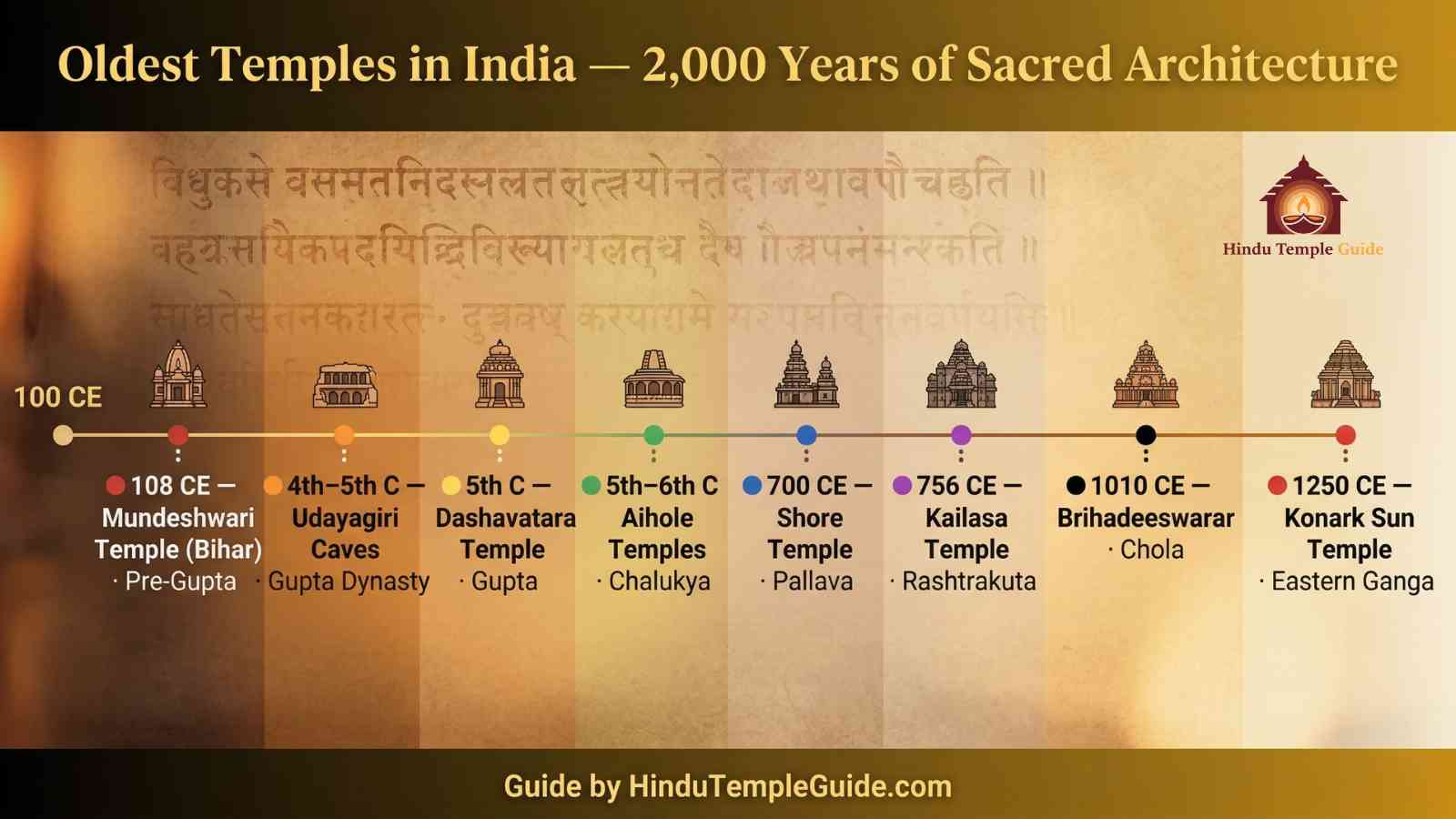
Timeline of India's Great Temple-Building Dynasties
How royal patronage across ten major Indian dynasties shaped stone temple architecture between the 2nd and 13th centuries CE.
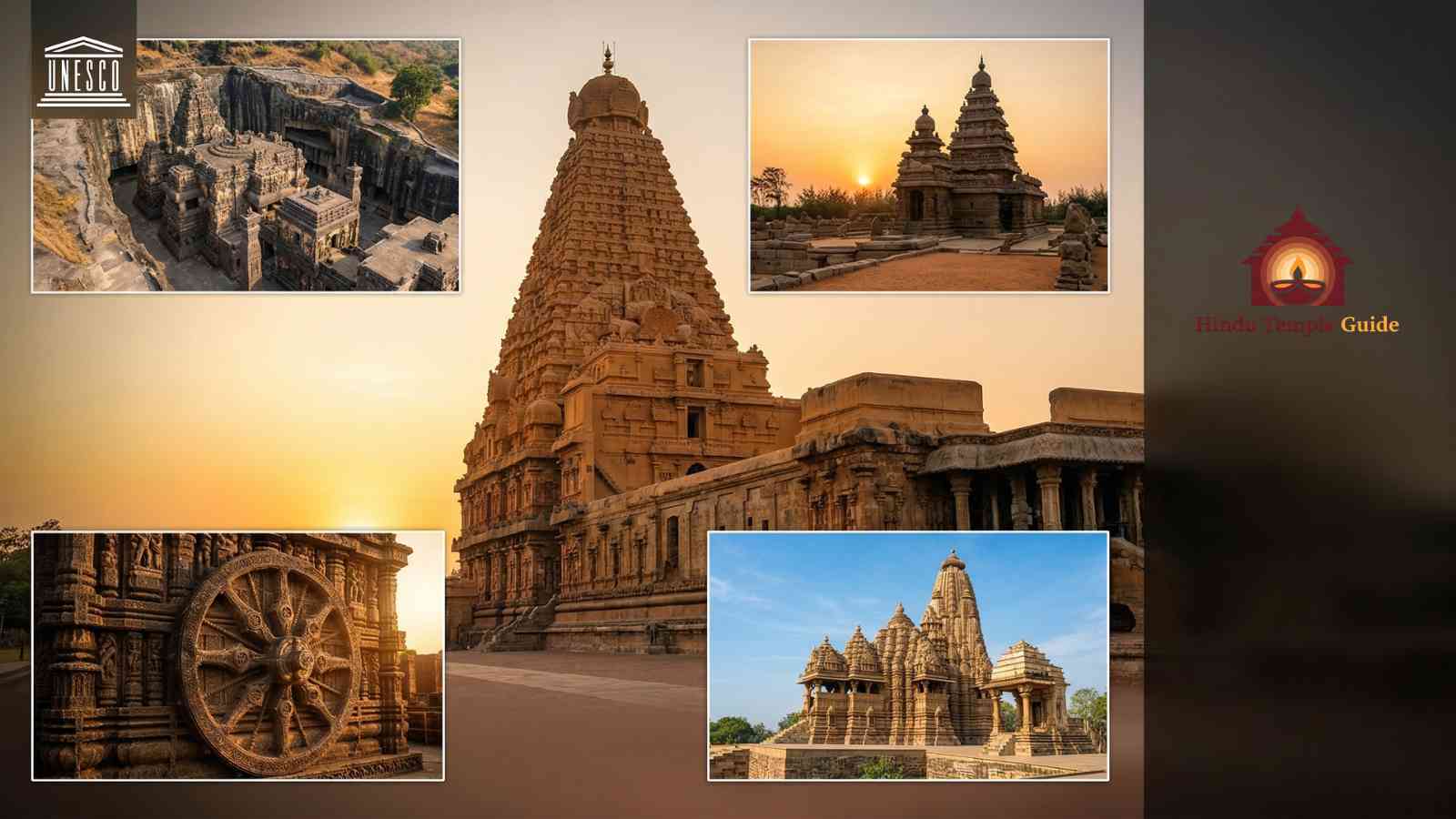
8 UNESCO World Heritage Ancient Temple Ensembles in India
Eight ancient Hindu temple ensembles in India are recognised on the UNESCO World Heritage List-from Ellora (1983) to the Hoysala Sacred Ensembles (2023).
UNESCO World Heritage Site
State
Inscribed Year
1. Ellora Caves (Kailasa Temple Cave 16)
Maharashtra
1983
2. Group of Monuments at Mahabalipuram (Shore Temple)
Tamil Nadu
1984
3. Sun Temple, Konârak
Odisha
1984
4. Khajuraho Group of Monuments (Kandariya Mahadeva)
Madhya Pradesh
1986
5. Group of Monuments at Hampi (Virupaksha & Vittala)
Karnataka
1986
6. Great Living Chola Temples (Thanjavur, Gangaikonda Cholapuram, Darasuram)
Tamil Nadu
1987 (ext. 2004)
7. Group of Monuments at Pattadakal (Virupaksha & Mallikarjuna)
Karnataka
1987
8. Sacred Ensembles of the Hoysalas (Belur, Halebidu & Somanathapura)
Book ASI Tickets via QR Code: At ASI-ticketed monuments (Shore Temple, Ellora, Pattadakal, Aihole, Konark, Khajuraho, Belur), scan the official ASI QR code at the gate for ₹35-₹40 cashless entry and skip the paper ticket window.
Distinguish Living Shrines from Protected Monuments: Active temples (Mundeshwari, Kedarnath, Somnath, Brihadeeswarar, Madurai, Srirangam, Lingaraja, Belur) enforce strict sanctum dress codes and prohibit inner-sanctum photography.
Hire ASI-Licensed Guides at Aihole, Ellora & Konark: Official badge-carrying ASI guides point out epigraphic inscriptions, astronomical alignments, and Puranic panels that are easy to walk past on your own.
SECTION 8
Frequently Asked Questions (FAQs)
Q1. Which is the oldest functioning Hindu temple in India?
Maa Mundeshwari Devi Temple in Bihar's Kaimur district is widely recognised as the oldest continuously functioning Hindu temple in India. Bihar Tourism and Saka-era tradition date the beginning of worship here to 108 CE, while an ASI Brahmi inscription from the site confirms active royal endowments by 635 CE (Harsha Era Year 30).
Q2. Which is the oldest surviving free-standing stone temple with a Shikhara?
The Gupta-era Dashavatara Vishnu Temple at Deogarh (c. 500 CE) in Uttar Pradesh is the earliest surviving free-standing stone temple in North India built with a Nagara Shikhara tower, while Bhitargaon Temple (5th c. CE, Kanpur) is the oldest surviving terracotta brick temple with a tall spire.
Q3. What is the oldest structural stone temple in South India?
In the Deccan, the Badami Chalukya shrines at Aihole (Lad Khan Temple, 6th century CE) are the earliest structural stone temples, while in Tamil Nadu, the Pallava-built Shore Temple at Mahabalipuram (700-728 CE) and Kailasanathar Temple at Kanchipuram (685-705 CE) are the oldest surviving structural stone shrines.
Q4. How was Kailasa Temple at Ellora carved from a single rock?
Commissioned by Rashtrakuta King Krishna I (756-773 CE), Kailasa Temple (Cave 16) was excavated vertically from the top of the basalt cliff downward to the courtyard floor. Craftsmen removed roughly 200,000 tonnes of rock using chisels and hammers without scaffolding, leaving behind a two-storeyed temple carved from a single living rock.
Q5. Which is the largest functioning ancient Hindu temple in India?
Sri Ranganathaswamy Temple at Srirangam (Tiruchirappalli, Tamil Nadu) is the largest functioning Hindu temple complex in India and the world, covering 156 acres (63 hectares) with seven concentric walled enclosures and 21 towering gopurams.
Experiencing 1,900 Years of Living Architecture & Devotion
Have a question about planning the Deccan Chalukya circuit, Ellora, or the Tamil Nadu temple loop? Reach out to me here-I read and reply to every fellow traveller personally. - Devendra Khambalkar, Nagpur
Read More Temple & Pilgrimage Guides on HinduTempleGuide.com
Written by Devendra Khambalkar, Nagpur, Maharashtra | Last updated: October 2026. Historical dates and architectural classifications in this guide are cross-checked against Archaeological Survey of India (ASI) epigraphic records and UNESCO World Heritage dossiers. Always verify current temple and monument visiting hours before travelling.
DK
Written by Devendra Khambalkar
Based in Nagpur, Maharashtra. Personally visited 50+ sacred shrines across India including Tirupati, Guruvayur, Vaishno Devi, Somnath, Mahakaleshwar Ujjain, and completed the Char Dham Yatra.