Oldest Temples in India
Complete Heritage Guide
From 108 CE to 1250 CE living testimonies to the unbroken spiritual civilisation of Bharat
Top 20 Oldest Temples
7 UNESCO Heritage Sites
1,900+ Years of Worship
ASI Verified Dates
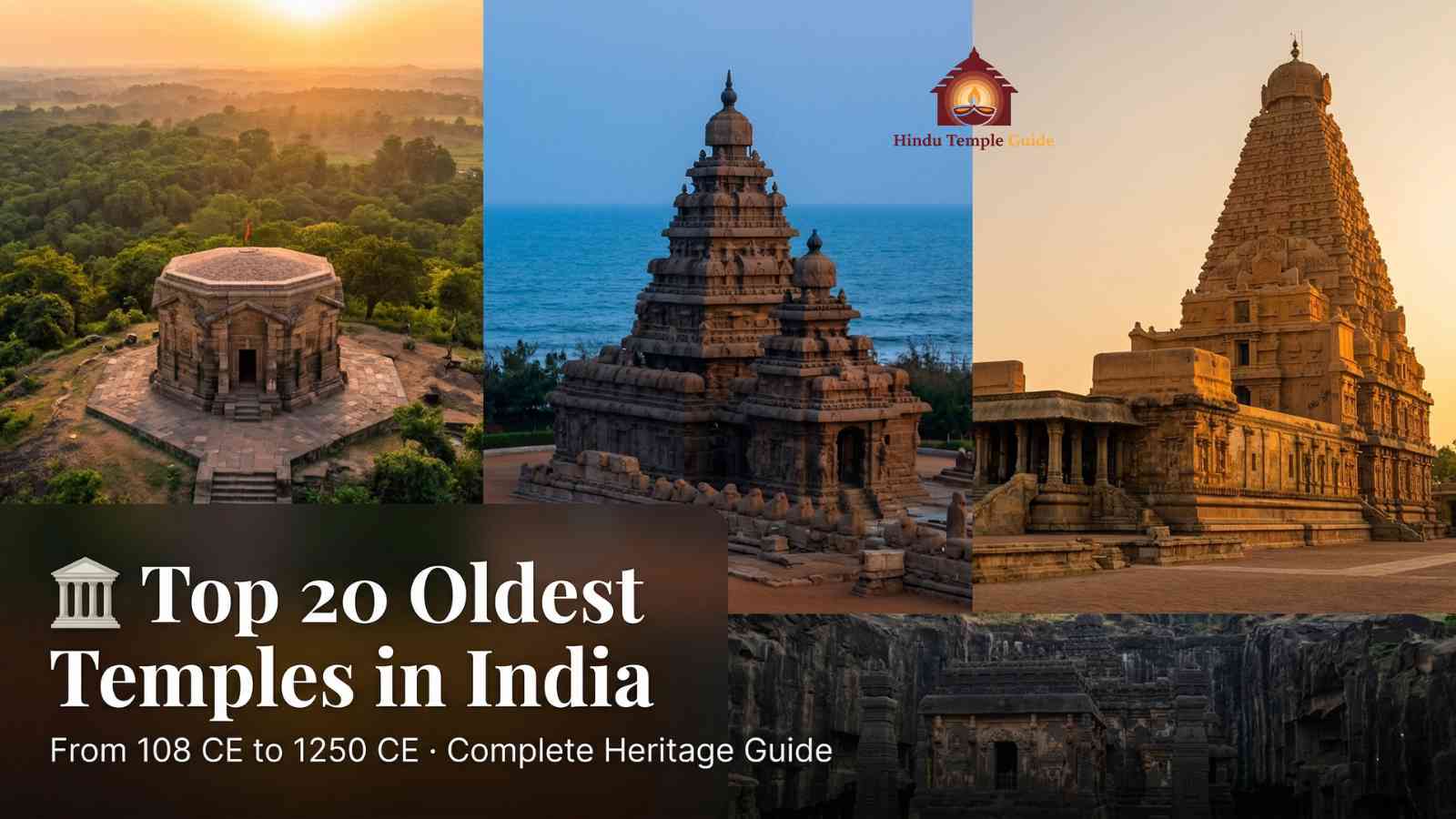
Oldest Temples in India – these are not merely ancient structures of stone and mortar. They are living, breathing testimonies to the unbroken spiritual civilisation of Bharat, a land that has been worshipping the divine for thousands of years without pause.
India is the land of temples. With over two million temples across the country, it is the most temple-rich nation in the world. Among these millions, the oldest temples stand apart not just for their architectural grandeur, but for their extraordinary age, history, and unbroken legacy of worship.
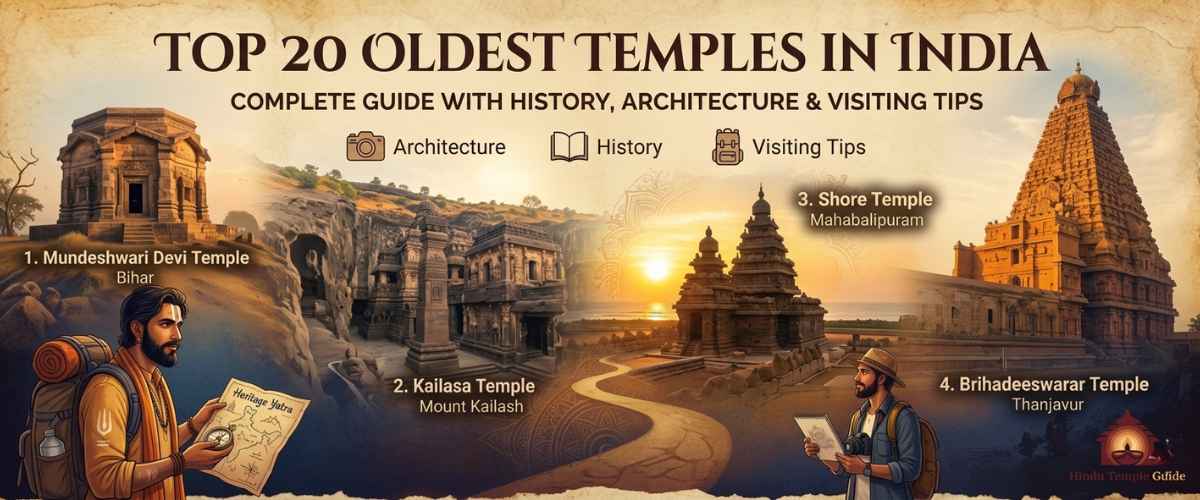
This complete guide covers: verified historical dates, dynasties and rulers, architectural styles, spiritual significance, UNESCO heritage status, darshan timings, how to reach, and practical visiting tips.
SECTION 1
Why the Oldest Temples in India Matter – Heritage & Spiritual Significance
The oldest temples in India are not frozen relics of the past they are living pilgrimage centres that still receive millions of devotees every year. They matter profoundly for three reasons:
Spiritual Continuity
Many have seen unbroken daily worship for over 1,000–1,900 years. The rituals performed today are the same as those of our ancestors an unbroken chain across millennia.
Architectural Genius
Ancient builders calculated sun angles, created shadow-free domes, carved entire mountains into temples, and built structures that have survived 1,500+ years without modern tools.
Cultural Heritage
Each ancient temple is a treasure chest of history walls carry inscriptions recording battles, donations, royal lineages, and detailed accounts of ancient Indian society.
Alarming Reality: Many of the oldest temples in India are under threat from pollution, encroachment, and insufficient maintenance funds. Visiting these temples and supporting their preservation is one of the most meaningful things a devotee and heritage lover can do.
SECTION 2
Quick Reference: Top 20 Oldest Temples in India at a Glance
| # |
Temple Name |
Location |
Estimated Age |
Dynasty |
Deity |
| 1 |
Mundeshwari Devi Temple |
Kaimur, Bihar |
108 CE (ASI) |
Pre-Gupta |
Shiva & Shakti |
| 2 |
Udayagiri Caves Temples |
Vidisha, MP |
4th–5th century CE |
Gupta |
Vishnu, Shiva |
| 3 |
Dashavatara Temple |
Deogarh, UP |
5th century CE |
Gupta |
Lord Vishnu |
| 4 |
Lad Khan Temple, Aihole |
Aihole, Karnataka |
5th–6th century CE |
Chalukya |
Shiva |
| 5 |
Durga Temple, Aihole |
Aihole, Karnataka |
7th–8th century CE |
Chalukya |
Shiva/Vishnu |
| 6 |
Shore Temple, Mahabalipuram |
Tamil Nadu |
700–728 CE |
Pallava |
Shiva & Vishnu |
| 7 |
Kailasa Temple, Ellora |
Maharashtra |
756–773 CE |
Rashtrakuta |
Lord Shiva |
| 8 |
Tungnath Temple |
Rudraprayag, UK |
8th century CE |
Pandava/Medieval |
Lord Shiva |
| 9 |
Virupaksha Temple, Pattadakal |
Karnataka |
740 CE |
Chalukya |
Lord Shiva |
| 10 |
Somnath Temple |
Veraval, Gujarat |
7th century CE+ |
Maitraka/Rebuilt |
Lord Shiva |
| 11 |
Kandariya Mahadeva Temple |
Khajuraho, MP |
1025–1050 CE |
Chandela |
Lord Shiva |
| 12 |
Brihadeeswarar Temple |
Thanjavur, TN |
1010 CE |
Chola |
Lord Shiva |
| 13 |
Lingaraja Temple |
Bhubaneswar, Odisha |
11th century CE |
Somavamshi |
Shiva & Vishnu |
| 14 |
Chennakesava Temple, Belur |
Hassan, Karnataka |
1117 CE |
Hoysala |
Lord Vishnu |
| 15 |
Meenakshi Amman Temple |
Madurai, TN |
7th century CE+ |
Pandya |
Goddess Meenakshi |
| 16 |
Sri Ranganathaswamy |
Srirangam, TN |
10th century CE |
Chola |
Lord Vishnu |
| 17 |
Mukteshwar Temple |
Bhubaneswar, Odisha |
10th century CE |
Somavamshi |
Lord Shiva |
| 18 |
Kedarnath Temple |
Rudraprayag, UK |
8th century CE+ |
Pandava origin, rebuilt |
Lord Shiva |
| 19 |
Konark Sun Temple |
Puri, Odisha |
1250 CE |
Eastern Ganga |
Sun God (Surya) |
| 20 |
Jagatpita Brahma Temple |
Pushkar, Rajasthan |
14th century CE+ |
Medieval, rebuilt 1809 |
Lord Brahma |
Note on Dating: Dates reflect the most widely accepted archaeological and epigraphic evidence as recognised by the ASI and historical scholarship as of March 2026. Temple dating is an evolving field.
SECTION 3
The 3 Architectural Styles of India’s Oldest Temples
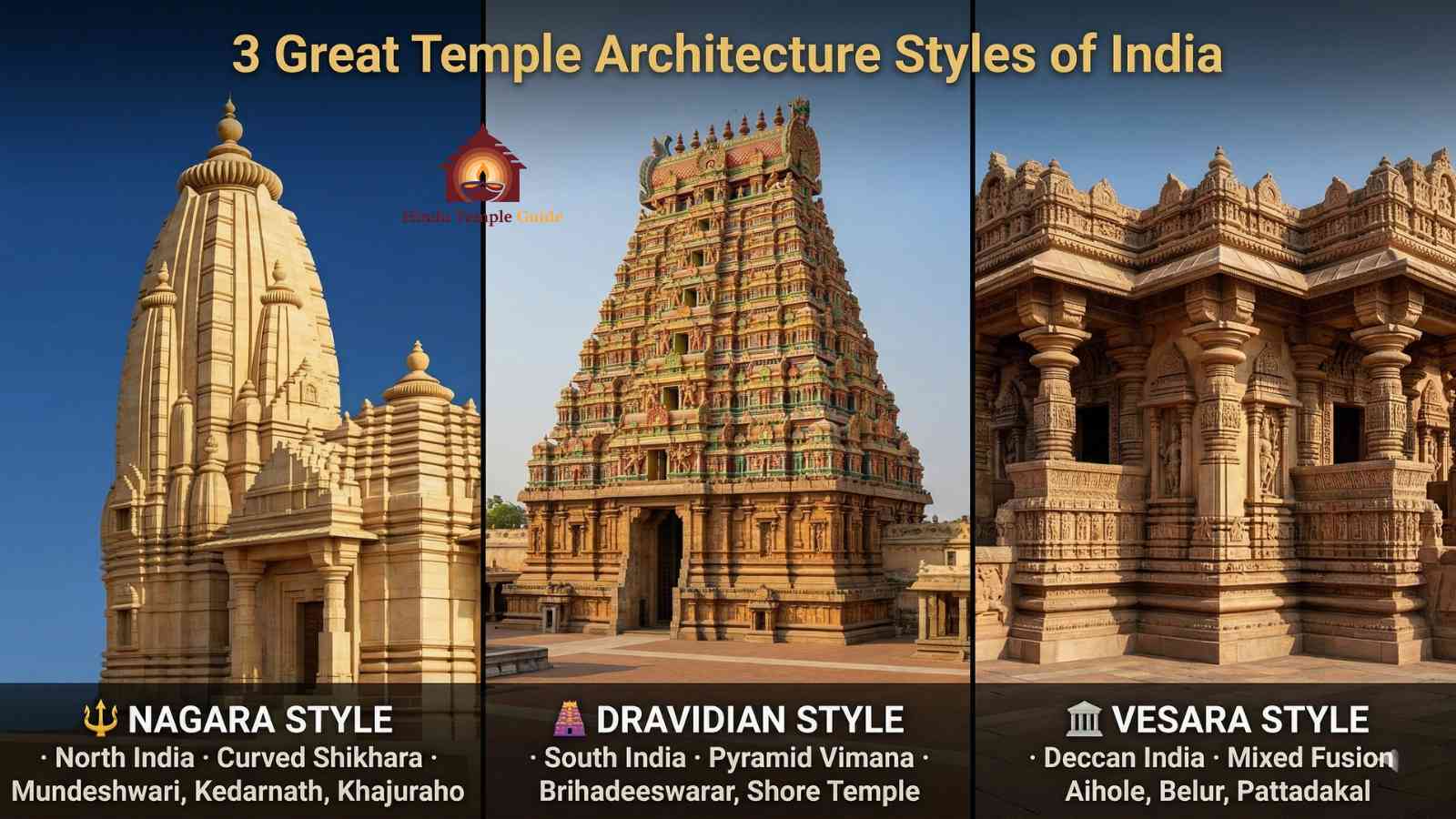
The three great temple architecture styles of ancient India Nagara (North), Dravidian (South), and Vesara (Deccan fusion) each represented across the oldest temples in India from the 5th to the 13th century CE.
To truly understand India’s oldest temples, it is essential to understand the three primary architectural styles that developed across the subcontinent:
Nagara Style
North Indian Temple Architecture
Predominant in North and Central India. Characterised by a curvilinear shikhara (spire) that rises in a curved shape above the sanctum. The entire temple plan is based on the square.
KEY FEATURES:
- Tall curvilinear shikhara
- Square plan (Panchayatana style)
- Amalaka (cushion-like stone disc) at top
- Kalasha (pot finial) above the amalaka
Examples: Mundeshwari Devi Temple, Dashavatara Temple, Kedarnath Temple, Kandariya Mahadeva Temple
Dravidian Style
South Indian Temple Architecture
Dominant in South India. Distinguished by its pyramid-shaped gopuram (gateway tower) and a flat-roofed vimana over the sanctum. The oldest examples are from the Pallava and Chola dynasties.
KEY FEATURES:
- Stepped pyramid-shaped vimana
- Massive gopuram entrance towers
- Large temple tanks
- Thousand-pillar mandapas | Multiple enclosures (prakaras)
Examples: Shore Temple (Mahabalipuram), Brihadeeswarar Temple (Thanjavur), Meenakshi Amman Temple (Madurai), Sri Ranganathaswamy Temple
Vesara Style
Mixed / Deccan Temple Architecture
A beautiful fusion of Nagara and Dravidian elements, developed primarily in the Deccan region. Known for its elaborate surface ornamentation and distinctive star-shaped plans.
KEY FEATURES:
- Star-shaped plan (stellate pattern)
- Elaborate surface ornamentation
- Lathe-turned pillars
- Combination of Nagara shikhara with Dravidian base elements
Examples: Lad Khan Temple & Durga Temple (Aihole), Virupaksha Temple (Pattadakal), Chennakesava Temple (Belur), Hoysala temples
SECTION 4
Top 20 Oldest Temples in India – Individual Guides
#1 — 108 CE
Mundeshwari Devi Temple, Bihar – The Oldest Temple in India
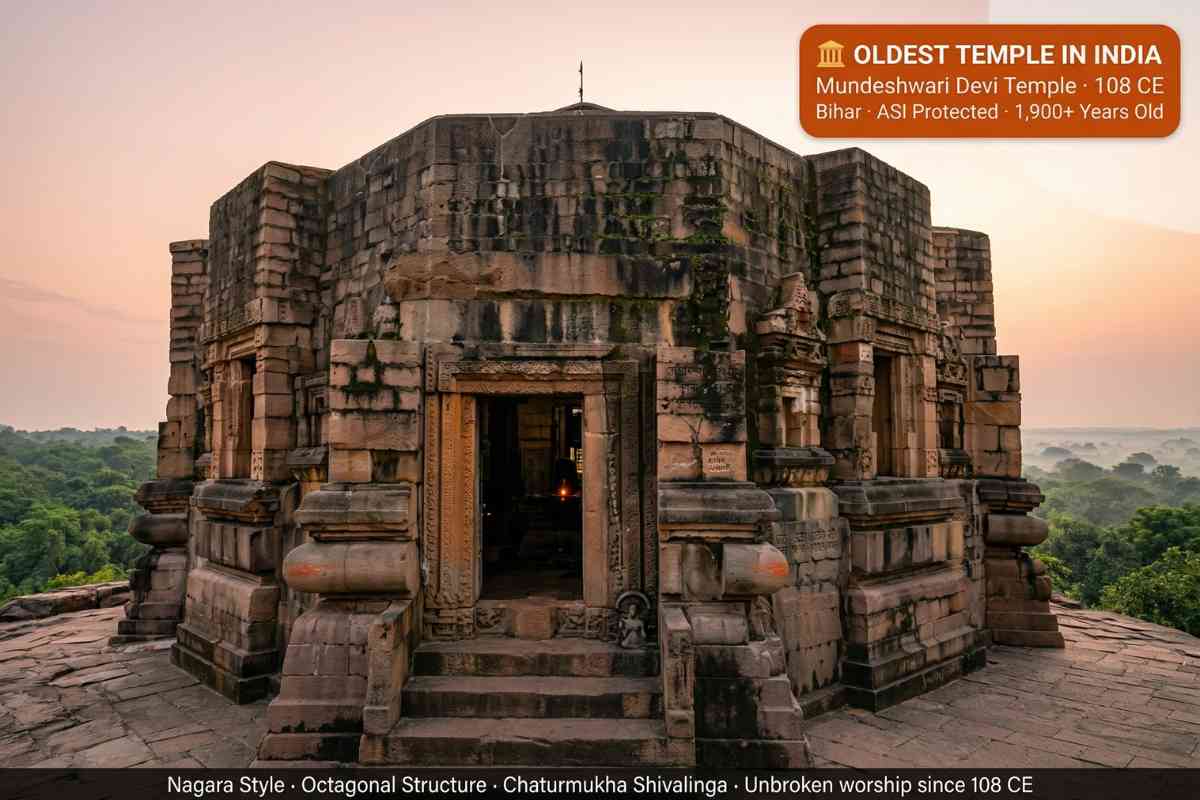
Mundeshwari Devi Temple in Kaimur district, Bihar, is widely recognised as the oldest functioning temple in India and arguably the oldest functional Hindu temple in the world. The Archaeological Survey of India (ASI) officially dated this temple to 108 CE making it nearly 1,900 years old.
The temple is dedicated to Goddess Mundeshwari (a form of Durga) and Lord Shiva, built in early Nagara style with a distinctive octagonal structure a rare architectural form. Inside, a Chaturmukha (four-faced) Shivalinga is installed. The temple practises an extraordinary tradition: bloodless animal sacrifice the goat is symbolically offered and then released alive.
| Detail |
Information |
| ASI Dated To |
108 CE (oldest temple in India per ASI) |
| Temple Style |
Nagara style unique octagonal structure |
| Main Deity |
Goddess Mundeshwari (Durga) + Chaturmukha Shivalinga |
| Temple Timings |
5:00 AM to 8:00 PM daily |
| Location |
Ramgarh village, Kaimur Hills, Bhabua, Bihar |
| Nearest Airport |
Varanasi Airport (100 km) | Patna Airport (210 km) |
| Unique Tradition |
Bloodless animal sacrifice goat offered symbolically and released alive |
Visitor Tip: The temple sits atop a 600-foot rocky hill in the Kaimur Hills. The climb via stone steps takes ~20–30 minutes and rewards visitors with breathtaking panoramic views of the Gangetic plains. Best visited at sunrise or late afternoon.
#2 – 4th–5th c. CE
Udayagiri Caves Temples, Madhya Pradesh
Udayagiri Caves in Vidisha, Madhya Pradesh, are among the oldest surviving rock-cut Hindu temples in India. Carved during the Gupta period (4th–5th century CE), these 20 cave shrines contain the magnificent Varaha avatar sculpture (Cave 5) considered one of the greatest achievements of Gupta-era sculpture. A rock inscription in Cave 6 mentions the visit of Chandragupta II (Vikramaditya) himself.
| Detail |
Information |
| Estimated Age |
4th–5th century CE (Gupta dynasty) |
| Style |
Rock-cut cave temples — earliest surviving form |
| Highlight |
Massive Varaha avatar sculpture | Chandragupta II inscription |
| Location |
Vidisha, Madhya Pradesh (13 km from Sanchi) |
| Combined Visit |
Combine with Sanchi Stupa (8 km) and Heliodorus Pillar nearby |
#3 – 5th c. CE
Dashavatara Temple, Deogarh, Uttar Pradesh
Dashavatara Temple in Deogarh is one of the earliest surviving free-standing structural temples in India dating to the 5th century CE (Gupta dynasty). Unlike earlier rock-cut temples, this was built from dressed stone blocks representing the transition to structural temple architecture. Dedicated to Lord Vishnu as Anantashayana, it is named for the ten avatars (Dashavatara) of Vishnu depicted in exquisite relief panels on its walls.
| Detail |
Information |
| Estimated Age |
5th century CE (Gupta dynasty) |
| Significance |
Among earliest free-standing structural temples in India |
| Main Deity |
Lord Vishnu – Anantashayana pose |
| Highlight |
Dashavatara relief panels | Gupta-era sculpture masterpiece |
| Nearest City |
Lalitpur (34 km) | Jhansi (113 km) |
#4 – 700–728 CE
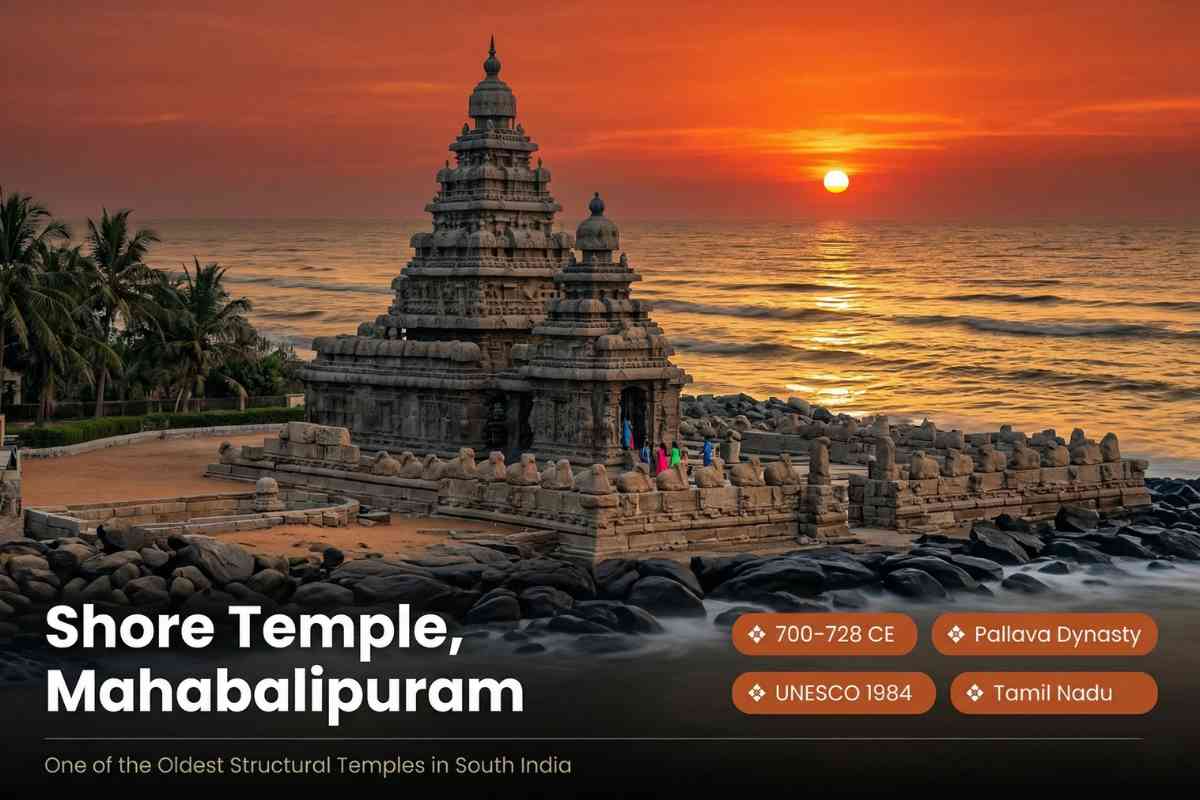
Shore Temple, Mahabalipuram, Tamil Nadu || UNESCO
Shore Temple at Mahabalipuram is perched on a rocky promontory overlooking the Bay of Bengal. Built between 700 and 728 CE by Pallava king Narasimhavarman II (Rajasimha), it marks a landmark in Indian architecture one of the first structural stone temples in South India. It has been a UNESCO World Heritage Site since 1984.
| Detail |
Information |
| Built By |
Pallava King Narasimhavarman II (Rajasimha) |
| Temple Timings |
6:00 AM – 6:00 PM daily |
| Entry Fee |
Indian: ₹40 | Foreign: ₹600 | Children under 15: Free |
| UNESCO Status |
World Heritage Site since 1984 |
| Nearest City |
Chennai (58 km) | Puducherry (95 km) |
Best Time to Visit: October to March. Watch the sunrise from the shore with the temple silhouetted against the golden sea one of the most photographically stunning moments at any of the oldest temples in India.
#5 – 756–773 CE
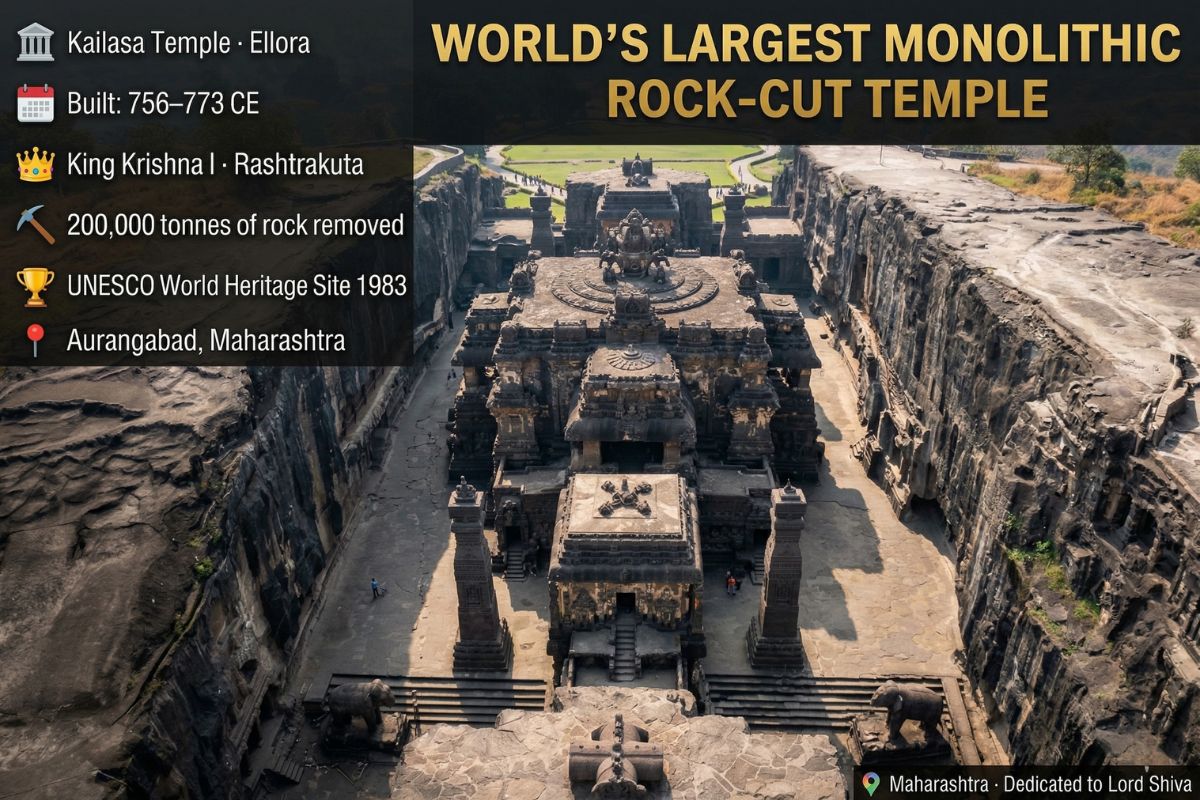
Kailasa Temple, Ellora, Maharashtra || UNESCO World’s Largest Monolithic Temple
Kailasa Temple at Ellora is one of the most extraordinary architectural achievements in all of human history. It is the world’s largest monolithic rock-cut temple carved entirely from a single basalt cliff face, working downward from the top. Built by Rashtrakuta king Krishna I (756–773 CE), over 200,000 tonnes of rock were excavated. Dedicated to Lord Shiva, it represents Mount Kailash.
| Detail |
Information |
| Built By |
Rashtrakuta King Krishna I (756–773 CE) |
| World Record |
World’s largest monolithic rock-cut temple |
| Rock Excavated |
Estimated 200,000+ tonnes from single basalt cliff |
| Temple Timings |
6:00 AM – 6:00 PM (Tuesday closed) |
| Entry Fee |
Indian: ₹40 | Foreign: ₹600 |
| UNESCO Status |
World Heritage Site (Ellora Caves) since 1983 |
| Nearest City |
Aurangabad (30 km) |
Must Know: Modern engineers estimate it would take at least 150 years to replicate Kailasa Temple using today’s technology yet it was completed in just 18 years by 8th-century craftsmen. One of the greatest engineering mysteries of the ancient world.
#6 – 1010 CE
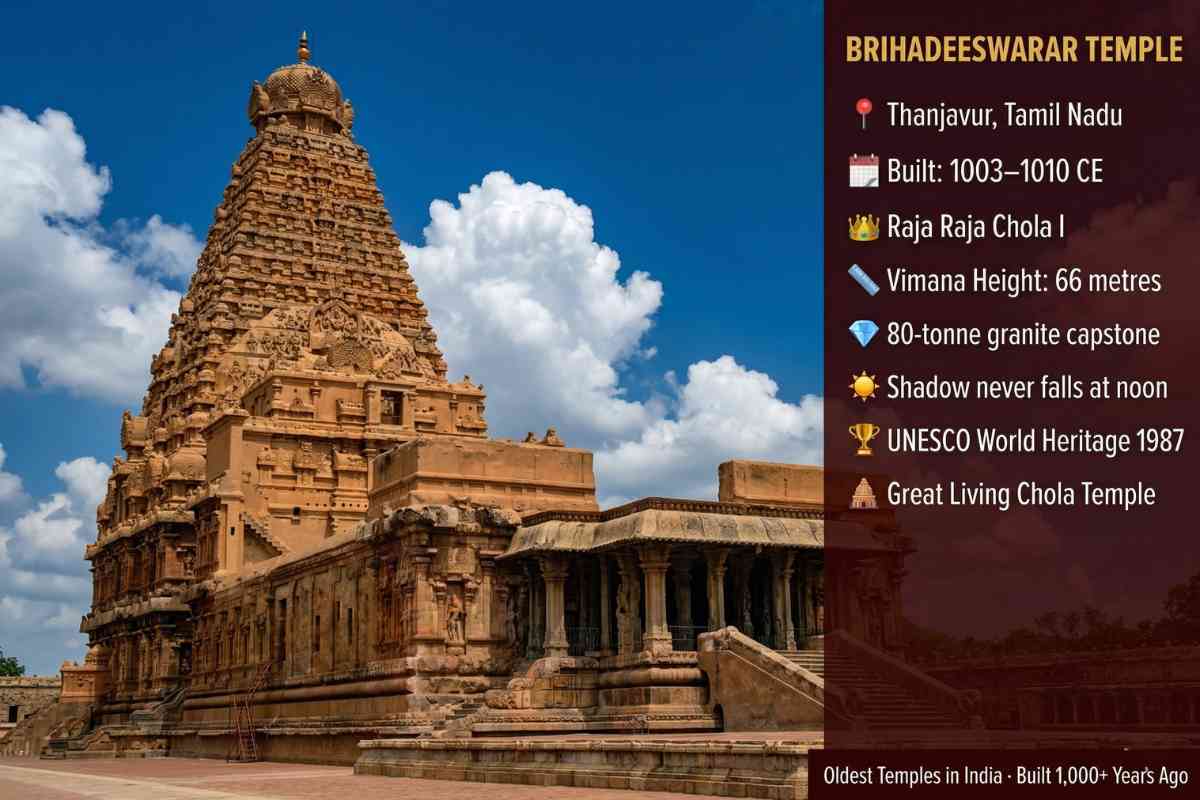
Brihadeeswarar Temple, Thanjavur, Tamil Nadu || UNESCO
Brihadeeswarar Temple in Thanjavur is the crown jewel of Dravidian temple architecture. Built by Chola king Raja Raja Chola I (1003–1010 CE), its 66-metre vimana tower was the tallest temple tower of its time. Topped with a single 80-tonne granite capstone an engineering feat that baffles modern experts. Remarkably, the shadow of the vimana never falls on the ground at noon a precise calculation by ancient Chola architects.
| Detail |
Information |
| Built By |
Chola King Raja Raja Chola I (1003–1010 CE) |
| Vimana Height |
66 metres – tallest of its era |
| Temple Timings |
6:00 AM – 12:30 PM & 4:00 PM – 8:30 PM |
| UNESCO Status |
World Heritage Site (Great Living Chola Temples) |
| Nearest Airport |
Trichy Airport (60 km) | Chennai Airport (350 km) |
Fun Fact: The Nandi (bull) statue guarding the temple is carved from a single stone and is one of the largest Nandis in India, weighing approximately 25 tonnes.
#7 – 8th c. CE
Kedarnath Temple, Uttarakhand Highest Ancient Temple in India
Kedarnath Temple in Rudraprayag, Uttarakhand, stands at 3,583 metres in the Garhwal Himalayas the highest ancient temple in India. Tradition attributes its construction to the Pandavas, while the current structure dates to the 8th century CE, reconstructed by Adi Shankaracharya. It is both one of the 12 Jyotirlinga and one of the Char Dham Yatra temples a dual sacred significance unmatched by any other ancient temple in India.
#8 – 1250 CE
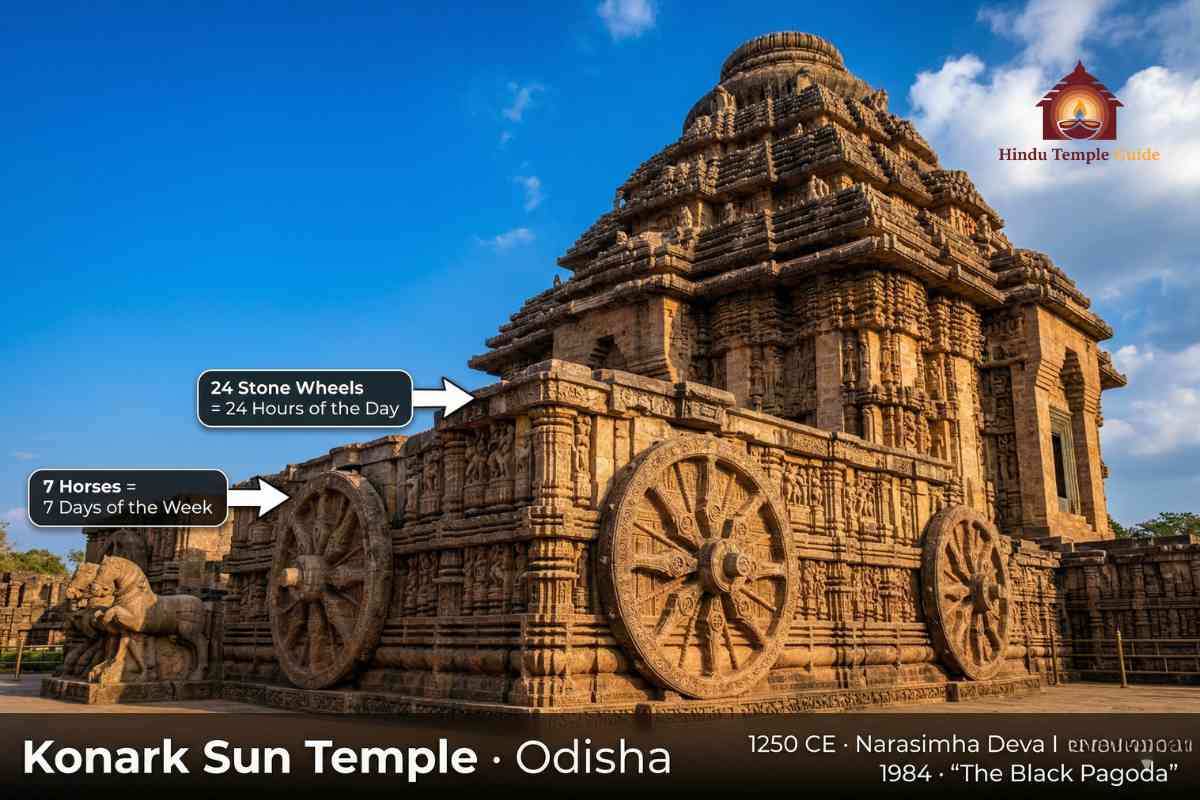
Konark Sun Temple, Odisha – The Black Pagoda || UNESCO
Konark Sun Temple is conceived as a massive stone chariot of the Sun God Surya with 24 intricately carved stone wheels representing the hours of the day and 7 galloping horses representing the days of the week. Built by Eastern Ganga King Narasimha Deva I in 1250 CE, it earned the name ‘Black Pagoda’ from European sailors. It is a UNESCO World Heritage Site and one of the Seven Wonders of India.
| Detail |
Information |
| Built By |
Narasimha Deva I, Eastern Ganga dynasty (1250 CE) |
| Temple Timings |
6:00 AM – 8:00 PM daily |
| Entry Fee |
Indian: ₹40 | Foreign: ₹600 |
| UNESCO Status |
World Heritage Site since 1984 |
| Best Time |
October to February | Konark Dance Festival (December) |
#9 – 6th c. CE+
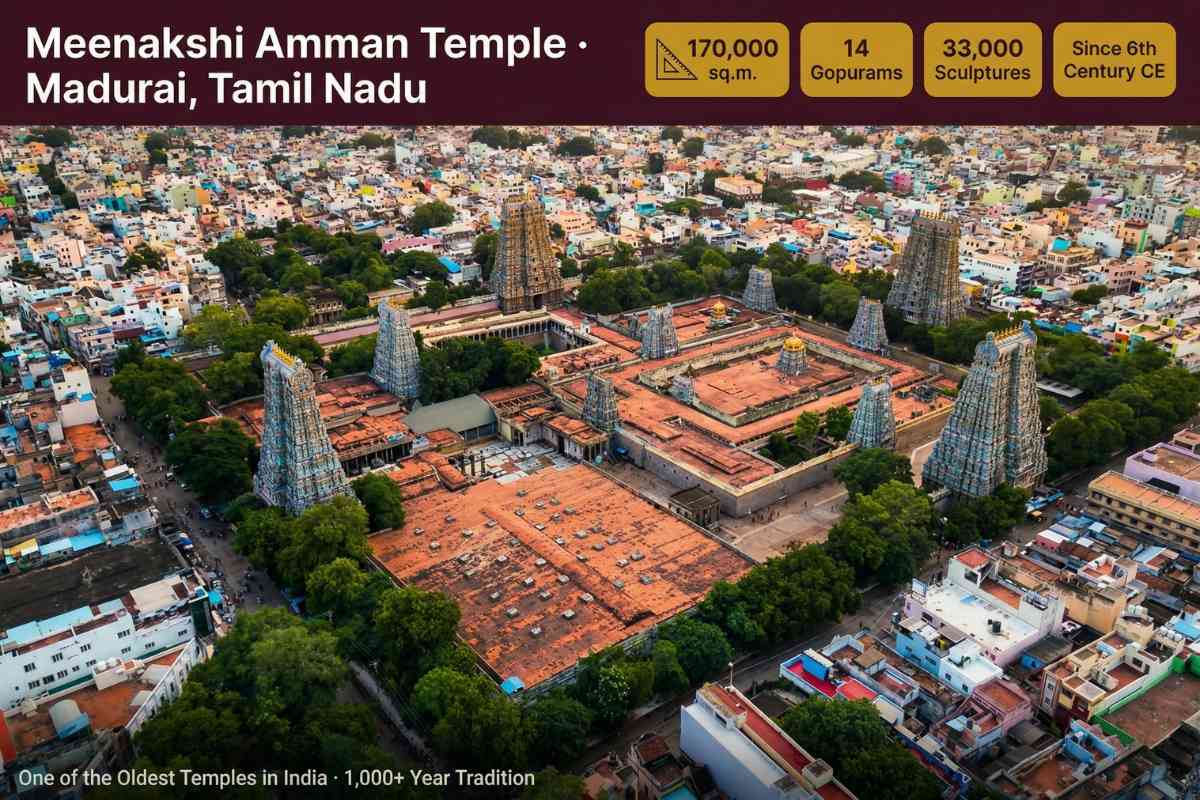
Meenakshi Amman Temple, Madurai, Tamil Nadu
Meenakshi Amman Temple in Madurai is a living city within a city covering 170,000 square metres with 14 towering gopurams (tallest: 51.9 metres) adorned with 33,000 painted stucco sculptures. The original temple dates to the 6th century CE during the Pandya dynasty. The nightly Alankaram ceremony has been performed every night for over a thousand years one of the most enduring rituals in the world.
| Detail |
Information |
| Temple Timings |
5:00 AM – 12:30 PM & 4:00 PM – 9:30 PM daily |
| Area & Scale |
170,000 sq. metres | 14 gopurams | 33,000 sculptures |
| Highlight |
1,000-pillar mandapa | Hall of 985 carved pillars | Golden Lotus Tank |
| Nearest Airport |
Madurai Airport (12 km from temple) |
#10 – 11th c. CE
Lingaraja Temple, Bhubaneswar, Odisha
Lingaraja Temple in Bhubaneswar is the largest and most important temple in the ‘City of Temples’ with over 150 smaller temples within its complex. Dating to the 11th century CE (Somavamshi dynasty), its presiding deity Harihara is a rare combined form of both Shiva and Vishnu unifying the two greatest traditions of Hindu worship. The 45-metre Kalinga-style shikhara is one of the finest examples of the Nagara style in Eastern India.
Note: Non-Hindus are not permitted inside the main sanctum of Lingaraja Temple.
Temples 11–20 are listed in the Quick Reference table in Section 2 above with all key details including dynasty, deity, and estimated age.
SECTION 5
Oldest Temples in India – By Dynasty & Time Period
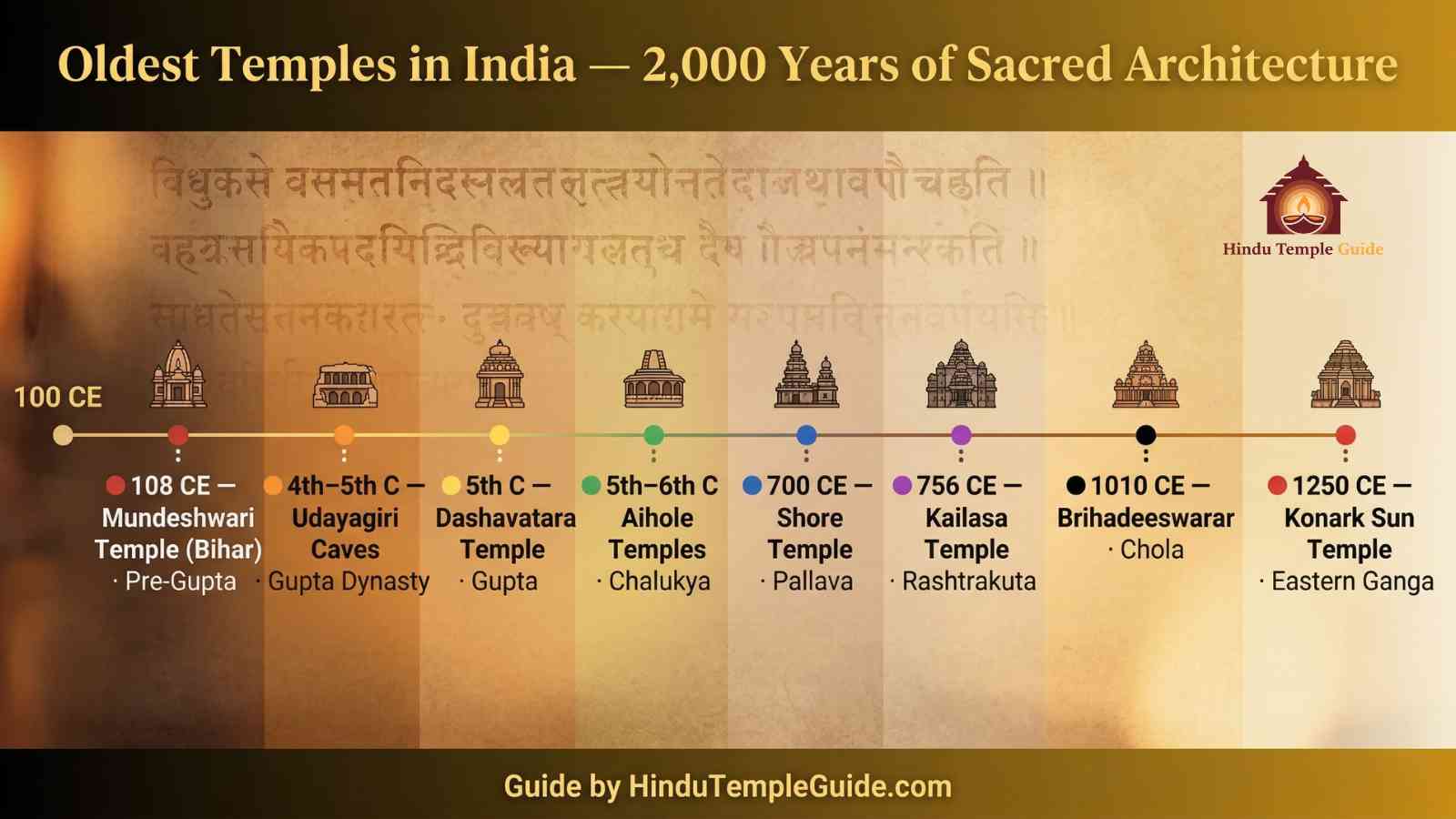
2,000 years of sacred temple architecture the oldest temples in India mapped across dynasties from 108 CE (Mundeshwari, pre-Gupta) to 1250 CE (Konark, Eastern Ganga). Each dynasty contributed a unique chapter to India’s unbroken heritage of temple building.
Understanding the oldest temples in India by dynasty helps trace the evolution of Indian temple architecture across 2,000 years:
| Dynasty / Period |
Time Period |
Region |
Key Temples |
| Pre-Gupta Period |
Before 320 CE |
Bihar |
Mundeshwari Devi Temple (108 CE) |
| Gupta Dynasty |
320–550 CE |
North & Central India |
Udayagiri Caves, Dashavatara Temple |
| Chalukya Dynasty |
543–753 CE |
Deccan (Karnataka) |
Lad Khan Temple, Durga Temple, Aihole; Pattadakal |
| Pallava Dynasty |
600–900 CE |
Tamil Nadu |
Shore Temple, Mahabalipuram |
| Rashtrakuta Dynasty |
753–982 CE |
Deccan (Maharashtra) |
Kailasa Temple, Ellora (756–773 CE) |
| Chola Dynasty |
848–1279 CE |
Tamil Nadu |
Brihadeeswarar Temple, Sri Ranganathaswamy |
| Chandela Dynasty |
831–1308 CE |
Madhya Pradesh |
Khajuraho temples, Kandariya Mahadeva |
| Somavamshi Dynasty |
9th–12th c. CE |
Odisha |
Lingaraja Temple, Mukteshwar Temple |
| Hoysala Dynasty |
1040–1346 CE |
Karnataka |
Chennakesava Temple, Belur (1117 CE) |
| Eastern Ganga Dynasty |
1078–1434 CE |
Odisha |
Konark Sun Temple (1250 CE), Jagannath Temple |
SECTION 6
UNESCO World Heritage Ancient Temples in India
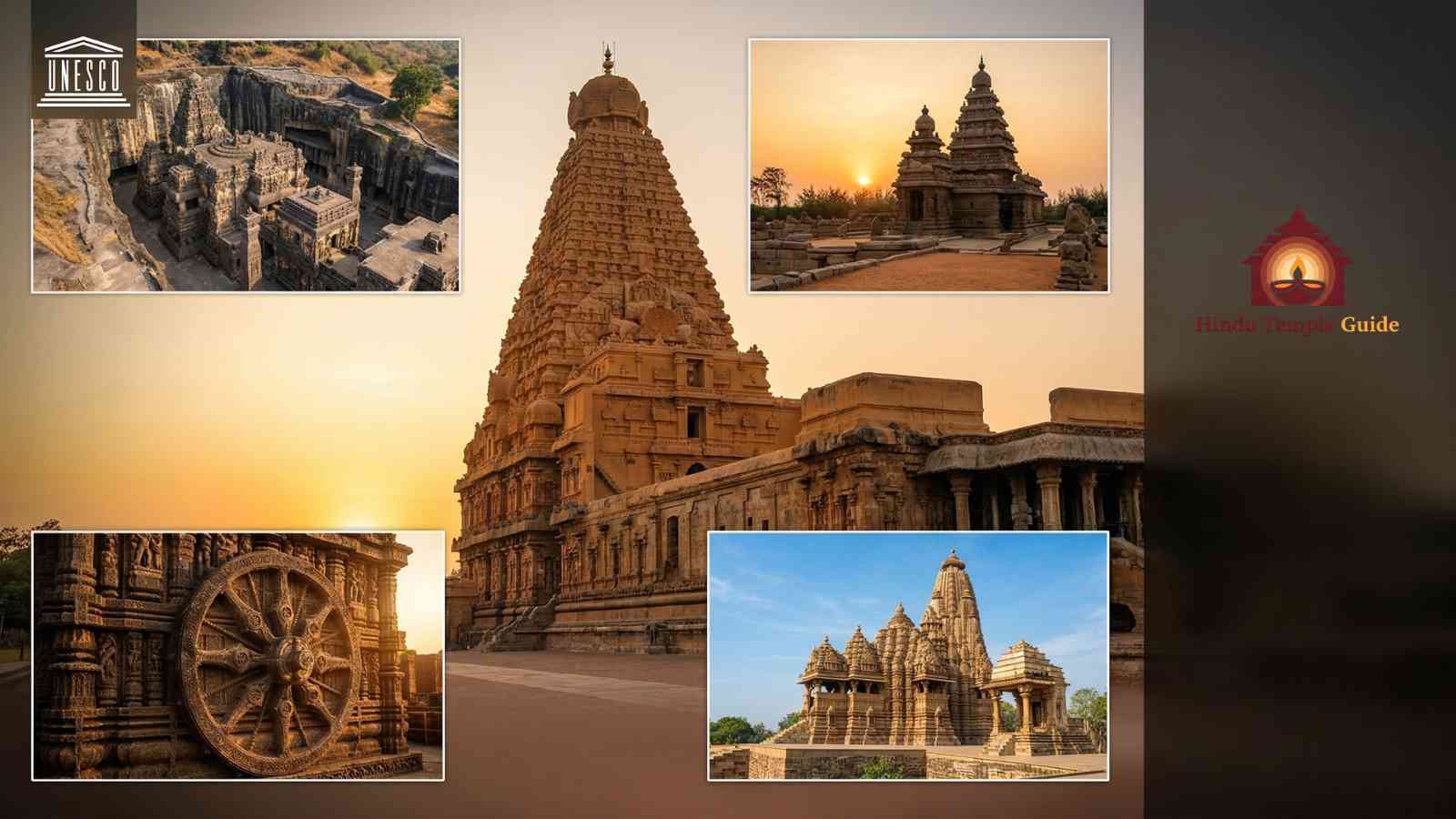
India has 7 UNESCO World Heritage Hindu temple sites – among the oldest temples in India with the highest international recognition. From Kailasa Temple (1983) to Pattadakal and Brihadeeswarar (1987), these sacred sites belong to the entire world.
Among all the oldest temples in India, these have received the highest international recognition – UNESCO World Heritage status:
| Temple / Site |
Location |
UNESCO Year |
| Brihadeeswarar Temple (Great Living Chola Temples) |
Thanjavur, Tamil Nadu |
1987 (extended 2004) |
| Kailasa Temple (Ellora Caves) |
Aurangabad, Maharashtra |
1983 |
| Shore Temple (Mahabalipuram Monuments) |
Kancheepuram, Tamil Nadu |
1984 |
| Konark Sun Temple |
Puri, Odisha |
1984 |
| Khajuraho Temples (Kandariya Mahadeva) |
Chhatarpur, Madhya Pradesh |
1986 |
| Pattadakal Group of Monuments |
Bagalkot, Karnataka |
1987 |
| Hampi Group of Monuments |
Bellary, Karnataka |
1986 |
For the official list of UNESCO World Heritage Sites in India, visit whc.unesco.org.
India’s oldest temples are not history they are the living soul of our civilisation. Plan your ancient temple heritage yatra today and experience the unbroken thread of devotion that connects our present to 2,000 years of sacred past.
SECTION 7
How to Plan Your Ancient Temple Heritage Yatra
Planning visits to the oldest temples in India is most effective when done region-wise, combining multiple ancient temples in a single trip:
South India Cluster – Biggest Concentration (5–7 Days)
Tamil Nadu has the highest density of oldest temples in India – covering Shore Temple, Brihadeeswarar, Meenakshi Amman, and Sri Ranganathaswamy in one 5–7 day loop from Chennai or Trichy.
- Day 1–2: Chennai → Mahabalipuram (Shore Temple + Five Rathas + Arjuna’s Penance)
- Day 3–4: Mahabalipuram → Thanjavur (Brihadeeswarar Temple)
- Day 5–6: Thanjavur → Madurai (Meenakshi Amman Temple)
- Day 7: Madurai → Srirangam (Sri Ranganathaswamy Temple) → Trichy
Central India Cluster – Gupta to Medieval Era (4 Days)
- Day 1: Bhopal → Sanchi → Udayagiri Caves
- Day 2: Udayagiri → Khajuraho (Kandariya Mahadeva + Lakshmana Temple)
- Day 3: Khajuraho → Deogarh (Dashavatara Temple) → Jhansi
- Day 4: Mumbai → Aurangabad (Kailasa Temple, Ellora + Ajanta Caves)
Heritage Yatra Packing Tips for Oldest Temple Visits
- Wear conservative, respectful attire: Shoulders and knees must be covered at all ancient Hindu temples. Many oldest temple sites enforce strict dress codes.
- Carry your own water: Facilities can be basic at some older sites, particularly Mundeshwari Devi Temple and Udayagiri Caves.
- Hire a certified ASI guide: The architectural and historical layers at ancient temples are immense – a knowledgeable guide transforms a casual visit into a profound experience.
- Go early morning: Ancient temples attract fewer crowds before 9:00 AM, and the light for photography is exceptional at sunrise.
- Photography rules vary: ASI-protected sites generally allow photography outside but not inside the inner sanctum. Always confirm before photographing.
- Respect the living worship: Many oldest temples in India are NOT museums they are active places of worship. Maintain silence, never enter restricted areas.
SECTION 8
FAQs – Oldest Temples in India
Q1. Which is the oldest temple in India?
Mundeshwari Devi Temple in Kaimur district, Bihar, is officially recognised as the oldest temple in India by the Archaeological Survey of India (ASI), dated to 108 CE. It is also considered the oldest functioning Hindu temple in the world, with unbroken continuous worship for nearly 1,900 years.
Q2. What is the oldest temple in South India?
Shore Temple at Mahabalipuram (700–728 CE) is among the oldest surviving structural temples in South India. The Meenakshi Amman Temple in Madurai has traditions dating to the 6th century CE during the Pandya dynasty, though the current structure reflects centuries of later additions.
Q3. Which is the oldest Shiva temple in India?
Mundeshwari Devi Temple (108 CE) houses a Chaturmukha Shivalinga and is dedicated to both Shiva and Shakti making it the oldest Shiva temple in India by ASI dating. Among clearly Shiva-dedicated temples, Kedarnath Temple (8th century CE) and Lingaraja Temple (11th century) are the most celebrated.
Q4. How old is the Brihadeeswarar Temple in Thanjavur?
Brihadeeswarar Temple was built by Chola king Raja Raja Chola I between 1003 and 1010 CE making it over 1,000 years old. It is a UNESCO World Heritage Site and remains the tallest medieval temple in India at 66 metres. The shadow of its vimana never falls on the ground at noon.
Q5. Is Kailasa Temple really carved from one rock?
Yes, entirely and completely. The Kailasa Temple at Ellora is the world’s largest monolithic rock-cut structure, carved downward from the top of a single basalt cliff. Over 200,000 tonnes of rock were removed, and modern engineers estimate it would take 150 years to replicate using today’s technology. It remains one of the most dramatic architectural achievements in ancient world history.
Q6. Which ancient temples in India have UNESCO World Heritage status?
Brihadeeswarar Temple (1987), Kailasa Temple/Ellora Caves (1983), Shore Temple/Mahabalipuram (1984), Konark Sun Temple (1984), Khajuraho Temples (1986), and Pattadakal Temples (1987). Visit the UNESCO official site for the complete list.
Q7. Can I visit all the oldest temples in India in one trip?
Visiting all 20 oldest temples in India in one continuous trip would take approximately 25–35 days across 8 states. The most practical approach is to organise them into regional clusters: South India (Tamil Nadu + Karnataka), Central India (MP + Maharashtra), North India (UP + Bihar), and East India (Odisha) each covered in a dedicated 5–7 day trip.
Q8. What is the best time to visit the oldest temples in India?
October to February is universally the best time, weather is pleasant across all regions. For Kedarnath specifically, the temple is open only from late April to November. The Maha Shivaratri festival (February/March) is the most auspicious time to visit all Shiva-dedicated temples.
Begin Your Ancient Temple Heritage Yatra
India’s Oldest Temples Are Not Just History – They Are the Living Soul of Our Civilisation
Whether you visit the 1,900-year-old Mundeshwari Devi Temple, stand speechless before Kailasa Temple, or watch the sunrise at the Shore Temple each of these sacred spaces will change you in ways you cannot predict.
Read More Temple & Pilgrimage Guides on HinduTempleGuide.com
Disclaimer: Dates and historical information in this guide are based on best available archaeological, epigraphic, and ASI-documented evidence as of March 2026. Temple dating is an evolving field some dates may be subject to revision as new research emerges. Temple timings are subject to change during festivals and special occasions. Always verify current timings before visiting. HinduTempleGuide.com is not responsible for any inaccuracies arising from subsequent scholarship or changes by temple authorities.





Leave a Comment
Your email will not be published. Required fields are marked *