
12 Jyotirlinga Temples in India: Complete Yatra Guide
From the Arabian Sea waves at Somnath to the 3,583-metre snow peaks of Kedarnath-names, locations, darshan timings, and cluster route planning in one place.
Growing up in Nagpur in the heart of India, my earliest long-distance pilgrimages were to the Jyotirlinga shrines of Maharashtra and Madhya Pradesh-standing before the south-facing Mahakal in Ujjain, crossing the Narmada to Omkareshwar, walking up to Trimbakeshwar in Nashik, and later travelling as far west as Somnath and Nageshwar in Gujarat, Kashi Vishwanath in Varanasi, and trekking 16 km up to Kedarnath in the Himalayas. Having stood inside seven of these twelve sanctums myself, I can tell you that each shrine carries a completely distinct atmosphere, architectural heritage, and set of darshan rules.
According to the Shiva Mahapurana (Kotirudra Samhita), these twelve shrines mark the exact places where Lord Shiva manifested as an infinite, blazing column of light (Jyotistambha). Whether you are planning a weekend visit to a single shrine or mapping out the complete Dwadasha Jyotirlinga Yatra in regional clusters, this guide brings together the traditional order, the Sanskrit stotram, verified darshan timings, nearest railway stations, and practical booking tips. Har Har Mahadev!

What Is a Jyotirlinga? Puranic Legend & Spiritual Meaning
In Sanskrit, 'Jyoti' means radiance or divine light, and 'Linga' means an emblem or sign. A Jyotirlinga therefore translates to the 'Radiant Sign of the Almighty Shiva'-representing Lord Shiva's beginningless, endless, and formless cosmic energy taking visible form for his devotees.
The Vidyesvara Samhita and Kotirudra Samhita of the Shiva Purana recount how Lord Brahma (the creator) and Lord Vishnu (the preserver) once debated whose role was supreme in the cosmos. To dissolve their ego, Lord Shiva appeared between them as an immeasurable, blazing pillar of fire (Anadi-Ananta Jyotistambha) piercing all three worlds, challenging them to find either its crown or its base. Vishnu took the form of a boar (Varaha) and burrowed downward for thousands of years without reaching the bottom, while Brahma flew upward on a swan and falsely claimed to have found the top using the testimony of a falling Ketaki flower. Pleased by Vishnu's honesty, Shiva cursed the Ketaki flower never to be used in his worship-and wherever that cosmic pillar of light cooled and rooted itself on Earth, a sacred Swayambhu Jyotirlinga emerged.
Scriptural Significance: While Hindu tradition speaks of 64 original Jyotirlinga sites across the subcontinent, the Dwadasha (Twelve) Jyotirlingas enumerated in Adi Shankaracharya's stotram are revered as the twelve primary Mahakshetras of Lord Shiva.
Complete List: All 12 Jyotirlinga Names, Cities & States (In Traditional Shloka Order)
The table below lists all twelve shrines in the exact traditional sequence in which they appear in the Sanskrit Dwadasha Jyotirlinga Stotram, starting from Somnath in Saurashtra and concluding at Grishneshwar in Maharashtra:
| No. | Jyotirlinga Name | Temple Name | Town / District | State |
|---|---|---|---|---|
| 1 | Somnath | Shree Somnath Jyotirlinga Temple | Prabhas Patan, Veraval (Gir Somnath) | Gujarat |
| 2 | Mallikarjuna | Sri Bhramaramba Mallikarjuna Temple | Srisailam, Nandyal District | Andhra Pradesh |
| 3 | Mahakaleshwar | Shri Mahakaleshwar Temple | Ujjain (Shipra River Bank) | Madhya Pradesh |
| 4 | Omkareshwar | Omkareshwar & Mamleshwar Temple | Mandhata Island, Khandwa District | Madhya Pradesh |
| 5 | Vaidyanath | Baba Baidyanath Dham | Deoghar (Santhal Pargana) | Jharkhand |
| 6 | Bhimashankar | Shri Kshetra Bhimashankar Temple | Khed Taluka, Pune District | Maharashtra |
| 7 | Rameshwaram | Arulmigu Ramanathaswamy Temple | Rameswaram Island, Ramanathapuram | Tamil Nadu |
| 8 | Nageshwar | Shri Nageshwar Jyotirlinga Temple | Daarukavanam, near Dwarka | Gujarat |
| 9 | Kashi Vishwanath | Shri Kashi Vishwanath Temple | Varanasi (Ganga River Bank) | Uttar Pradesh |
| 10 | Trimbakeshwar | Shri Trimbakeshwar Shiva Temple | Trimbak, Nashik District | Maharashtra |
| 11 | Kedarnath | Shri Kedarnath Dham | Rudraprayag District (3,583 m) | Uttarakhand |
| 12 | Grishneshwar | Shri Grishneshwar Jyotirlinga Temple | Verul (Ellora), Chhatrapati Sambhajinagar | Maharashtra |
Regional Breakdown: Maharashtra is home to the highest number of Jyotirlingas (3 shrines: Bhimashankar, Trimbakeshwar, and Grishneshwar), followed by Gujarat (2) and Madhya Pradesh (2)-meaning 7 of the 12 shrines lie across Western and Central India.
The Sacred Dwadasha Jyotirlinga Stotram (With Meaning)
Composed by Adi Shankaracharya, this two-verse Sanskrit hymn memorably encodes both the name and geographical region of every Jyotirlinga:
Saurashtre Somanatham cha Shrishaile Mallikarjunam |
Ujjayinyam Mahakalam Omkaramamaleshwaram ||
Paralyam Vaidyanatham cha Dakinyam Bhimashankaram |
Setubandhe tu Ramesham Nagesham Darukavane ||
Varanasyam tu Vishwesham Tryambakam Gautami Tate |
Himalaye tu Kedaram Ghushmesham cha Shivalaye ||
Etani Jyotirlingani Sayam Pratah Pathennarah | Sapta Janma Kritam Papam Smaranena Vinashyati ||
Meaning: One who recites these twelve sacred names at dawn and dusk is freed from the karmic burdens of seven lifetimes.
All 12 Jyotirlinga Temples: Timings, History & How to Reach
Below is a shrine-by-shrine planning breakdown covering the Puranic legend, daily aarti windows, nearest rail/air hubs, and ground tips from my own visits:
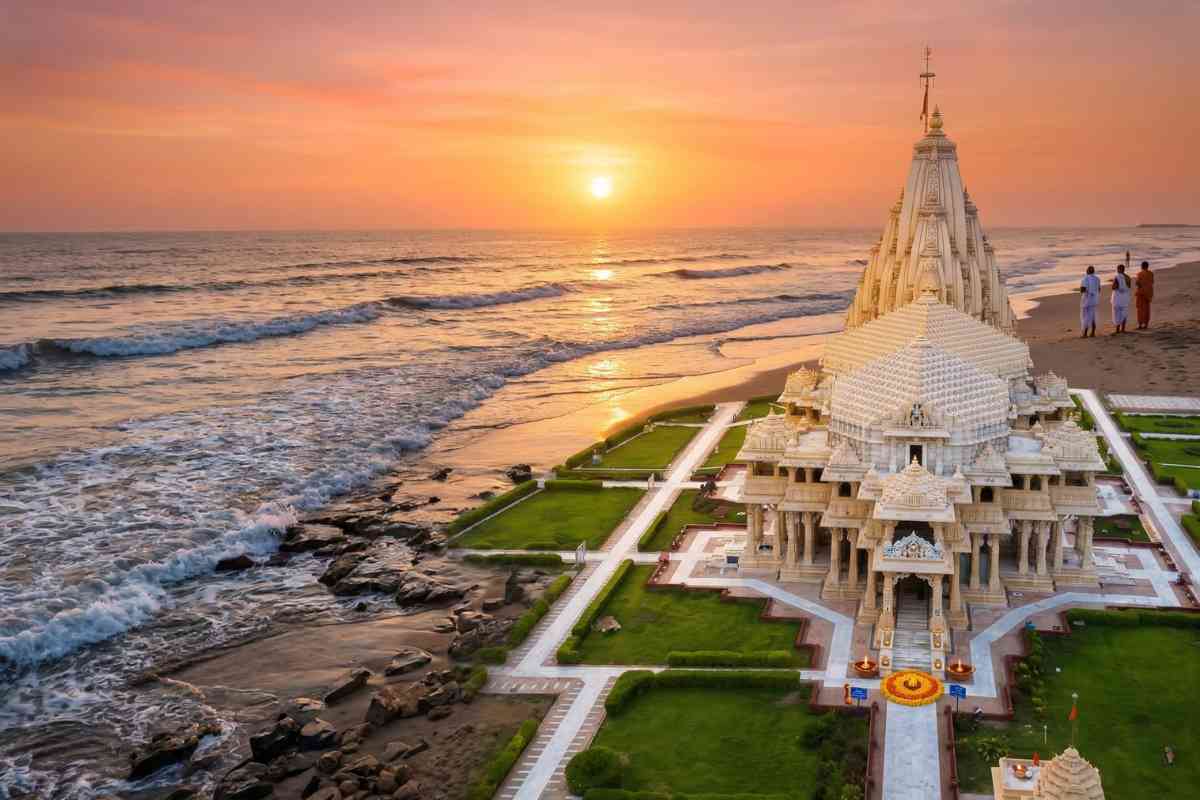
1. Somnath Jyotirlinga - Prabhas Patan (Veraval), Gujarat
Somnath is revered as the Adi Jyotirlinga-the first of the twelve shrines. Perched right on the edge of the Arabian Sea at Prabhas Patan near Veraval, the name Somnath means "Lord of the Moon," marking the spot where Chandra (the Moon God) performed penance to Lord Shiva to be cured of Daksha Prajapati's wasting curse. Repeatedly raided and rebuilt across centuries, the present 155-foot sandstone temple was initiated by Sardar Vallabhbhai Patel in 1947 and consecrated by President Dr. Rajendra Prasad in 1951.
| Detail | Information |
|---|---|
| Temple & Aarti Timings | 6:00 AM - 10:00 PM daily (Aarti at 7:00 AM, 12:00 PM & 7:00 PM) |
| Jay Somnath Light & Sound Show | 8:00 PM - 9:00 PM daily (except monsoon) | ₹50 adults, ₹25 children |
| Best Months to Visit | October to March | Kartik Purnima & Maha Shivaratri |
| Nearest Railway Station | Veraval Junction (VRL - 6 km) & Somnath Station (1.5 km) |
| Nearest Airport | Keshod Airport (55 km) | Diu Airport (85 km) | Rajkot (195 km) |
| Official Trust Portal | somnath.org |
My Personal Tip from Somnath: Walk to the southern sea-wall pillar called the Baan Stambh (Arrow Pillar) inside the temple lawn-its ancient Sanskrit inscription points straight across the Indian Ocean to the South Pole without a single landmass in between-and also visit Bhalka Tirth (4 km away) and the Triveni Sangam where the Hiran, Kapila, and mythical Saraswati rivers meet the sea.
2. Mallikarjuna Jyotirlinga - Srisailam, Andhra Pradesh
Located atop the forested Nallamala Hills overlooking the deep gorge of the Krishna River (Patalganga), Sri Bhramaramba Mallikarjuna Temple in Srisailam is one of only three shrines in India that house both a Jyotirlinga (Lord Mallikarjuna) and an Ashta Dasha Maha Shakti Peetha (Goddess Bhramaramba Devi) inside the same fortified stone complex. According to legend, when Lord Kartikeya retired to Krauncha Mountain in frustration after Ganesha married before him, Shiva and Parvati came here to console their son and remained eternally as Mallikarjuna (worshipped with jasmine flowers, Mallika, and white Arjuna blossoms).
| Detail | Information |
|---|---|
| Temple Timings | 4:30 AM - 3:30 PM & 4:30 PM - 10:00 PM daily |
| Key Highlights | Jyotirlinga + Shakti Peetha | Vijayanagara stone carvings | Patalganga Ropeway |
| Important Road Rule | Nallamala Tiger Reserve forest check-post closes 9:00 PM to 6:00 AM |
| Nearest Railway Station | Markapur Road (MRK - 85 km) | Kurnool City (180 km) |
| Nearest Airport | Rajiv Gandhi International Airport, Hyderabad (215 km via Srisailam Highway) |
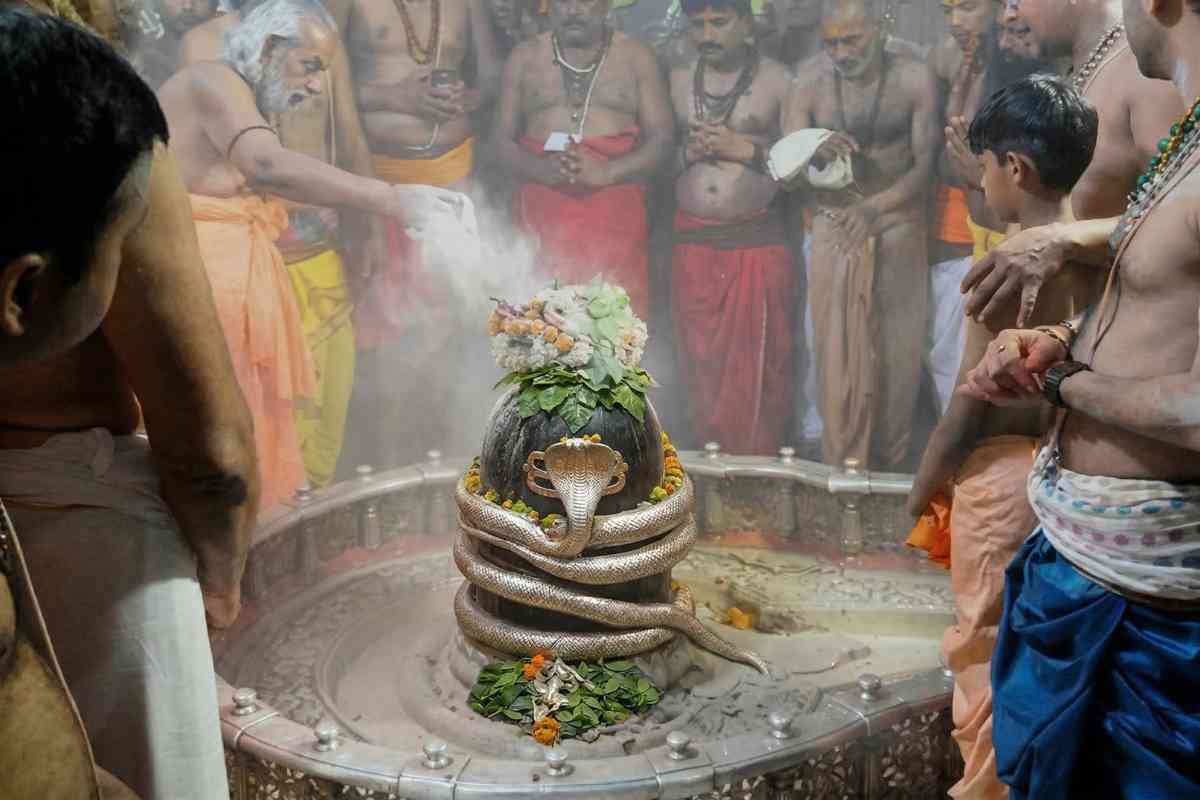
3. Mahakaleshwar Jyotirlinga - Ujjain, Madhya Pradesh (Only South-Facing Shrine)
On the banks of the sacred Shipra River in ancient Avantika (Ujjain), Shri Mahakaleshwar is the only Dakshinamukhi (south-facing) Jyotirlinga among the twelve-symbolizing Lord Shiva's absolute mastery over time and death (Kala) as Mahakala. The three-storeyed shrine houses Mahakaleshwar on the lower level, Omkareshwar on the middle level, and Nagchandreshwar (which opens for just 24 hours a year on Nag Panchami) on the top floor.
| Detail | Information |
|---|---|
| Bhasma Aarti Timing | 4:00 AM - 6:00 AM daily (Advance online booking + dress code mandatory) |
| General Darshan Timings | 6:00 AM - 10:30 PM (Shayan Aarti 10:30 PM - 11:00 PM) |
| Key Highlights | Dakshinamukhi Linga | Shri Mahakal Lok Corridor | ₹250 Shighra Darshan |
| Nearest Railway & Air Hub | Ujjain Junction (UJN - 2 km) | Indore Airport (IDR - 55 km) |
| Official Temple Portal | shrimahakaleshwar.com |
My Ground Tip for Ujjain: Online Bhasma Aarti booking opens 15 to 30 days in advance on shrimahakaleshwar.com (₹200 online per person). Remember that men attending Bhasma Aarti inside the Nandi Hall must wear a stitched-free dhoti/sola and women must wear a saree, and during the moment bhasma (sacred ash) is offered, women traditionally cover their faces with their pallu.
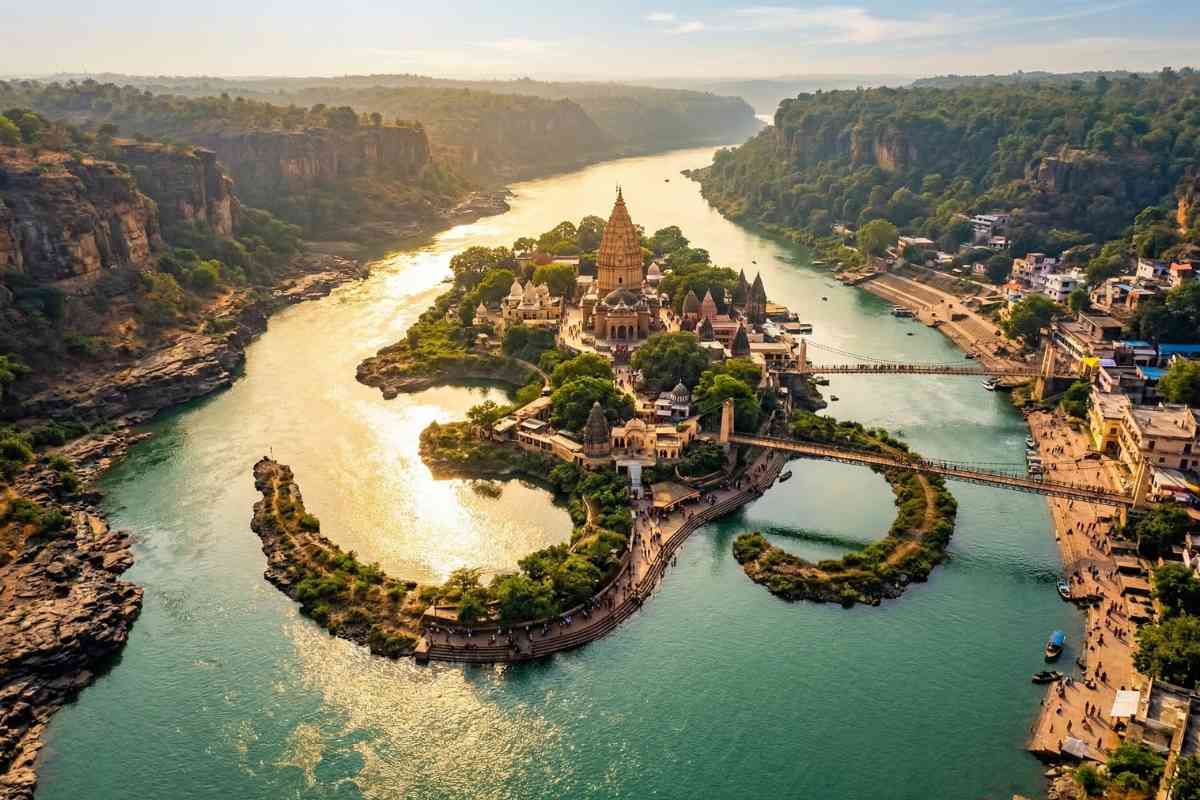
4. Omkareshwar & Mamleshwar Jyotirlinga - Mandhata Island, Madhya Pradesh
Located 140 km south of Ujjain (and 77 km from Indore) in Khandwa district, Omkareshwar sits on Mandhata (Shivapuri) Island in the Narmada River, naturally shaped like the sacred Sanskrit symbol 'ॐ' (Om). As indicated in the stotram line "Omkaramamaleshwaram", the fourth Jyotirlinga is actually a twin shrine: Shri Omkareshwar on the island (connected by two suspension bridges and motorboats) and Shri Mamleshwar (Amareshwar) on the southern mainland bank. Your darshan is considered complete only after visiting both shrines.
| Detail | Information |
|---|---|
| Temple Timings | 5:00 AM - 9:30 PM daily (Shayan Aarti 8:30 PM - 9:00 PM) |
| Special Highlight | Twin shrines (Omkareshwar + Mamleshwar) | 7 km Om-shaped Narmada Parikrama |
| Unique Evening Ritual | Dice board (Chausar) laid out in the sanctum every night for Shiva & Parvati |
| Nearest Rail & Air Hub | Indore Junction (77 km) | Khandwa Junction (72 km) | Indore Airport (80 km) |
| Official Temple Portal | shriomkareshwar.org |
5. Baba Baidyanath (Vaidyanath) Jyotirlinga - Deoghar, Jharkhand
Revered as both a Jyotirlinga and a Heart Shakti Peetha (Hridaya Peetha), Baba Baidyanath Dham in Deoghar is where Ravana performed intense penance to carry Lord Shiva's Atmalinga to Lanka, and where Lord Shiva acted as a divine physician (Vaidya) to reattach Ravana's severed heads. Uniquely among Indian temples, the apex of the main shikhara bears a sacred five-pronged Panchshula rather than a three-pronged Trishula, and red silk threads tie the spire of Baba Baidyanath directly to the spire of Goddess Parvati's temple across the courtyard (Gathbandhan).
| Detail | Information |
|---|---|
| Temple Timings | 4:00 AM - 3:30 PM & 6:00 PM - 9:00 PM daily |
| Special Highlight | 22 temples inside complex | 105 km Sultanganj-Deoghar Shravani Kanwar Mela |
| Nearest Railway Station | Jasidih Junction (JSME - 7 km, main express hub) & Baidyanathdham (2 km) |
| Nearest Airport | Deoghar Airport (DGH - 8 km, direct flights from Delhi, Kolkata & Patna) |
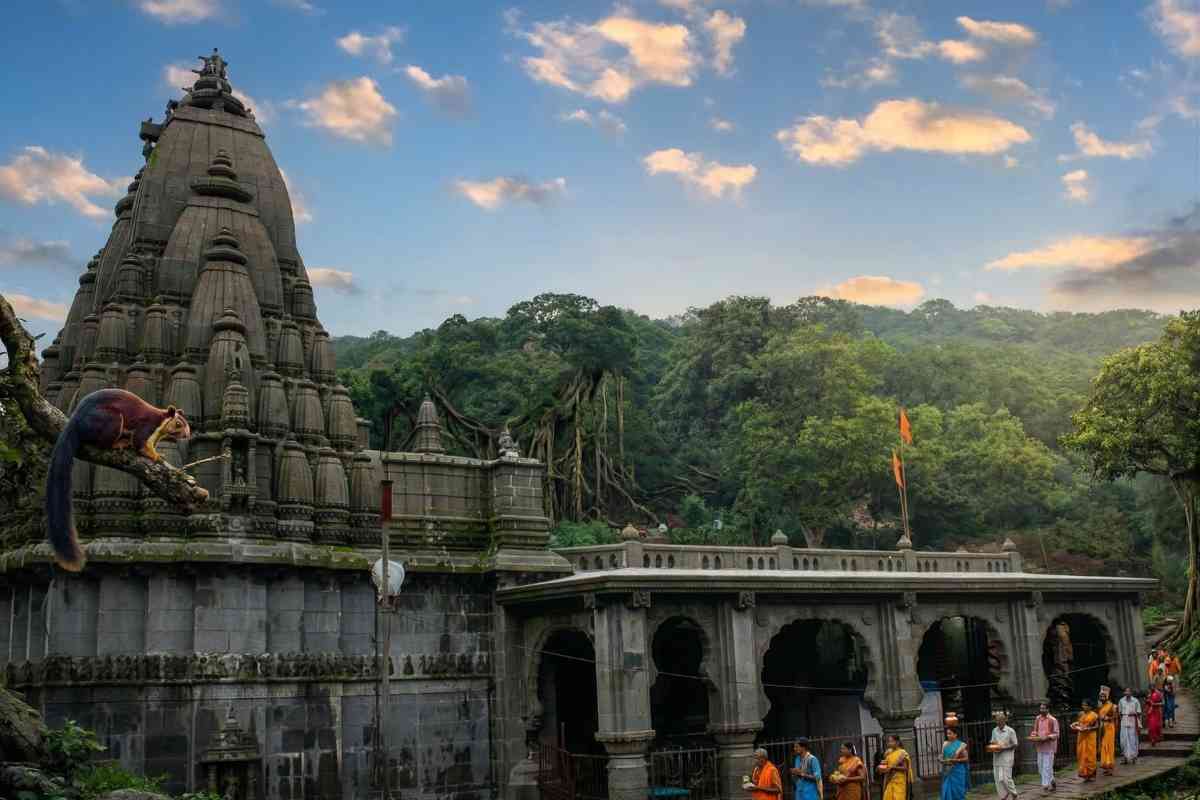
6. Bhimashankar Jyotirlinga - Sahyadri Hills (Pune), Maharashtra
Tucked deep inside the evergreen forests of the Western Ghats at 1,032 metres in Pune's Khed taluka, Bhimashankar is built in the 13th-century black-basalt Hemadpanthi style, with its shikhara later expanded by the Peshwa statesman Nana Phadnavis. According to the Shiva Purana, Lord Shiva vanquished the demon Bhima (son of Kumbhakarna) here, and the sweat that poured from Shiva's brow after the battle gave birth to the Bhima River (Chandrabhaga).
| Detail | Information |
|---|---|
| Temple Timings | 4:30 AM - 9:30 PM daily (Madhyanhaarti Shutdown: 12:00 PM - 12:30 PM) |
| Special Highlight | Origin of Bhima River (Gupt Bhimashankar) | Giant Squirrel Wildlife Sanctuary |
| Nearest Rail & Air Hub | Pune Junction (110 km via Manchar) | Karjat (for trekkers) | Pune Airport (115 km) |
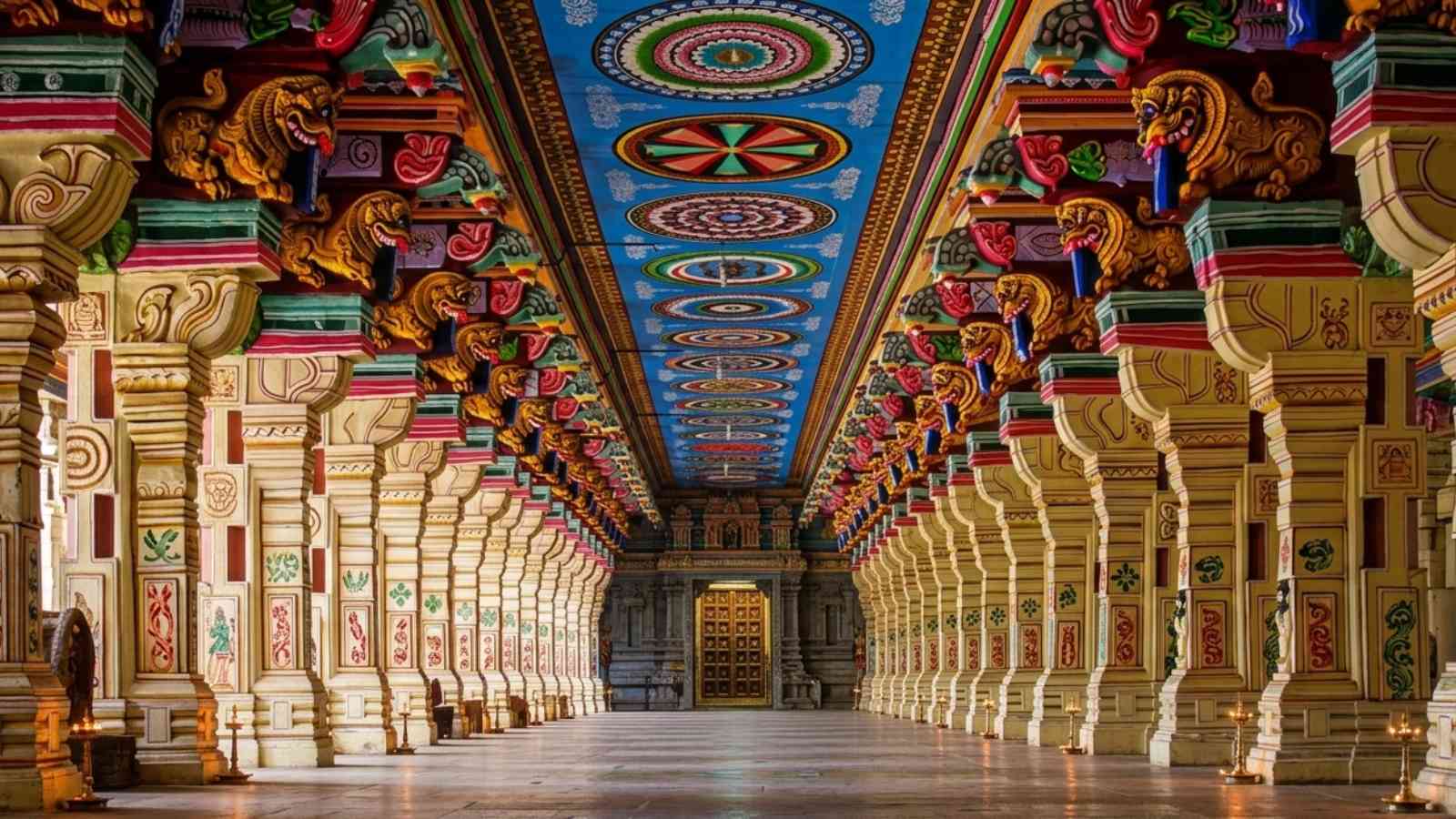
7. Rameshwaram (Ramanathaswamy) Jyotirlinga - Pamban Island, Tamil Nadu
Serving as both the southernmost Jyotirlinga and the southern pillar of India's main Char Dham circuit, Arulmigu Ramanathaswamy Temple on Rameswaram Island marks the sacred shore where Lord Rama worshipped Lord Shiva to absolve the Brahmahatya dosha after defeating Ravana in Lanka. Inside the sanctum stand two lingams: the Ramalingam (moulded from sea sand by Goddess Sita) and the Vishwalingam (brought from Mount Kailash by Lord Hanuman), with Lord Rama instructing that Hanuman's Vishwalingam always be worshipped first.
| Detail | Information |
|---|---|
| Temple Timings | 5:00 AM - 1:00 PM & 3:00 PM - 9:00 PM daily (Spatika Linga Darshan: 5:00-6:00 AM) |
| Sacred Bathing Ritual | Dip at Agni Theertham sea beach first, followed by the 22 freshwater temple wells |
| Nearest Rail & Air Hub | Rameswaram Station (2 km) & Mandapam (19 km) | Madurai Airport (IXM - 170 km) |
8. Nageshwar Jyotirlinga - Daarukavanam (Dwarka), Gujarat
Located 17 km from Dwarkadhish Temple along the route toward Bet Dwarka on the Saurashtra coast, Shri Nageshwar Jyotirlinga is where Lord Shiva manifested in the ancient Daarukavana forest to rescue his imprisoned devotee Supriya from the serpent demon Daaruka. Easily recognizable from miles away by its 82-foot (25-metre) outdoor sitting statue of Lord Shiva, the sanctum houses a porous, three-faced natural stone called Dwarka Shila marked with tiny chakra motifs.
| Detail | Information |
|---|---|
| Temple Timings | 6:00 AM - 12:30 PM & 5:00 PM - 9:30 PM daily |
| Abhishekam Dress Code | Men must wear traditional Dhoti to enter the inner Garbha Griha for abhishekam |
| Nearest Rail & Air Hub | Dwarka Railway Station (DWK - 17 km) | Jamnagar Airport (137 km) |
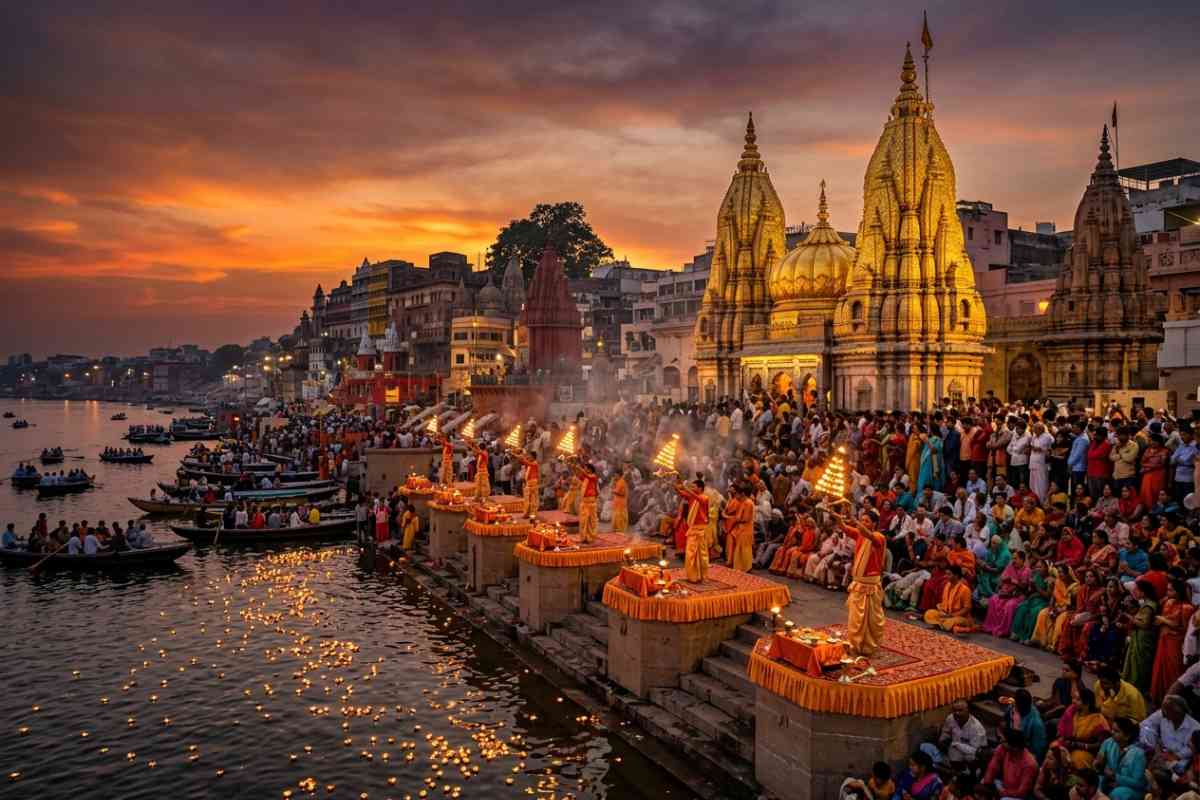
9. Kashi Vishwanath Jyotirlinga - Varanasi, Uttar Pradesh
Standing on the western bank of the northward-flowing (Uttarvahini) Ganga in the world's oldest living city, Shri Kashi Vishwanath is revered as the spiritual heart of Shaivism-where Lord Vishweshwara himself whispers the Taraka Mantra to liberate souls from the cycle of rebirth. Reconstructed in 1780 by Maharani Ahilyabai Holkar and crowned with 800 kg of gold plating donated by Maharaja Ranjit Singh in 1835, the temple is now connected directly to Lalita Ghat via the expansive Shri Kashi Vishwanath Dham Corridor.
| Detail | Information |
|---|---|
| Daily Aarti & Darshan | Mangala Aarti: 3:00-4:00 AM | General Darshan: 4:00 AM - 11:00 PM |
| Sparsh Darshan (Touching Linga) | 4:00 AM - 5:00 AM & 4:00 PM - 5:00 PM (subject to non-festival crowd rules) |
| Nearest Rail & Air Hub | Varanasi Junction (BSB - 4 km) & Banaras (BSBS - 5 km) | VNS Airport (25 km) |
| Official Trust Portal | shrikashivishwanath.org (Sugam Darshan & Aarti booking) |
My Varanasi Tip: Enter via Gate No. 4 (Chhattadwar) or take a morning boat to Lalita Ghat (Ganga Dwar) so you can carry a copper vessel of Gangajal straight up the corridor escalators to offer on the Jyotirlinga, and always pay your respects at Kal Bhairav Temple (the Kotwal of Kashi) before leaving Varanasi.
10. Trimbakeshwar Jyotirlinga - Nashik, Maharashtra
Nestled at the foot of the Brahmagiri mountain 28 km from Nashik-where Sage Gautama's penance brought the sacred Godavari River (Gautami Ganga) down to Earth-Shri Trimbakeshwar is completely unique among all twelve shrines. Instead of a raised stone pillar, the sanctum floor contains a hollow depression (Garbha) holding three small thumb-sized self-manifested lingas representing Brahma, Vishnu, and Mahesh (Rudra), continuously bathed by a natural underground stream of water. Rebuilt in sleek black basalt between 1755 and 1786 by Peshwa Balaji Baji Rao (Nanasaheb), it is also the primary seat in India for performing Narayan Nagbali, Kalsarpa Shanti, and Tripindi Shraddha rituals.
| Detail | Information |
|---|---|
| Temple Timings | 5:30 AM - 9:00 PM daily (Golden Crown Darshan on Mondays: 4:00-5:00 PM) |
| Special Highlight | Three-faced Trimurti Linga | Kushavarta Kund | Simhastha Kumbh Mela site |
| Nearest Rail & Air Hub | Nashik Road Station (NK - 38 km) | Ozar Nashik Airport (48 km) |
| Official Devasthan Portal | trimbakeshwartrust.com |
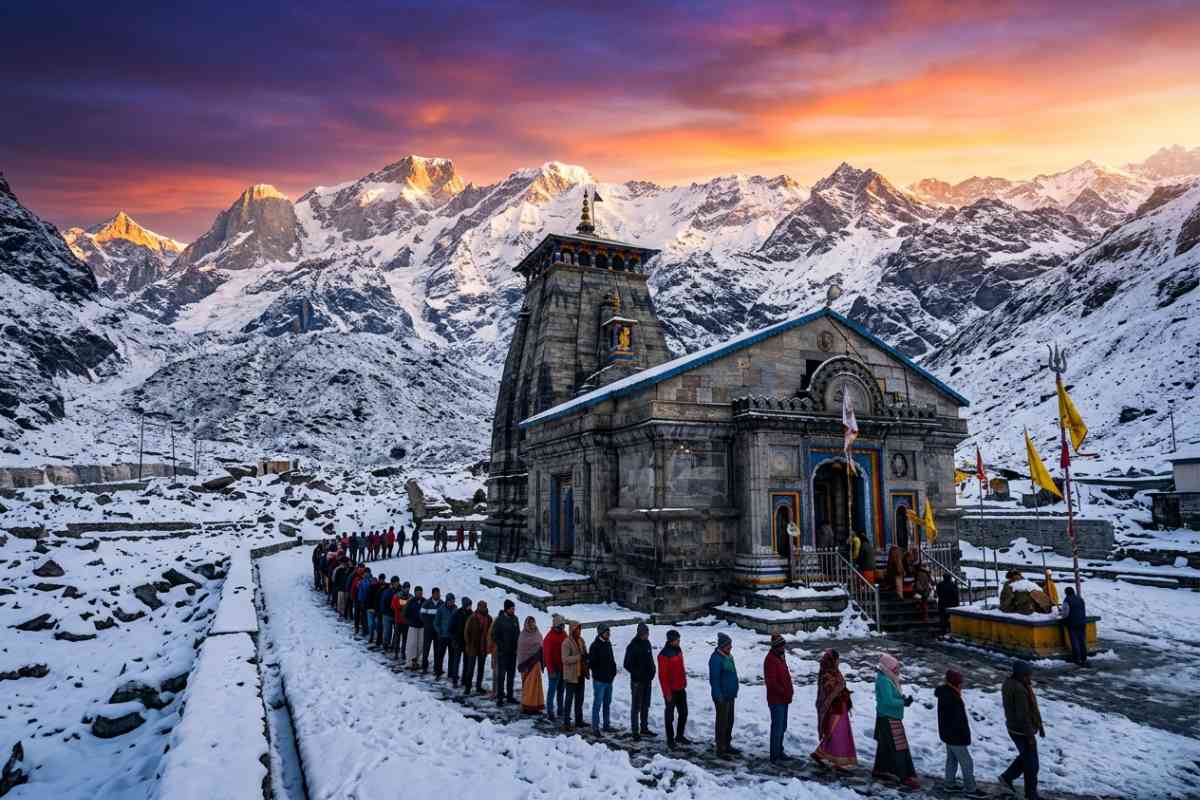
11. Kedarnath Jyotirlinga - Rudraprayag, Uttarakhand (Highest at 3,583 m)
Standing at 3,583 metres (11,755 feet) beside the Mandakini River beneath the snow-covered Kedar Dome, Kedarnath is the highest of all twelve Jyotirlingas and the flagship shrine of both the Himalayan Char Dham Yatra and the Panch Kedar circuit. Inside the 8th-century interlocked stone sanctum sits the triangular, pyramid-shaped rock Jyotirlinga representing the hump of Lord Shiva's Nandi form when he dived into the earth before the Pandava brothers.
| Detail | Information |
|---|---|
| Daily Schedule | Mahabhishek: 4:00-6:00 AM | Darshan: 6:00 AM - 3:00 PM & 5:00 PM - 8:30 PM |
| 2026 Yatra Window | 22 April 2026 (8:00 AM) to 11 November 2026 (Bhai Dooj) |
| How to Reach | 16 km trek from Gaurikund OR 9-min shuttle helicopter from Sersi / Phata / Guptkashi |
| Official Helicopter Portal | heliyatra.irctc.co.in (Requires free Uttarakhand Yatra Registration) |
| Official Temple Website | badrinath-kedarnath.gov.in |
For checkpoint-by-checkpoint trail notes from my trek, read my Kedarnath Temple Travel Guide 2026 and our Helicopter Booking Guide 2026.
12. Grishneshwar (Ghushmeshwar) Jyotirlinga - Verul (Ellora), Maharashtra
Located less than a kilometre from the world-famous Ellora Caves (Kailasa Cave 16) in Chhatrapati Sambhajinagar (Aurangabad) district, Shri Grishneshwar is the twelfth and final Jyotirlinga enumerated in the stotram. Named after the devoted woman Kusuma (Ghushma), whose slain son was restored to life by Lord Shiva after she remained steadfast in her daily Shiva-puja at the village tank (Shivalaya Tirtha), the current five-tiered red- and black-stone temple was rebuilt in the 18th century by Maharani Ahilyabai Holkar.
| Detail | Information |
|---|---|
| Temple Timings | 5:30 AM - 9:30 PM daily (Open till 11:00 PM during Shravan) |
| Important Sanctum Rule | Men must remove upper garments (shirt/vest) before entering the inner Garbha Griha |
| Nearest Rail & Air Hub | Chhatrapati Sambhajinagar / Aurangabad Station (AWB - 30 km) | IXU Airport (35 km) |
State-Wise Distribution of the 12 Jyotirlingas
Grouping the shrines by state makes it much easier to plan multi-temple road circuits:
| State | Count | Shrines in State |
|---|---|---|
| Maharashtra | 3 (Highest) | Bhimashankar (Pune) · Trimbakeshwar (Nashik) · Grishneshwar (Ellora) |
| Gujarat | 2 | Somnath (Veraval) · Nageshwar (Dwarka) |
| Madhya Pradesh | 2 | Mahakaleshwar (Ujjain) · Omkareshwar (Khandwa) |
| Andhra Pradesh | 1 | Mallikarjuna (Srisailam) |
| Jharkhand | 1 | Baba Baidyanath Dham (Deoghar) |
| Tamil Nadu | 1 | Ramanathaswamy (Rameswaram Island) |
| Uttar Pradesh | 1 | Kashi Vishwanath (Varanasi) |
| Uttarakhand | 1 | Kedarnath Dham (Rudraprayag) |
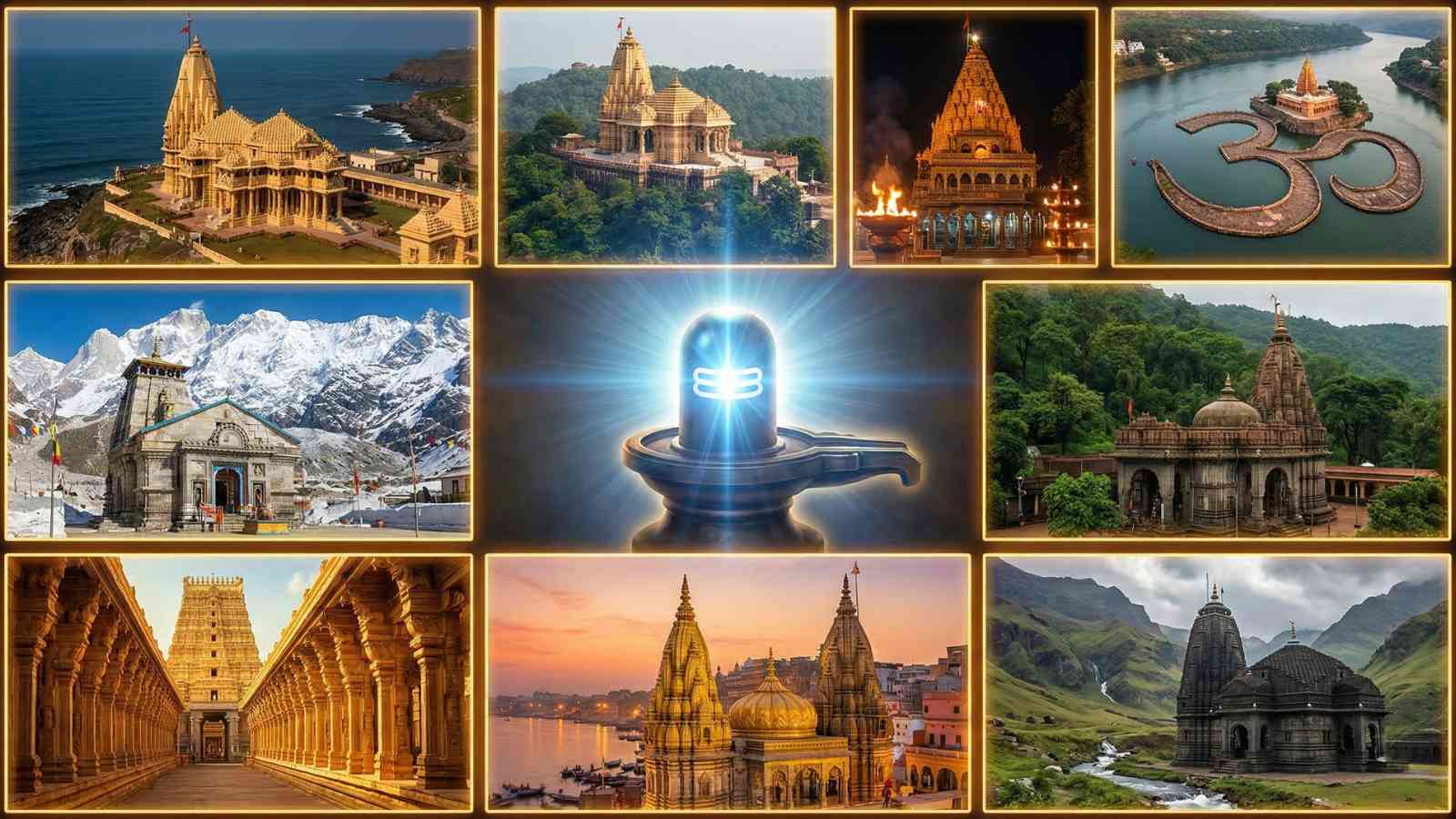
How to Plan Your Jyotirlinga Yatra: Regional Cluster Itinerary
Instead of trying to cover all 12 temples in a single exhausting 25-day marathon across 8 states, the most practical approach I recommend to readers is dividing the circuit into regional clusters that fit neatly into 3- to 5-day trips:
| Regional Cluster | Shrines Covered | Best Starting Hub | Trip Days |
|---|---|---|---|
| 1. Maharashtra Trio | Bhimashankar + Trimbakeshwar + Grishneshwar (with Shirdi) | Pune / Mumbai / Sambhajinagar | 4-5 Days |
| 2. Madhya Pradesh Duo | Mahakaleshwar (Ujjain) + Omkareshwar (140 km apart) | Indore / Ujjain | 2-3 Days |
| 3. Saurashtra (Gujarat) Duo | Somnath + Nageshwar (with Dwarkadhish & Bet Dwarka) | Ahmedabad / Rajkot / Veraval | 3-4 Days |
| 4. Eastern & Ganga Circuit | Kashi Vishwanath (Varanasi) + Baidyanath Dham (Deoghar) | Varanasi → Jasidih (overnight train) | 4 Days |
| 5. Himalayan Shrine | Kedarnath Dham (often paired with Badrinath) | Haridwar / Rishikesh / Dehradun | 4-6 Days |
| 6. Southern Shrines | Mallikarjuna (ex-Hyderabad) & Rameshwaram (ex-Madurai) | Hyderabad & Madurai | 2-3 Days each |
| COMPLETE YATRA | All 12 Jyotirlingas Across 8 States | 6 Cluster Trips (or 1 Bharat Gaurav Train) | 20-25 Days Total |
My Route Tip: Starting with the Madhya Pradesh Duo (Mahakaleshwar + Omkareshwar) or the Maharashtra Trio (Trimbakeshwar + Grishneshwar + Bhimashankar) is the easiest way to complete your first 5 Jyotirlingas in just two short road trips.
IRCTC Bharat Gaurav Jyotirlinga Yatra Train: Complete Guide
For senior citizens who do not want the hassle of booking separate hotels, cabs, and connecting trains across seven states, Indian Railways operates dedicated Bharat Gaurav Jyotirlinga Special Tourist Trains throughout the year:
- Train Packages: Dakshin Bharat Jyotirlinga Yatra, Sapta Jyotirlinga Darshan Train (covering Ujjain, Omkareshwar, Somnath, Nageshwar, Dwarka, Trimbakeshwar, Bhimashankar & Grishneshwar), and Dwadasha Jyotirlinga Yatra.
- Typical Duration: 9 to 13 days for the 7-Jyotirlinga Western/Central circuit.
- All-Inclusive Package Fare: ₹18,000 - ₹24,000 (Sleeper/Economy), ₹30,000 - ₹38,000 (3AC Standard), and ₹40,000 - ₹52,000 (2AC Comfort) per person.
- What Is Included: Train berth, pure vegetarian onboard meals (breakfast, lunch & dinner), night hotel/hall stays at wash-and-change halts, local transfer buses, onboard security, and tour escorts.
- Official Booking Portal: Book directly on IRCTC Tourism (irctctourism.com / irctc.co.in) under the Bharat Gaurav tab.
Best Time to Visit Each Jyotirlinga Region
Because eleven of the twelve shrines lie in the plains, hills, or coast while Kedarnath sits high in the Himalayas, timing your trips by climate is important:
| Jyotirlinga Region | Ideal Months | Months to Avoid / Caution |
|---|---|---|
| Somnath & Nageshwar (Gujarat) | October - Early March | April-June (intense coastal heat) |
| Mahakaleshwar & Omkareshwar (MP) | October - March | Shravan | May-June (43°C+ Malwa summer) |
| Bhimashankar, Trimbakeshwar & Grishneshwar (MH) | October - February (Lush post-monsoon) | July-August (heavy ghat fog & Shravan rush) |
| Mallikarjuna (Srisailam, AP) & Rameshwaram (TN) | October - March | April-June (high heat & humidity) |
| Kashi Vishwanath (UP) & Baidyanath (JH) | October - March | Dev Deepawali | May-June (loo winds) | Shravan Mondays (extreme queues) |
| Kedarnath Dham (Uttarakhand) | May-June & Mid-Sept-October | July-Aug (landslides) | Mid-Nov-April (Closed for winter) |
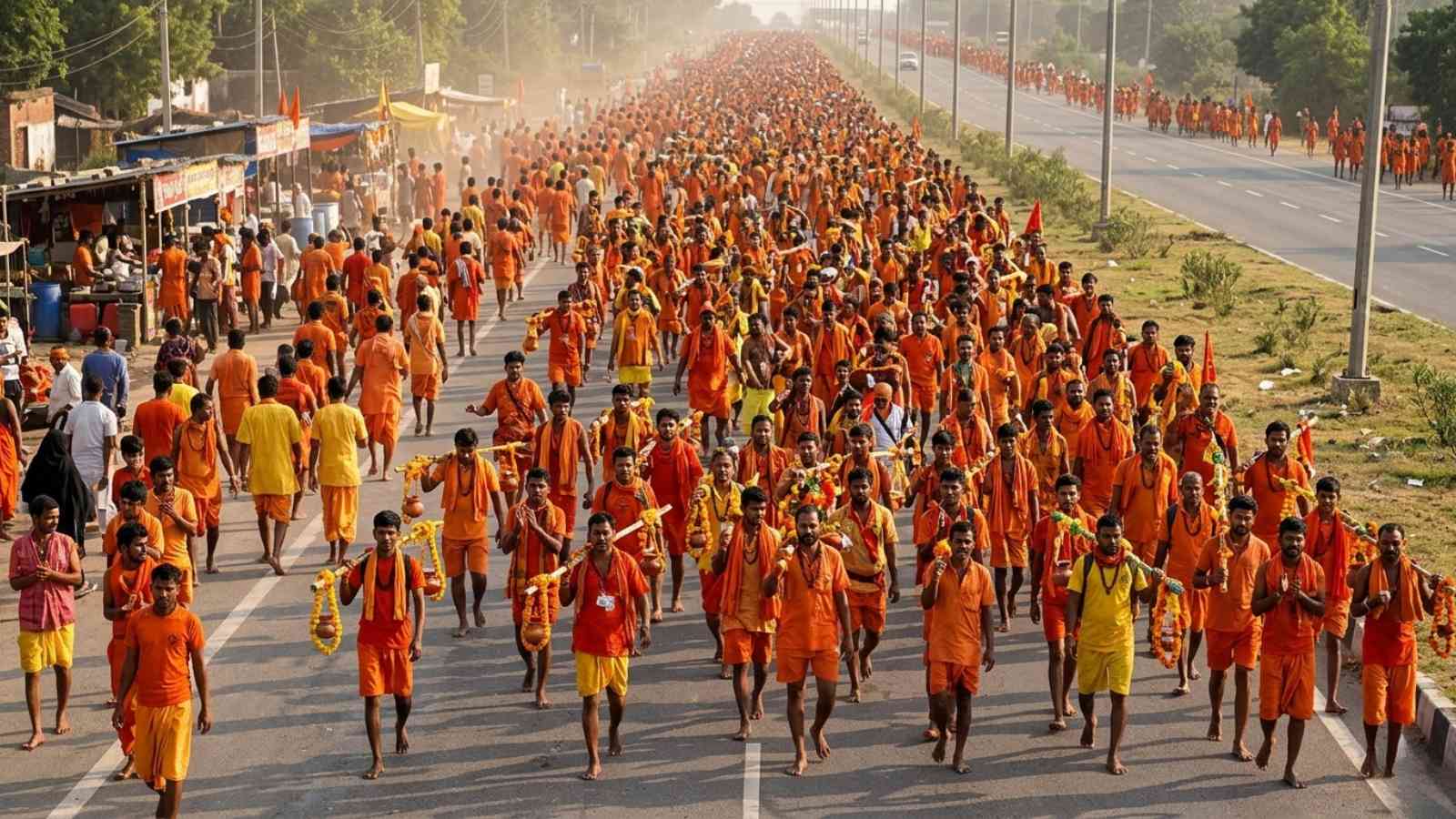
Practical Tips & Sanctum Dress Codes Every Devotee Should Know
Important Sanctum Rules Across the 12 Shrines
- Know the Garbha Griha Dress Codes in Advance: At Grishneshwar (Ellora), men must remove their shirt, vest, and belt to enter the sanctum. At Mahakaleshwar (for Bhasma Aarti & Garbha Griha entry), Trimbakeshwar, Nageshwar, and Mallikarjuna (for Sparsha Darshan), men must wear an unstitched traditional dhoti/sola and women must wear a saree.
- Book Time-Sensitive Aartis Online 15-30 Days Ahead: Mahakaleshwar's 4:00 AM Bhasma Aarti (shrimahakaleshwar.com) and Kashi Vishwanath's 3:00 AM Mangala Aarti (shrikashivishwanath.org) sell out weeks in advance.
- Leave Phones & Leather Belts at Cloakrooms: Mobile phones, smartwatches, cameras, and leather belts are strictly prohibited inside the inner barriers of Somnath, Mahakaleshwar, Kashi Vishwanath, Trimbakeshwar, Grishneshwar, and Kedarnath. Leaving them in your hotel room saves 30-45 minutes in the locker queue.
- Traditional Offerings for Shiva Puja: Carry unbroken three-leaved Bilva Patra (Bael leaves) (always offer with the smooth side facing down onto the Shivalinga), pure Gangajal, raw cow's milk, white akshata (unbroken rice grains), sandalwood paste (chandan), and bhasma. Never offer Ketaki flowers, tulsi, or sindoor/kumkum on a Shivalinga.
Frequently Asked Questions (FAQs)
Q1. Which is the first and which is the last of the 12 Jyotirlingas?
According to the traditional Dwadasha Jyotirlinga Stotram in the Shiva Purana, Somnath (in Prabhas Patan, Gujarat) is the first (Adi) Jyotirlinga, and Grishneshwar (near Ellora Caves, Maharashtra) is the twelfth and final Jyotirlinga.
Q2. Why is Mahakaleshwar in Ujjain considered unique among the 12 Jyotirlingas?
While all twelve Jyotirlingas are revered as self-manifested (Swayambhu), Mahakaleshwar in Ujjain is the only Dakshinamukhi (south-facing) Jyotirlinga in India. Because the southern direction is governed by Yama (the Lord of Death), worshipping Dakshinamukhi Mahakal is believed to remove the fear of untimely death (Akal Mrityu). It is also the only shrine where the 4:00 AM Bhasma Aarti is performed daily.
Q3. Which Jyotirlingas are also revered as Shakti Peethas?
Mallikarjuna in Srisailam (Andhra Pradesh) is the most famous shrine housing both a Jyotirlinga and an Ashta Dasha Maha Shakti Peetha (Bhramaramba Devi) in the same complex. Additionally, Kashi Vishwanath (Vishalakshi / Manikarnika), Mahakaleshwar (Harsiddhi / Avantika), and Baidyanath Dham (Jai Durga / Hridaya Peetha) are closely paired with major Shakti Peethas in the same temple precinct or town.
Q4. Which state has the highest number of Jyotirlingas?
Maharashtra has the highest number with three Jyotirlingas-Bhimashankar (Pune), Trimbakeshwar (Nashik), and Grishneshwar (Chhatrapati Sambhajinagar/Ellora). Gujarat and Madhya Pradesh each have two.
Q5. Are all 12 Jyotirlinga temples open 365 days a year?
Eleven of the twelve Jyotirlingas remain open 365 days a year. Only Kedarnath Dham in Uttarakhand (at 3,583 metres altitude) closes for six winter months between Bhai Dooj (November) and Akshaya Tritiya (late April/May) due to heavy Himalayan snowfall; during winter, Lord Kedarnath's Utsav idol is worshipped at Omkareshwar Temple in Ukhimath.
Q6. Must I visit the 12 Jyotirlingas in the exact order of the shloka?
While traditional yatris who undertake a single continuous parikrama sometimes start at Somnath and end at Grishneshwar, there is no compulsory rule requiring you to visit in sequence. Most families complete the 12 shrines across 5 to 6 regional cluster trips based on convenient rail and flight connections.
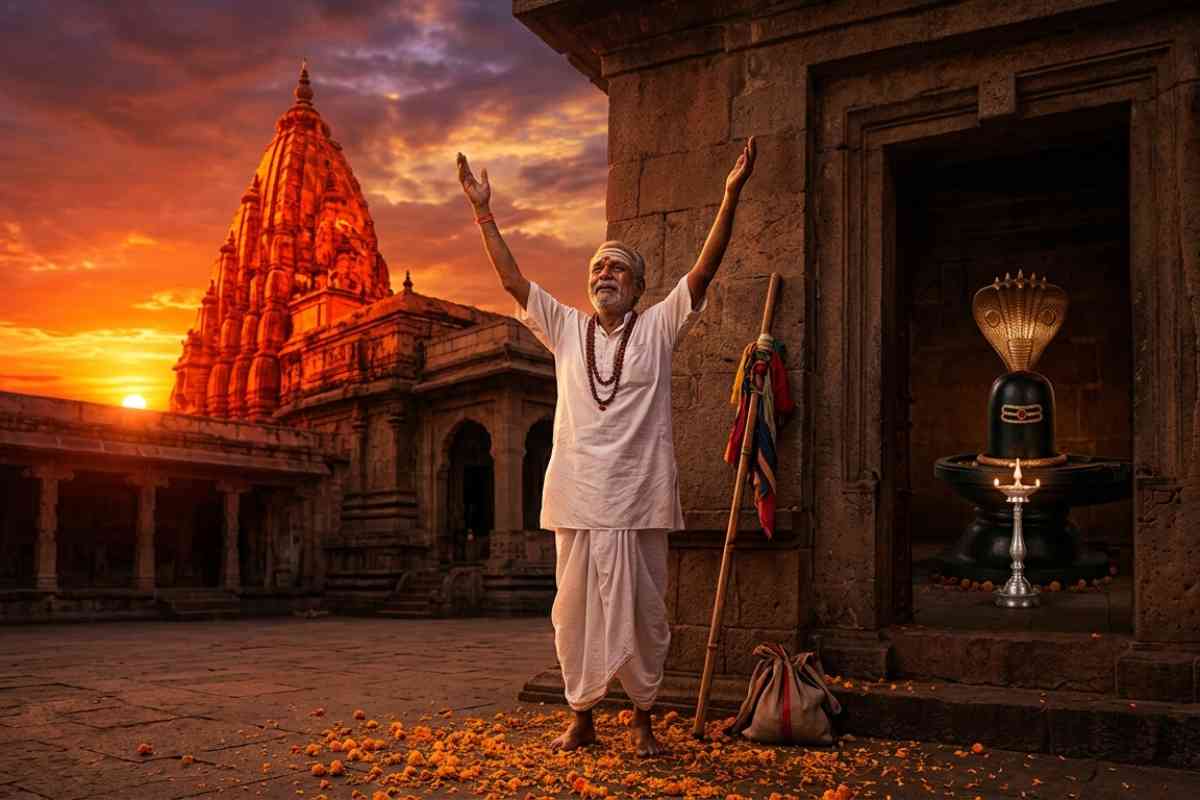
Official Temple Trust & Booking Portals
Plan Your Next Jyotirlinga Cluster With Confidence
Har Har Mahadev · Om Namah Shivaya 🙏
Have a question about combining Ujjain and Omkareshwar or planning the Maharashtra Jyotirlinga circuit? Message me here-I reply to every reader personally. - Devendra Khambalkar, Nagpur
Read More First-Hand Temple Guides on HinduTempleGuide.com
- Kedarnath Temple Travel Guide 2026 - 16 km Trek Route, Registration & Tips
- Nagchandreshwar & Mahakaleshwar Ujjain - My 24-Hour Darshan Experience
- Char Dham Yatra 2026 Complete Guide - Dates, Registration, Route & Cost
- Helicopter Booking Guide for Temple Yatra 2026 - Kedarnath, Badrinath & Vaishno Devi
- Tirupati Balaji Temple Guide 2026 - Darshan Types, SED Booking & Timings
Written by Devendra Khambalkar, Nagpur, Maharashtra | Last updated: October 2026. Temple timings and aarti booking rules for the 12 Jyotirlingas are verified against official temple trust portals and may be adjusted by temple authorities during Shravan Maas, Maha Shivaratri, and Simhastha/Kumbh periods. Always confirm live slot availability on the official temple websites linked above before travelling.